Yugcharan News / 24-11-2026
India has announced a major development cooperation package worth more than ₹15,000 crore for Nepal, alongside plans to establish an offshore campus of the Indian Institute of Technology (IIT) in the Himalayan nation. The announcements were made by Prime Minister Narendra Modi on November 23, 2026, following high-level discussions with Nepalese Prime Minister Balendra Shah in New Delhi. The agreements and initiatives aim to strengthen bilateral relations through education, infrastructure, technology, trade and regional connectivity.
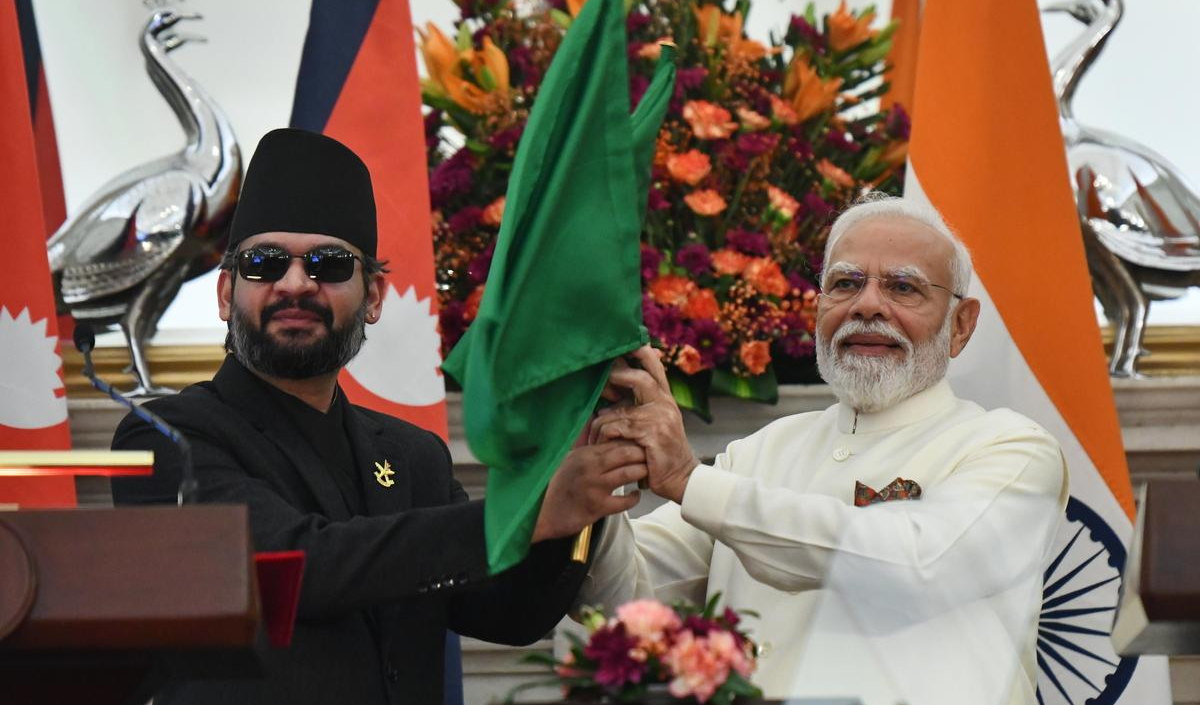
The announcement came during Shah's first official visit to India since assuming office in March 2026. During the meeting at Hyderabad House, the two leaders discussed several aspects of India-Nepal cooperation and inaugurated important infrastructure projects, including a direct railway connection between Ayodhya and Janakpur and a road bridge connecting Dharchula in Uttarakhand with Nepal.
The development package, valued at 24,000 crore Nepalese rupees, reflects India's continued commitment to supporting Nepal's development priorities. The two governments also discussed expanding educational opportunities for Nepali students, promoting entrepreneurship and improving infrastructure links between the neighbouring countries.
The visit is being viewed as an important diplomatic engagement aimed at reinforcing the longstanding relationship between India and Nepal.
India Announces ₹15,000 Crore Development Cooperation Package
Prime Minister Narendra Modi announced a development cooperation package worth 24,000 crore Nepalese rupees, equivalent to more than ₹15,000 crore in Indian currency, following his discussions with Prime Minister Balendra Shah.
The package is intended to support Nepal's development requirements and strengthen cooperation across multiple sectors.
During the announcement, Modi highlighted India's longstanding role as a dependable neighbour and its assistance to Nepal during difficult circumstances, including natural disasters.
Nepalese Prime Minister Shah also acknowledged India's support, stating that India had consistently stood with Nepal during challenging situations.
He emphasised that mutual respect, trust and goodwill form the foundation of relations between the two countries.
The development package is expected to contribute to cooperation in infrastructure and other development-related areas. However, the detailed sector-wise allocation and implementation timelines were not specified in the announcement.
Modi also expressed condolences over the loss of lives in recent floods in Nepal, underlining the importance of cooperation during humanitarian emergencies and natural disasters.
India to Establish Offshore IIT Campus in Nepal
One of the most significant announcements during the visit was India's decision to establish an offshore campus of the Indian Institute of Technology in Nepal.
The initiative is intended to expand access to quality higher education and advanced technical learning for Nepali students.
Addressing the discussions, Modi said Nepal's younger generation possessed considerable talent, energy and ambition. He emphasised India's commitment to supporting their aspirations through educational and technological cooperation.
The proposed IIT campus is expected to create additional opportunities for students interested in engineering, science, technology and innovation.
The initiative also represents an expansion of India's educational engagement beyond its borders and could strengthen academic cooperation between institutions in the two countries.
The establishment of an offshore IIT campus is particularly significant because Indian Institutes of Technology are among the country's leading institutions for technical education and research.
Further details regarding the location, academic programmes, admission arrangements and operational timeline of the proposed campus were not provided in the announcement.
Startup Incubator and Innovation Hub Planned
Alongside the IIT campus, Modi announced plans to establish a startup incubator and an innovation hub in Nepal.
These initiatives are intended to encourage entrepreneurship, support emerging businesses and create opportunities for young people interested in technology-driven enterprises.
A startup incubator can help early-stage businesses develop their ideas through mentoring, institutional support and access to entrepreneurial networks. An innovation hub can provide an environment for research, technological development and collaboration.
The proposed facilities are expected to strengthen cooperation between Indian and Nepalese entrepreneurs while encouraging innovation and knowledge exchange.
The announcements also reflect the growing importance of technology and entrepreneurship in the development strategies of both countries.
Modi said India was committed to helping Nepal's young population turn its ambitions into practical opportunities.
Scholarships for Nepali Students in India to Be Expanded
India also announced plans to expand scholarship opportunities for students from Nepal.
According to Modi, additional academic opportunities would be provided in India, particularly in the fields of law and technology.
The announcement is aimed at strengthening educational links and enabling more Nepali students to pursue higher studies in Indian institutions.
India and Nepal have longstanding educational and cultural connections, with students from Nepal regularly travelling to India for university education and professional courses.
Expanding scholarship opportunities could further strengthen these exchanges and support the development of skilled professionals in Nepal.
The initiative is also expected to complement the proposed IIT campus and innovation-related projects by creating multiple pathways for academic and professional advancement.
Specific details regarding the number of additional scholarships, eligibility conditions and implementation arrangements were not announced during the visit.
Ayodhya-Janakpur Direct Rail Service Inaugurated
Improving cross-border connectivity was another major focus of the discussions.
Prime Minister Narendra Modi and Prime Minister Balendra Shah jointly inaugurated the Saryu-Kamala rail service connecting Ayodhya in Uttar Pradesh with Janakpur in Nepal through video conferencing.
The railway connection is expected to strengthen transport links between the two countries while supporting religious tourism and cultural exchanges.
Ayodhya holds immense religious significance for devotees of Lord Rama, while Janakpur is traditionally revered as the birthplace of Goddess Sita.
The connection between these two cities is therefore particularly important for religious travellers and pilgrims interested in the Ramayana tradition.
The new railway service is expected to make travel between the two destinations more convenient and encourage greater movement of visitors.
According to the announcement, regular weekly services will begin on November 28, 2026.
The initiative also reflects the shared cultural and historical heritage of India and Nepal, where religious traditions and historical connections have contributed to close people-to-people relations.
Uttar Pradesh Chief Minister Yogi Adityanath's leadership was highlighted in connection with the development of the new direct rail link.
Dharchula Road Bridge Connecting India and Nepal Inaugurated
The two prime ministers also inaugurated a road bridge connecting Dharchula in Uttarakhand with Nepal.
The bridge is an important infrastructure development aimed at strengthening road connectivity across the India-Nepal border.
Dharchula is a strategically important border region with close social, economic and cultural links between communities on both sides of the international boundary.
Improved road connectivity can support local movement, facilitate trade and make transportation easier for people living in border areas.
The bridge is also expected to contribute to broader efforts to improve infrastructure between India and Nepal.
Alongside the railway connection, the project demonstrates the importance both governments are placing on physical connectivity as a foundation for stronger bilateral cooperation.
Nepal Prime Minister Invites Modi and Indian Citizens to Visit Nepal
Following his discussions with Modi, Nepalese Prime Minister Balendra Shah invited the Indian Prime Minister and Indian citizens to visit Nepal.
In a post on social media platform X, Shah said the discussions had focused on strengthening the centuries-old relationship between the two countries and making bilateral cooperation relevant to contemporary needs.
He noted that important agreements had been reached across several areas of cooperation and that infrastructure projects had been inaugurated or had their foundation stones laid.
Shah also emphasised that the outcomes of the discussions must translate into tangible benefits for ordinary citizens.
He called for cooperation that would improve opportunities for farmers, generate employment for young people, expand educational prospects for students and create new markets for entrepreneurs.
The Nepalese Prime Minister also welcomed Indian investors and encouraged greater business engagement between the two countries.
He expressed confidence that the latest developments would take India-Nepal relations to a higher level.
Modi Gifts Gangajal and Traditional Indian Artwork to Shah
The diplomatic visit also included an exchange of gifts reflecting the historical, religious and cultural connections between India and Nepal.
Prime Minister Modi presented Shah with a Kalamkari painting depicting the complete Ramayana, a Banarasi brocade stole placed in a Sadeli box and Gangajal.
The Kalamkari artwork was created in the traditional Srikalahasthi style of Andhra Pradesh. Hand-painted on cotton using a bamboo pen and natural dyes, the painting depicts important episodes from Lord Rama's life, including his birth, exile, victory over Ravana and return to Ayodhya.
The artwork represents India's traditional craftsmanship and storytelling heritage.
Its presentation also carried cultural significance because of the close religious association between Ayodhya and Janakpur.
Ayodhya is associated with Lord Rama, while Janakpur is revered as the birthplace of Goddess Sita. The two locations are central to the Ramayana tradition and have historically shared religious and cultural connections.
The exchange of gifts highlighted the importance of these shared traditions in strengthening diplomatic relations.
Nepalese Prime Minister Meets President Droupadi Murmu
During his visit to New Delhi, Prime Minister Balendra Shah also called on President Droupadi Murmu at Rashtrapati Bhavan.
The meeting formed part of his official engagements during his maiden state visit to India since taking office in March.
His discussions with the Indian leadership provided an opportunity to review bilateral relations and identify areas where cooperation could be expanded.
The visit also reflected the importance both countries attach to maintaining high-level diplomatic engagement.
Focus on Farmers, Youth and Entrepreneurs
An important theme emerging from the discussions was the need to ensure that diplomatic agreements produce practical benefits for people in both countries.
Shah stressed that infrastructure projects and bilateral understandings should contribute directly to economic opportunities.
He highlighted the importance of improving conditions for farmers, creating employment for young people, expanding educational opportunities and helping entrepreneurs access new markets.
His remarks suggested that Nepal wants bilateral cooperation to focus not only on government-to-government agreements but also on economic growth and opportunities for ordinary citizens.
India's announcements concerning the IIT campus, scholarships, startup incubator and innovation hub align with this broader objective.
The infrastructure projects are also expected to improve transportation and facilitate stronger economic and social connections.
India-Nepal Relations Gain Fresh Momentum
The November 23 meeting represents an important step in the continuing engagement between India and Nepal.
The two neighbouring countries share longstanding historical, cultural, religious and economic connections, along with an open border and extensive people-to-people relations.
Cooperation in infrastructure, education, energy, trade and disaster response remains central to their bilateral relationship.
The latest announcements cover several of these areas and provide a framework for expanding engagement.
The proposed IIT campus and innovation hub could strengthen educational and technological cooperation, while the development package is intended to support Nepal's broader development priorities.
Meanwhile, the Ayodhya-Janakpur railway service and Dharchula bridge are expected to improve connectivity and facilitate cross-border movement.
The two governments will now need to translate the announcements into concrete projects through implementation plans, institutional coordination and continued diplomatic engagement.
With Prime Minister Modi and Prime Minister Balendra Shah expressing confidence in the future of bilateral relations, the latest visit has placed development cooperation, youth empowerment and regional connectivity at the centre of India's engagement with Nepal.