Yugcharan News / 23-11-2026
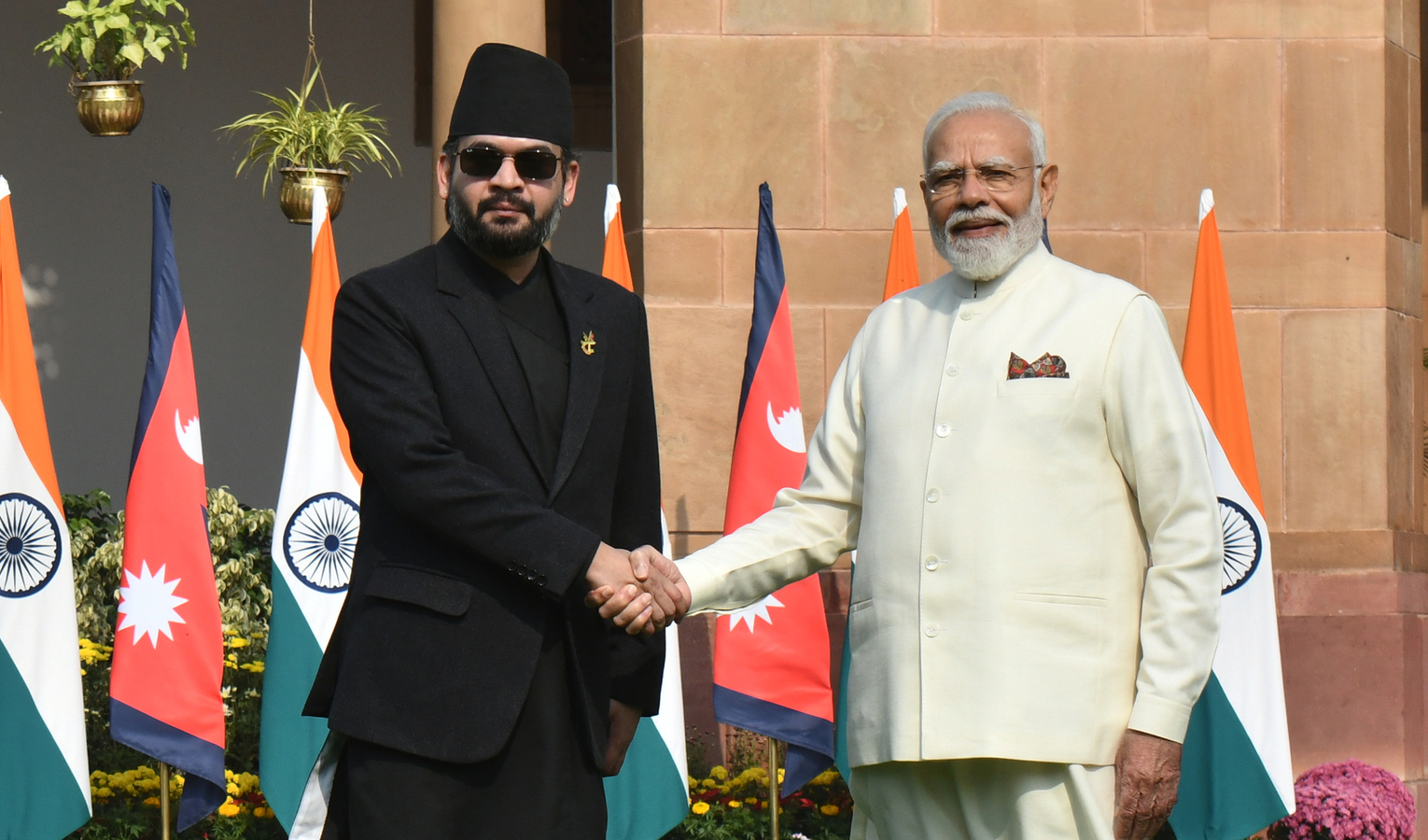
India has announced a major economic assistance package worth $1.62 billion for flood-hit Nepal, marking one of New Delhi's largest-ever financial commitments to its Himalayan neighbour. The announcement came after a high-level meeting between Prime Minister Narendra Modi and Nepal's Prime Minister Balendra Shah in New Delhi on Monday, November 23, 2026. The package is aimed at supporting Nepal's post-disaster reconstruction, strengthening its energy infrastructure and accelerating long-term economic development following devastating floods that severely damaged the country earlier this year.
The assistance includes a $377 million grant for post-disaster reconstruction and new infrastructure projects, along with a $1.24 billion line of credit for energy-related projects. The two governments said that specific projects and the arrangements for providing development assistance would be finalised through mutual consultations.
The announcement represents a significant step in India-Nepal relations at a time when Kathmandu is facing extensive reconstruction requirements following a major natural disaster. It also reflects New Delhi's continued efforts to strengthen its strategic, economic and diplomatic engagement with Nepal, a country that occupies an important geographical position between India and China.
Addressing the media after his meeting with Shah, Prime Minister Modi reiterated India's commitment to helping Nepal recover from the disaster and rebuild essential infrastructure.
Modi said India's assistance would focus on helping affected families restore their lives, creating new economic opportunities and strengthening Nepal's ability to respond to future natural disasters.
Shah, meanwhile, expressed gratitude for India's continued support during difficult circumstances and invited Indian investors as well as Prime Minister Modi to visit Nepal.
Devastating Himalayan Floods Left Nepal Facing Major Reconstruction Challenges
The financial assistance comes nearly three months after catastrophic flooding struck Nepal's Himalayan region in August 2026, resulting in widespread destruction and a major humanitarian crisis.
According to the figures reported by Reuters, the disaster killed approximately 1,500 people, while another 5,200 people remained missing and were presumed dead. The floods caused extensive damage to roads, bridges, schools, residential properties and other essential infrastructure.
The destruction affected not only communities and households but also Nepal's economic activities, transportation networks and energy production facilities.
Several mountainous areas experienced severe disruption, with damaged roads and communication infrastructure making relief and recovery operations more challenging. The destruction of bridges and other transport links also affected connectivity between communities and important economic centres.
For a country with significant geographical and infrastructural challenges, rebuilding damaged public facilities and restoring economic activity requires substantial financial resources.
The scale of the disaster has placed considerable pressure on Nepal's public finances, making international assistance an important component of its recovery strategy.
Nepal's reconstruction requirements have been estimated at approximately 10 per cent of its gross domestic product, according to remarks made by Shah at the United Nations General Assembly in September 2026.
During his address, the Nepali Prime Minister sought grant-based international assistance to support the country's recovery and reconstruction efforts.
India's newly announced package is expected to contribute significantly to these requirements, particularly in infrastructure development and the restoration of essential economic sectors.
$377 Million Grant and $1.24 Billion Credit Package Explained
The $1.62 billion assistance commitment has been divided into two major components designed to address Nepal's immediate reconstruction requirements as well as its longer-term development priorities.
The first component is a grant worth $377 million. This funding will support post-disaster reconstruction and the development of new infrastructure projects.
Unlike a conventional loan, grant assistance does not carry the same repayment obligation. It can therefore provide important financial support to a country dealing with extensive disaster-related losses and limited domestic resources.
The second component is a $1.24 billion line of credit intended for energy projects.
The energy-related assistance is particularly significant because Nepal's hydropower sector suffered substantial damage during the August floods. Several projects were affected, reducing the country's electricity generation capacity and disrupting its ability to export power.
The two governments have stated that individual projects and the arrangements for extending development assistance will be determined through mutual consultations.
This means the final allocation of funds, project selection and implementation arrangements will require further discussions between the Indian and Nepali authorities.
The combination of grant assistance and credit facilities is intended to address different aspects of Nepal's recovery, from rebuilding damaged infrastructure to supporting the country's longer-term energy development.
Nepal's Hydropower Sector Suffers Major Setback
One of the most serious economic consequences of the August floods was the damage inflicted on Nepal's hydropower industry.
Hydropower is a crucial part of Nepal's energy sector, supported by the country's extensive river systems and mountainous geography. The country has considerable potential for generating electricity through water-based power projects.
However, the floods damaged more than a dozen hydropower projects, according to the Reuters report.
The destruction reportedly wiped out approximately 10 per cent of Nepal's electricity generation capacity. The disruption forced the country to suspend electricity exports and depend on India to meet domestic power requirements.
The damage created difficulties for Nepal's energy security while also affecting a sector that has significant potential to contribute to its economic growth.
Nepal has traditionally viewed hydropower as an important source of future revenue. Electricity exports to neighbouring countries, particularly India, offer opportunities to generate foreign exchange and strengthen regional economic cooperation.
However, the destruction of power infrastructure has temporarily affected these opportunities.
The $1.24 billion credit facility announced by India could play an important role in supporting new energy projects and strengthening Nepal's electricity infrastructure.
The development of additional energy capacity could also help Nepal improve domestic electricity availability and gradually restore its position as a regional power exporter.
Nevertheless, the specific projects to be financed under the credit arrangement have not yet been finalised.
Modi and Balendra Shah Hold High-Level Bilateral Talks
The announcement followed bilateral discussions between Narendra Modi and Balendra Shah at Hyderabad House in New Delhi.
Shah's visit to India is particularly significant because it marks his first bilateral foreign visit since assuming office in March 2026.
The two-day visit provides an opportunity for both governments to discuss economic cooperation, infrastructure development, regional connectivity and broader diplomatic relations.
India and Nepal share longstanding cultural, historical, economic and people-to-people connections. Their relationship is supported by geographical proximity, extensive trade and an open border that allows citizens of both countries to travel, live and work across the border under established arrangements.
Hundreds of thousands of Nepalis live and work in India, contributing to the close social and economic relationship between the two countries.
India is also Nepal's largest trading partner and an important source of bilateral development assistance.
New Delhi has historically played a major role in supporting Nepal during natural disasters and other emergencies.
Following the August floods, India was among the first countries to provide emergency assistance. It sent several aircraft carrying relief supplies and supported efforts to restore communication links disrupted by the disaster in mountainous areas.
Shah acknowledged India's role during difficult periods, describing the country as a consistent first responder for Nepal during natural disasters and other challenging circumstances.
His remarks highlighted the importance Kathmandu attaches to India's assistance in emergency response and reconstruction.
India and Nepal Sign Multiple Agreements to Expand Cooperation
Apart from the financial assistance package, the two countries signed several agreements intended to strengthen cooperation across different sectors.
The agreements cover education, research, satellite communications and sustainable urban development.
These areas reflect an effort to broaden bilateral engagement beyond traditional trade and infrastructure cooperation.
Cooperation in education and research could create opportunities for academic institutions, researchers and students from both countries to work together.
Satellite communications represent another important area of collaboration, particularly for countries with challenging geographical conditions.
In Nepal, where mountainous terrain can make conventional communication infrastructure difficult and expensive to establish, satellite-based technologies could support connectivity in remote communities.
The agreement on sustainable urban development is also relevant as Nepal works to rebuild damaged settlements and improve infrastructure following the floods.
Reconstruction provides an opportunity to strengthen urban planning, improve essential services and develop infrastructure that can better withstand future natural disasters.
However, the practical impact of these agreements will depend on their implementation, funding arrangements and continued coordination between the two governments.
New Railway Link Strengthens Cross-Border Connectivity
Another important development during the bilateral visit was the joint inauguration of a railway link connecting India and Nepal.
The railway connection is expected to contribute to improved transportation and regional connectivity between the neighbouring countries.
Railway infrastructure can support the movement of passengers and goods while creating additional opportunities for trade and economic cooperation.
For Nepal, improved connectivity with India is particularly important because of its landlocked geographical position and dependence on regional transport networks for international trade.
Better cross-border transportation facilities can help reduce logistical difficulties, improve access to markets and strengthen economic exchanges.
The railway development also complements broader efforts by both governments to improve infrastructure and deepen their economic relationship.
Further details regarding the route, operational arrangements and passenger or freight services were not provided in the supplied report.
China Factor Adds Strategic Importance to India's Assistance
India's announcement also carries wider geopolitical significance because Nepal occupies an important strategic position between India and China.
Both countries have sought to strengthen their economic and diplomatic relationships with Kathmandu through infrastructure investment, development assistance and regional cooperation.
India has traditionally maintained close historical, cultural and economic ties with Nepal. Its open border, extensive trade relationship and geographical proximity make it one of Nepal's most important international partners.
China, meanwhile, has also expanded its engagement with Nepal through infrastructure projects and economic cooperation.
Against this background, India's $1.62 billion assistance package represents a substantial commitment to maintaining and strengthening its relationship with Kathmandu.
The announcement comes at a time when Nepal requires considerable international support to rebuild infrastructure and restore economic activity following the devastating floods.
For New Delhi, supporting Nepal's recovery is both a humanitarian priority and an important element of its wider neighbourhood policy.
However, the immediate focus of the announced package remains reconstruction, energy development and economic cooperation rather than any formally stated geopolitical objective.
Nepal's Recovery Will Depend on Effective Implementation
Although India's financial commitment provides a major boost to Nepal's reconstruction efforts, the country's recovery will require sustained investment, effective project execution and cooperation with multiple international partners.
The destruction caused by the August floods affected several critical sectors simultaneously, including transportation, electricity generation, education, housing and communication infrastructure.
Rebuilding these facilities will require careful planning, technical expertise and coordination between national and local authorities.
The $377 million grant could support reconstruction and new infrastructure development, while the $1.24 billion credit facility may help strengthen the energy sector.
The final impact of the package will depend on how quickly projects are identified, agreements are completed and financial assistance is translated into operational infrastructure.
For Nepal, restoring hydropower capacity will be particularly important because of the sector's contribution to electricity supply and potential export earnings.
For India, the package reinforces its role as a major development and humanitarian partner in the region.
The agreements signed during Shah's visit, along with the inauguration of the railway connection, also demonstrate the broader scope of cooperation between the two countries.
With reconstruction needs estimated at around 10 per cent of its GDP, Nepal faces a significant challenge in returning affected communities and economic sectors to normal conditions.
India's $1.62 billion commitment marks an important step towards addressing that challenge while giving fresh momentum to bilateral relations.
The coming months will determine how effectively the announced financial assistance and cooperation agreements translate into reconstruction, stronger energy infrastructure and improved economic opportunities for the people of Nepal.