Yugcharan News / 23-11-2026
India has strengthened its position as Asia’s third-most powerful country, with improvements in its diplomatic influence, defence partnerships and cultural reach, according to the 2026 Asia Power Index released by the Australia-based Lowy Institute. The report has also ranked Prime Minister Narendra Modi as Asia’s second-most effective regional leader, placing him behind Chinese President Xi Jinping.
The findings highlight India's growing strategic influence across the region despite challenges relating to economic performance, currency weakness and changes in its international diplomatic profile. According to the report, India's overall power score has risen to 40.5 points, consolidating its position among Asia's major powers.
The assessment also indicates that the gap between India's overall power and its potential based on available resources has narrowed. Furthermore, India's power gap with China has reached its narrowest level since the Lowy Institute began publishing the Asia Power Index in 2018.
However, the report makes clear that China continues to hold a substantial advantage over India, with its overall power remaining approximately 80 per cent higher.
India Strengthens Its Position in Asia Power Rankings
The 2026 Asia Power Index evaluates the relative influence and capabilities of 27 countries and territories across the Asia-Pacific region. It uses 131 indicators grouped under eight broad measures to assess the overall power of each country.
These measures include economic capability, military capability, resilience, future resources, economic relationships, defence networks and diplomatic influence, among other strategic factors.
According to the report, India recorded improvements across five of the eight assessment measures, while its performance declined marginally in the remaining three.
Despite the slight setbacks, diplomatic influence continued to be India's strongest and most consistent area of performance. The report observed that India maintained its diplomatic standing at a time when several other countries experienced a decline in this category.
The findings suggest that India's expanding international engagement, strategic partnerships and regional cooperation have contributed to its position as one of Asia's most influential powers.
The narrowing power gap with China is another significant development highlighted in the assessment. Although Beijing continues to enjoy a considerable advantage, the changing comparison reflects India's gradual expansion of its capabilities and influence.
PM Modi Ranked Asia's Second-Most Effective Regional Leader
One of the key findings of the report concerns the assessment of political leadership across Asia.
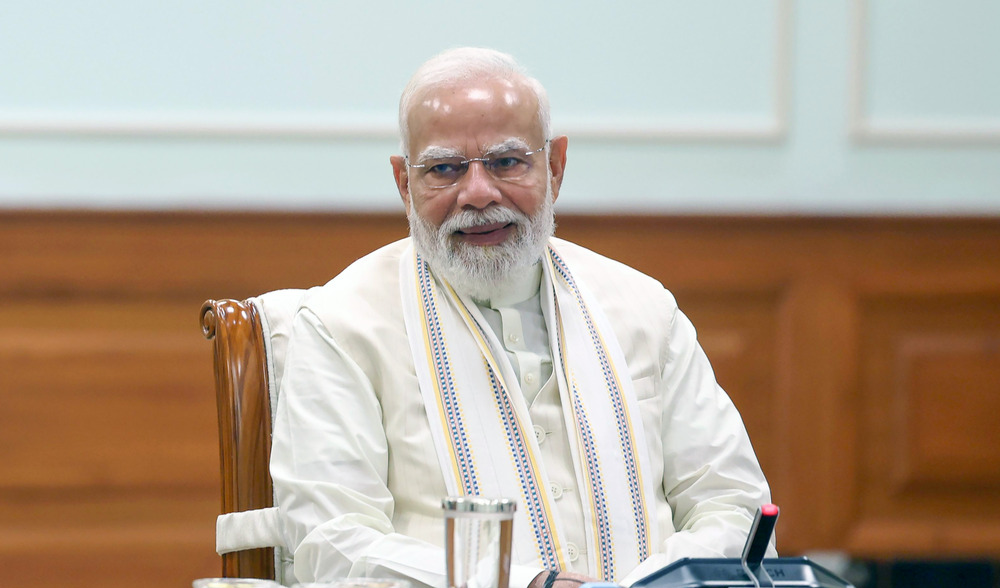
Prime Minister Narendra Modi has been ranked as the region's second-most effective leader, with Chinese President Xi Jinping occupying the first position.
The assessment reflects perceptions of regional leadership, strategic ambition and the ability to influence developments beyond national borders.
Dr Hunter Marston, Director of the Southeast Asia Program at the Lowy Institute and Project Lead for the Asia Power Index, highlighted India's improving position while discussing the findings on social media platform X.
"India gains influence. India rose to 40.5, consolidating its place as a major power. The gap with China is the narrowest since 2018, and Modi is now rated the second-most effective regional leader behind Xi, despite a dip in economic capability," Marston said.
The leadership assessment comes alongside the report's broader evaluation of India's diplomatic and strategic position.
However, the report also identified a decline in certain perceptions surrounding Modi's leadership and strategic ambition. It attributed this development partly to India's comparatively lower diplomatic profile during the conflict in the Gulf.
This indicates that while Modi continues to receive a strong regional leadership assessment, India's international diplomatic engagement remains an important factor influencing perceptions of its leadership.
Defence Partnerships and BrahMos Missile Sales Boost India's Influence
India's growing defence engagement with Southeast Asian countries has emerged as another important factor behind its regional influence.
The report noted that India's defence networks have strengthened, contributing to its strategic presence across the region.
In particular, defence cooperation and the sale of BrahMos missiles to Southeast Asian countries were highlighted as developments supporting India's position. These activities have helped India improve its standing in the defence networks category, where it secured ninth place.
India has increasingly sought to expand defence relationships with countries in Southeast Asia through military cooperation, strategic partnerships and defence exports.
Such engagement allows New Delhi to strengthen its relationships with regional governments while expanding its role in discussions concerning maritime security and regional stability.
The growing importance of defence networks also reflects the changing strategic environment in the Indo-Pacific, where countries are increasingly seeking partnerships to address security concerns.
For India, stronger defence relationships provide an opportunity to expand its influence beyond its immediate neighbourhood and establish itself as a significant security partner.
The Lowy Institute's assessment suggests that these partnerships are contributing to India's broader power position, although the country continues to face limitations in comparison with major regional competitors.
Cultural Influence Records Significant Improvement
India's cultural influence has also registered a notable improvement in the 2026 assessment.
According to the report, India's cultural influence score reached 43.8 points, supported by progress across all three dimensions used to measure cultural influence.
These dimensions include cultural projection, information flows and people exchanges.
The improvement indicates that India's influence in Asia is not limited to military relationships, economic engagement or diplomatic initiatives. Its cultural presence and connections with people across the region also contribute to its overall standing.
India's cultural outreach, international visibility and people-to-people engagement form important elements of its regional influence.
The report's findings underline the importance of these non-military factors in determining how countries exercise influence in an increasingly interconnected Asian region.
Economic Challenges Continue to Affect India's Overall Performance
Despite the improvements in several areas, the report also identified economic challenges that could affect India's future power position.
Among the concerns highlighted were the weakening Indian rupee, changes in the International Monetary Fund's methodology for measuring economies and a decline of nearly $20 billion in outbound investment.
These factors were identified as negative developments in India's overall assessment.
The weakening rupee remains an important economic consideration because currency movements can influence international trade, investment flows and the relative value of economic activity.
Similarly, changes in the IMF's approach to measuring economies can affect how countries compare in international economic assessments.
The nearly $20 billion decline in outbound investment was another concern highlighted by the report. Outbound investment is an important measure of how businesses and investors from a country participate in economic activity overseas.
A reduction in such investment can influence a country's international economic relationships and its ability to expand commercial influence beyond domestic markets.
The report's findings therefore present a mixed picture of India's rise. While the country has made progress in diplomatic influence, cultural reach and defence partnerships, economic capability remains an area requiring attention.
India's Opportunities Remain Significant Despite Setbacks
The Lowy Institute also observed that India's overall opportunities are relatively greater than those available to several other Asian countries.
This assessment reflects India's potential to strengthen its position through continued economic development, strategic partnerships and expanding international engagement.
India's growing role in regional affairs has become increasingly important as the balance of power across Asia continues to evolve.
The country's geographical position, economic potential, defence capabilities and diplomatic relationships provide several avenues for expanding its influence.
However, the report's findings also demonstrate that maintaining this momentum will require improvements across multiple areas rather than relying exclusively on progress in defence or diplomacy.
Economic performance, international investment and a stronger diplomatic presence will remain important components of India's future position.
China Narrows Military Power Gap With the United States
Beyond India's regional standing, the 2026 Asia Power Index also highlighted the changing balance of power between the United States and China.
According to the report, China has moved closer to the United States in terms of overall military power, with the gap between the two countries continuing to narrow.
The comprehensive power score of the United States stood at 78.9 points, while China recorded 73.6 points, leaving a difference of 5.3 points.
The assessment attributed some of Washington's declining performance to losses in economic capability, military capability, defence networks and diplomatic influence.
China, meanwhile, maintained relatively strong and stable performance across most of these areas.
The report also highlighted China's continued military modernisation and expansion of maritime capabilities.
These developments have increased Beijing's strategic strength in the region, particularly amid continuing tensions involving its territorial claims over the Philippines and Taiwan.
China's expanding maritime capabilities remain an important factor in the changing security environment across the Indo-Pacific.
US Engagement in the Middle East and China's Expanding Influence
The report also pointed to the impact of American foreign policy priorities on the regional balance of power.
It observed that US President Donald Trump's substantial engagement in the Middle East has diverted some American attention away from Asia.
This development comes at a time when China continues to strengthen its economic and military position.
The report further noted that China's official foreign exchange reserves had reached approximately three times the level of those held by the United States.
The comparison highlights the economic resources available to Beijing as it continues to expand its international influence.
China's growing economic strength, combined with military modernisation and expanding maritime capabilities, has contributed to its position as Washington's closest competitor in the region.
What the 2026 Asia Power Index Indicates
The 2026 Asia Power Index provides a broad assessment of how influence and strategic capabilities are distributed across the Asia-Pacific region.
Its evaluation of 27 countries and territories uses 131 indicators across eight measures of power, offering a comparative picture of economic, military, diplomatic and strategic performance.
For India, the latest findings represent a combination of progress and continuing challenges.
Its third-place position among Asia's most powerful countries, improved cultural influence, stronger defence networks and Prime Minister Modi's leadership ranking underline the country's expanding regional role.
At the same time, the substantial power advantage maintained by China and the economic concerns identified in the report indicate that India's rise is still accompanied by significant competition.
The narrowing gap with China since 2018 is an important finding, but the report makes clear that the two countries remain separated by a considerable difference in overall power.
India's ability to strengthen its economic capabilities, expand defence partnerships and maintain a consistent diplomatic presence will be crucial to its future standing.