Yugcharan News / 23-11-2026
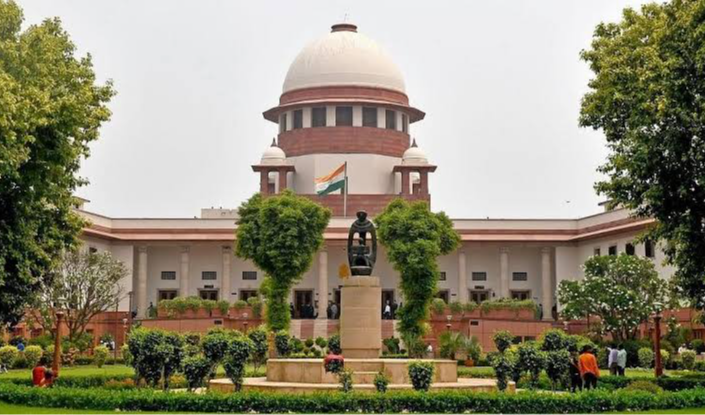
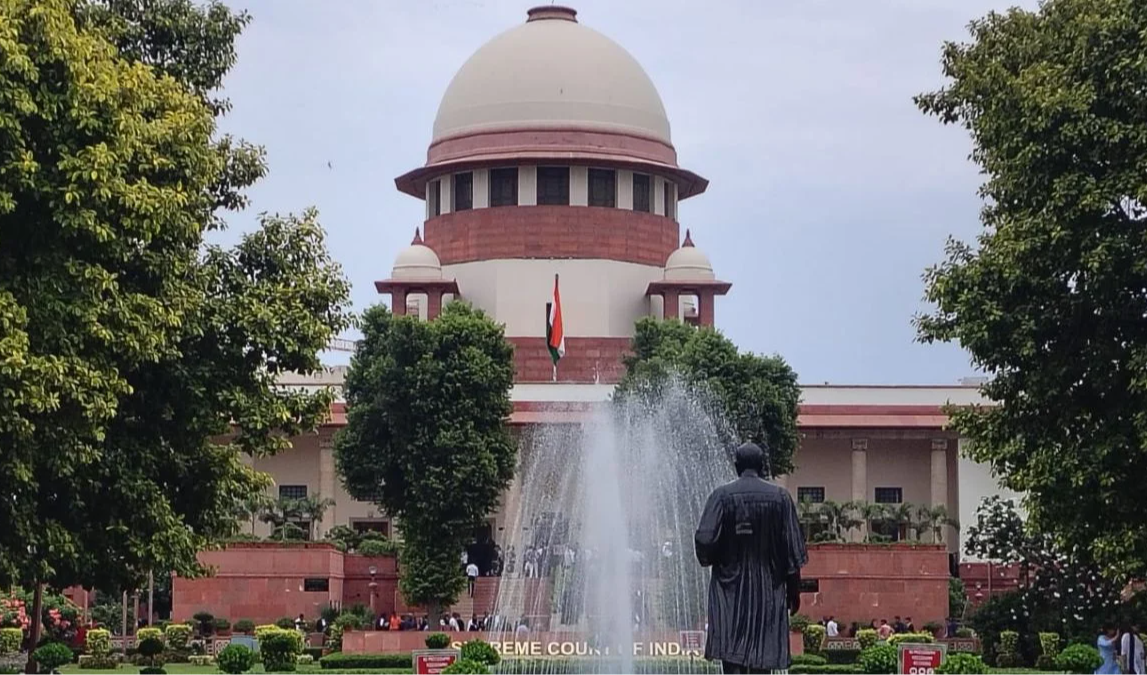
The Supreme Court on Monday strongly criticised a Bihar Sessions Judge for initiating criminal contempt proceedings against a senior police officer and convicting him for allegedly failing to comply with the judge's directions. During the hearing, the Court questioned the judicial officer's understanding of the law governing contempt committed in the face of a court and advised him against adopting what it described as an excessively aggressive approach.
The bench, comprising Chief Justice of India Surya Kant, Justice Joymalya Bagchi and Justice V. Mohana, was hearing a challenge filed by Anil Kumar, a judicial officer who had earlier served as the 4th Additional Sessions Judge in Rohtas at Sasaram, Bihar. The proceedings arose from a Patna High Court order that had made critical observations about the judicial officer's conduct.
During the hearing, the Supreme Court questioned the Sessions Judge's decision to initiate criminal contempt proceedings against the Rohtas Superintendent of Police (SP) and convict him for allegedly disobeying court directions. Justice Bagchi observed that merely failing to comply with a judicial direction does not automatically constitute a criminal offence committed in the face of the court.
The bench also questioned the Sessions Judge's decision to summon the senior police officer and convict him on the same day. Justice Bagchi described the action as aggressive and indicated that if the judicial officer believed the conduct amounted to criminal contempt, the matter should have been placed before the High Court for appropriate consideration.
The Court remarked that the Sessions Judge should understand the limits of his authority and follow the procedural discipline expected of judicial officers. It also suggested that the officer's explanation and apology should be sympathetically considered by the High Court.
Background: Sessions Judge Initiated Contempt Proceedings Against Rohtas SP
The controversy originated from an order passed by Anil Kumar while serving as the 4th Additional Sessions Judge in Rohtas district, with his court situated at Sasaram.
According to the case details, the judicial officer had expressed concern over what he described as the lack of responsiveness among senior administrative and police officers towards subordinate courts. He passed an order highlighting the alleged apathy of Indian Administrative Service (IAS) and Indian Police Service (IPS) officers in complying with directions issued by judicial authorities at the district level.
In that context, the Sessions Judge initiated criminal contempt proceedings against the Superintendent of Police, Rohtas, alleging wilful disobedience of his directions.
The judge subsequently convicted the SP under Section 384 of the Bharatiya Nyaya Sanhita (BNS), corresponding to Section 345 of the Code of Criminal Procedure (CrPC), as referred to in the proceedings. He imposed a nominal fine of Re 1 on the police officer.
The judicial officer's order also reportedly called upon the Ministry of Personnel and Training to overhaul the training system for IAS and IPS officers. He suggested that their training should make them more sensitive to the democratic structure and the role of subordinate courts.
The order attracted scrutiny and eventually became the subject of proceedings before the Patna High Court. The High Court made certain critical observations about the judicial officer, prompting Anil Kumar to approach the Supreme Court.
The present case, titled Anil Kumar versus State of Bihar and Another, is registered as Diary No. 67310-2026.
Justice Bagchi Questions Understanding of Contempt Law
During Monday's hearing, Justice Joymalya Bagchi questioned the Sessions Judge's understanding of what constitutes a criminal contempt committed in the immediate presence of a court.
The judge explained that an offence committed in the face of the court generally involves conduct taking place within the courtroom that directly disrupts judicial proceedings or challenges the authority of the court in its immediate presence.
To illustrate the distinction, Justice Bagchi referred to situations such as a person physically assaulting another individual inside the courtroom, abusing the court or refusing to leave the courtroom despite being directed to do so.
He contrasted these examples with a situation in which a court directs a person or authority to perform a particular action, but that direction is not followed.
Justice Bagchi observed that failure to comply with an order, such as a direction to register a First Information Report (FIR), would not automatically amount to a crime committed in the face of the court.
He questioned the Sessions Judge's decision to treat non-compliance with his directions as an offence falling within the scope of the relevant provision.
The observation was significant because the Sessions Judge had used the contempt-related provision to convict the Superintendent of Police for allegedly failing to follow his directions.
Justice Bagchi indicated that the judicial officer needed to understand the scope and limits of the statutory provision before exercising such powers.
Supreme Court Calls the Action 'Aggressive'
The bench also expressed concern over the manner in which the Sessions Judge had proceeded against the Superintendent of Police.
Justice Bagchi described the decision to summon the SP and convict him on the same day as an aggressive exercise of authority.
He observed that if the Sessions Judge genuinely believed that the police officer's conduct amounted to criminal contempt, it would have been more appropriate to leave the matter to the High Court.
According to the judge, the High Court could have considered the issue and taken suitable steps after examining how the police administration had dealt with the Sessions Court's directions.
Justice Bagchi also questioned whether the Sessions Judge had acted within his jurisdiction while summoning the District Magistrate and the Superintendent of Police for personal appearance and treating their absence as an offence in the face of the court.
The Supreme Court's observations highlighted the distinction between a judicial officer's authority to issue directions and the legal procedure that must be followed when those directions are allegedly disobeyed.
The bench acknowledged that judicial officers may face difficulties when administrative authorities fail to respond to court directions. However, it stressed that concerns about institutional functioning cannot override the procedural limitations governing the exercise of judicial powers.
'Enough of Adventure': Supreme Court Emphasises Judicial Discipline
During the hearing, Justice Bagchi made several pointed remarks about the judicial officer's approach.
The judge reportedly remarked, "Enough of adventure", while discussing the manner in which the Sessions Judge had pursued the matter.
He also observed that judges are governed by procedural constraints and institutional discipline, even when they are attempting to address genuine concerns about the administration of justice.
"We understand your sentiments. We appreciate your effort to reach out to do justice. But as a judge, we are governed by certain procedural constraints and discipline. We cannot forget that," Justice Bagchi observed.
The bench further questioned whether a District Judge could act in the manner adopted by the petitioner while exercising judicial and administrative responsibilities.
Justice Bagchi also referred to the judicial officer's interaction with the inspecting judge in his administrative capacity. He questioned the Sessions Judge's decision to exercise powers under Article 227 of the Constitution in the circumstances discussed during the hearing.
The observations indicated that the Supreme Court was examining not only the legal basis of the contempt conviction but also the judicial officer's conduct and understanding of institutional boundaries.
Judge Advised to Seek Training at National Judicial Academy
At another point during the hearing, Justice Bagchi suggested that the judicial officer should undergo training at the National Judicial Academy to understand the requirements of judicial propriety.
The judge used strong but partly humorous language to caution against an individualistic approach to judicial functioning.
"Acting like a Don Quixote judge will not do... you are not Robinhood," Justice Bagchi remarked.
The reference was made while emphasising that judicial officers cannot act beyond the limits of their authority, even when they believe they are pursuing a larger cause or attempting to correct administrative failures.
The bench's remarks underscored the importance of judicial restraint, procedural compliance and respect for the hierarchy of courts.
The Court also questioned the judicial officer's eagerness to take action against senior administrative and police officials without adequately considering the legal framework governing such proceedings.
Supreme Court Requests High Court to Consider Explanation and Apology
After hearing the submissions made on behalf of Anil Kumar, the Supreme Court indicated that it did not see sufficient grounds to interfere with the matter in the manner sought by the petitioner.
However, the bench requested the Patna High Court to sympathetically consider the judicial officer's explanation-cum-apology and dispose of the proceedings.
The request suggests that the Supreme Court sought to balance its criticism of the Sessions Judge's conduct with an opportunity for the High Court to consider his response.
During the hearing, counsel for the petitioner had also questioned remarks made by the State Advocate General before the High Court, particularly the suggestion that the matter warranted an inquiry.
Justice Bagchi indicated that the Supreme Court would lessen the impact of certain observations made by the High Court, while also expecting the judicial officer to exercise restraint in the future.
The bench's position was that the judicial officer should not continue adopting an aggressive approach while dealing with administrative authorities and matters concerning alleged non-compliance with judicial directions.
Case Raises Questions About Judicial Authority and Contempt Proceedings
The proceedings bring attention to the distinction between a court's power to ensure compliance with its directions and the specific legal requirements for initiating criminal contempt proceedings.
The Supreme Court's observations emphasised that a failure by an authority to comply with a judicial direction cannot automatically be treated as an offence committed in the face of the court. The nature of the alleged conduct, the applicable legal provision and the procedure followed by the judicial officer remain important considerations.
The case also highlights the importance of institutional channels when judicial officers believe that administrative or police authorities are not responding appropriately to court directions.
Although the Supreme Court acknowledged the judicial officer's stated intention to address concerns about the functioning of subordinate courts, it made clear that such efforts must remain within the limits of judicial authority and established procedure.
The matter was heard by a bench comprising CJI Surya Kant, Justice Joymalya Bagchi and Justice V. Mohana. The Supreme Court requested the Patna High Court to consider Anil Kumar's explanation-cum-apology sympathetically and bring the proceedings to a close.