Search

    Language Settings
    Select Website Language

    GDPR Compliance

    We use cookies to ensure you get the best experience on our website. By continuing to use our site, you accept our use of cookies, Privacy Policy, and Terms of Service.

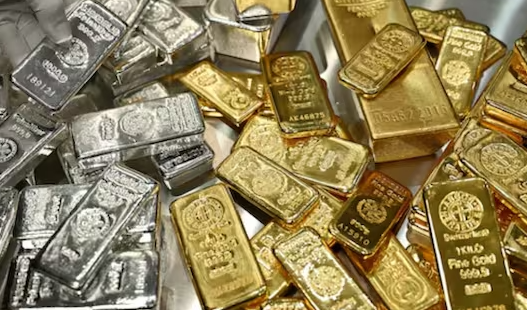
    Gold and Silver Prices Remain Volatile Amid Geopolitical Tensions and Global Economic Uncertainty

    7 hours ago

    Yugcharan News / 11 May 2026

    Gold and silver prices witnessed fluctuations in domestic and international markets on Monday as investors reacted to rising geopolitical tensions, inflation concerns, and uncertainty surrounding global economic developments.

    Market analysts said precious metals are likely to remain range-bound in the near term as traders closely monitor developments linked to the ongoing tensions in the Middle East, movements in crude oil prices, global inflation trends, and signals from major central banks.

    The latest trading session reflected cautious investor sentiment, with gold prices easing slightly in international markets even as broader geopolitical risks continued to support safe-haven demand.

    Gold Prices Decline in International Market

    According to market data available during early trading hours, spot gold prices declined by around 0.6% to approximately $4,684 per ounce in international markets. Gold futures for June delivery also reportedly registered losses amid concerns that rising energy prices could keep inflation elevated globally.

    Analysts stated that increasing crude oil prices, linked to tensions in the Persian Gulf region, have raised fears that central banks may delay interest rate cuts in major economies.

    Traditionally, gold tends to lose some attractiveness in a high-interest-rate environment because the metal does not generate regular yield or interest income. As a result, investor sentiment toward bullion often reacts sharply to signals related to monetary policy and inflation expectations.

    Despite the short-term decline, experts noted that broader geopolitical uncertainty continues to provide underlying support to gold prices.

    Domestic Gold Rates See Mild Correction

    In India, gold prices also recorded a slight decline across major cities.

    Market data indicated that in Delhi, 24-carat gold was trading at approximately ₹15,228 per gram, while 22-carat gold was priced near ₹13,960 per gram. Rates for 18-carat gold were also lower compared to previous sessions.

    Jewellery traders and bullion dealers attributed the correction primarily to movements in international prices and fluctuations in the rupee-dollar exchange rate.

    However, market participants believe domestic prices may continue to remain elevated overall due to strong investor demand, wedding season purchases, and uncertainty in global financial markets.

    Silver Continues to Outperform Gold

    While gold prices remained relatively stable with a slightly downward bias, silver continued to display stronger momentum in both domestic and international markets.

    Analysts observed that silver has been outperforming gold in recent weeks due to concerns over global supply constraints and growing industrial demand.

    Silver prices reportedly gained significantly during the previous trading week on the Multi Commodity Exchange (MCX), supported by rising industrial consumption trends linked to renewable energy, electronics manufacturing, and infrastructure-related sectors.

    Experts said silver’s dual role as both an industrial metal and a precious metal has allowed it to benefit from broader commodity market strength.

    Some analysts also pointed to tightening supply conditions in global silver markets as an additional factor supporting prices.

    Geopolitical Tensions Continue to Influence Markets

    One of the biggest drivers affecting bullion markets remains the ongoing geopolitical uncertainty in the Middle East.

    Recent developments related to the United States-Iran situation, tensions in the Persian Gulf, and concerns over possible disruptions in oil supply routes have increased volatility across financial markets.

    Rising geopolitical tensions generally support demand for safe-haven assets such as gold. However, the accompanying increase in crude oil prices has also strengthened inflation fears, creating mixed reactions among investors.

    Market experts explained that this unusual combination has prevented gold from witnessing a stronger breakout despite elevated geopolitical risks.

    Investors are also closely watching diplomatic developments, ceasefire discussions, and policy signals from global leaders, which could influence commodity and currency markets in the coming weeks.

    Economic Data to Guide Future Trend

    Financial analysts believe upcoming economic data releases from major global economies will play a crucial role in determining the next direction for precious metals.

    Investors are expected to monitor inflation reports, GDP growth figures, employment data, and manufacturing indicators from countries including the United States, China, Germany, and the United Kingdom.

    Central bank policy decisions and statements from monetary authorities are also likely to influence market sentiment.

    Economists noted that if inflation remains elevated globally, central banks could maintain higher interest rates for longer periods, which may place pressure on non-yielding assets like gold.

    At the same time, any signs of economic slowdown or recessionary risks could revive safe-haven demand for bullion.

    Dollar Movement and Bond Yields Remain Important

    Another major factor impacting precious metal prices is the movement of the US dollar and Treasury bond yields.

    During the previous week, gold and silver had received support from a relatively weaker dollar and softer bond yields. Lower yields generally improve the attractiveness of gold because the opportunity cost of holding the metal decreases.

    However, recent geopolitical developments and oil price movements have once again increased uncertainty over future interest rate trajectories.

    Market strategists say investors are currently attempting to balance inflation fears with recession concerns, resulting in highly volatile trading conditions across commodity markets.

    Central Bank Buying Supports Bullion

    Experts also highlighted that continued gold purchases by central banks around the world have helped provide long-term support to bullion prices.

    In recent years, several countries have increased gold reserves as part of diversification strategies aimed at reducing dependence on foreign currencies and protecting against global financial instability.

    Exchange-traded fund (ETF) inflows into precious metals have also remained supportive in certain markets, although investor participation continues to fluctuate depending on broader market conditions.

    Analysts believe institutional demand could remain an important pillar supporting gold prices even during phases of short-term correction.

    MCX Performance Reflects Strong Investor Interest

    On the Multi Commodity Exchange (MCX), both gold and silver recorded gains over the previous week despite intermittent volatility.

    Gold futures reportedly rose nearly one percent during the period, while silver posted much stronger gains exceeding four percent.

    Commodity experts stated that the rally in silver reflected not only safe-haven buying but also confidence in industrial consumption trends.

    Retail investors in India have also shown increasing interest in precious metals as a hedge against inflation and global uncertainty.

    Bullion traders noted that high volatility has led to cautious but active participation from both short-term traders and long-term investors.

    Experts Predict Consolidation Phase

    Most market analysts currently expect gold and silver to trade within a broad range over the short term unless a major geopolitical or economic trigger emerges.

    According to commodity strategists, investors are waiting for greater clarity regarding inflation trends, central bank decisions, and global political developments before taking aggressive positions.

    Some experts believe gold may continue consolidating at elevated levels, while silver could remain relatively stronger if industrial demand continues improving.

    However, traders have also been advised to remain cautious due to rapid swings in sentiment caused by international developments.

    Indian Market Factors to Remain Crucial

    Apart from global events, domestic factors such as rupee movement, import duties, inflation data, and seasonal jewellery demand are expected to influence precious metal prices in India.

    The wedding and festive season traditionally increases gold demand in the country, which often provides additional support to domestic bullion markets.

    Analysts also noted that any major changes in government policy related to imports or taxation could affect local pricing trends.

    Investors Advised to Track Volatility Carefully

    Financial advisors continue to recommend cautious investment strategies amid ongoing market uncertainty.

    Experts suggest that investors closely monitor geopolitical developments, inflation indicators, and central bank commentary before making major decisions related to precious metals.

    While gold continues to be viewed as a traditional safe-haven asset during uncertain times, analysts warn that short-term price movements may remain highly volatile due to rapidly changing global conditions.

    For now, both gold and silver markets appear to be balancing between geopolitical support and macroeconomic pressure, leaving investors closely watching every major international development for signals on the next big move in bullion prices.


    Click here to Read More
    Previous Article
    Trinamool Congress Suspends Three Spokespersons Following Internal Dissent After Bengal Poll Defeat
    Next Article
    कैबिनेट सचिव से बड़ी बैठक आज, 8th पे कमीशन और 5% Addi पेंशन पर फैसला, देखें लेटर और एजेंडा |

    Related National Updates:

    Are you sure? You want to delete this comment..! Remove Cancel

    Comments (0)

      Leave a comment