Search

    Language Settings
    Select Website Language

    GDPR Compliance

    We use cookies to ensure you get the best experience on our website. By continuing to use our site, you accept our use of cookies, Privacy Policy, and Terms of Service.

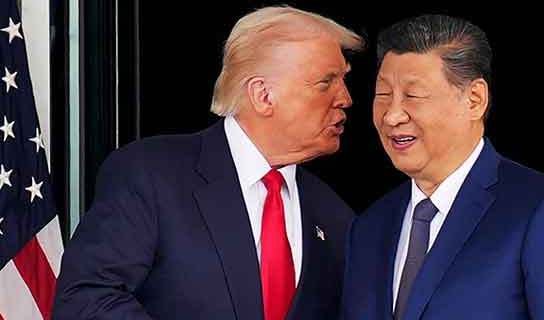
    Trump-Xi Meeting Gains Global Attention as Iran Tensions and Strait of Hormuz Concerns Escalate

    8 hours ago

    Yugcharan News / 13 May 2026

    Global diplomatic and security attention has shifted toward Beijing as former U.S. President Donald Trump arrived in China for high-level discussions with Chinese President Xi Jinping amid escalating tensions linked to the ongoing conflict involving Iran and rising concerns surrounding the Strait of Hormuz.

    The meeting between the two influential leaders comes at a time of increasing geopolitical uncertainty, with energy markets, global trade routes, and international diplomatic alliances facing renewed pressure due to instability in the Middle East.

    According to international media reports, discussions between the United States and China are expected to focus on multiple strategic issues, including trade relations, regional security, energy supply concerns, and efforts aimed at preventing further escalation in the Iran-related conflict.

    The diplomatic engagement is being closely monitored by global financial institutions, defence analysts, and energy markets because of its potential implications for oil prices, maritime security, and broader geopolitical stability.

    Growing Focus on Strait of Hormuz

    One of the major developments preceding the talks was Iran’s reported announcement regarding a revised interpretation of the Strait of Hormuz boundaries. Iranian authorities reportedly stated that they now consider the strategically important waterway to cover a significantly wider operational area than previously defined.

    The statement has raised concerns among international observers due to the Strait of Hormuz’s importance as one of the world’s busiest oil transit routes. A substantial portion of global crude oil shipments passes through the narrow maritime corridor, making any instability in the region highly sensitive for international markets.

    Security experts believe that even rhetorical changes regarding territorial or operational claims in the region can influence shipping patterns, insurance costs, naval deployment strategies, and energy pricing.

    While no immediate disruption to commercial shipping has officially been confirmed, analysts stated that the situation has increased nervousness across international trade and energy sectors.

    U.S.-China Talks Expected to Address Iran Conflict

    Sources familiar with the discussions indicated that the United States is expected to seek China’s diplomatic cooperation in efforts to reduce tensions linked to the ongoing regional conflict involving Iran.

    American officials have publicly argued that Beijing maintains significant influence in the region due to its economic and energy relationships with Tehran. Washington reportedly hopes that China can use its strategic leverage to encourage de-escalation and support diplomatic engagement.

    Ahead of the Beijing meeting, senior U.S. defence officials reportedly told lawmakers that China holds substantial influence over Iran through trade and energy partnerships. Some American lawmakers also alleged that Beijing’s economic ties with Iran and Russia continue to shape global geopolitical alignments.

    Chinese authorities, however, have consistently maintained that they support dialogue, sovereignty, and peaceful political solutions rather than military escalation.

    Observers believe the Trump-Xi talks could become a key diplomatic moment in determining whether major global powers are willing to cooperate on stabilising the Middle East situation despite broader strategic competition between Washington and Beijing.

    Oil Shipments and Maritime Security Under Scrutiny

    The latest developments come amid reports that the United States has intensified restrictions and monitoring efforts linked to Iranian oil shipments allegedly destined for Asian markets, including China.

    Energy analysts stated that any interruption in oil transportation through the Gulf region could have immediate consequences for global crude prices and supply chains.

    Several international shipping firms are reportedly reviewing operational risks associated with routes near the Strait of Hormuz, while maritime security agencies continue to monitor military and naval activity in the region.

    Experts warned that prolonged instability could impact fuel prices, inflation trends, and economic recovery efforts in multiple countries.

    Global markets have historically reacted sharply to developments involving the Strait of Hormuz because of its strategic importance to energy-exporting nations in the Gulf region.

    Reports of Regional Intelligence Coordination

    International reports also suggested that senior intelligence and security officials from regional countries have held coordination meetings amid the evolving conflict scenario.

    According to media reports, the head of Israel’s intelligence agency allegedly travelled to the United Arab Emirates multiple times during the recent military developments involving Iran. The visits were reportedly linked to security coordination and regional diplomatic consultations.

    However, several details regarding such interactions remain officially unverified, and authorities involved have largely refrained from making detailed public statements.

    Middle East analysts noted that regional governments are increasingly attempting to balance security concerns with economic stability, especially given the Gulf’s central role in global trade and energy exports.

    Rising Economic Concerns in the United States

    The geopolitical tensions are also beginning to influence domestic economic discussions in the United States.

    Reports indicated that Trump recently addressed concerns regarding rising inflation, stating that current economic pressures were temporary and linked largely to instability caused by the ongoing conflict.

    Economists believe that oil price volatility and supply-chain uncertainty could place additional pressure on inflation figures worldwide if tensions continue for an extended period.

    At the same time, defence expenditure linked to the regional conflict has reportedly increased significantly. According to international reports citing Pentagon estimates, the financial cost associated with the ongoing military operations has risen sharply over recent weeks.

    Analysts noted that prolonged conflict scenarios often lead to increased fiscal pressure, defence spending, and broader market uncertainty.

    Strategic Importance of Beijing Meeting

    Political observers consider the Beijing summit particularly significant because it occurs during a period when relations between the United States and China remain complex and competitive.

    Trade disputes, technology restrictions, supply-chain rivalry, Taiwan-related tensions, and military positioning in the Indo-Pacific region have all contributed to strained ties between the two countries in recent years.

    Despite these differences, both nations continue to hold major influence over global markets and international diplomacy.

    Experts believe the current situation involving Iran may create limited opportunities for tactical cooperation between Washington and Beijing, especially if both sides view regional instability as harmful to global economic interests.

    Diplomatic analysts also pointed out that China relies heavily on Middle Eastern energy imports, while the United States continues to maintain strong strategic and military interests in the Gulf region.

    This overlapping dependence on regional stability could encourage dialogue, even amid broader geopolitical rivalry.

    Global Markets Watching Closely

    International financial markets remained cautious as investors monitored developments surrounding the Trump-Xi discussions and the broader Middle East situation.

    Energy traders, shipping companies, and multinational corporations are expected to closely assess any signals emerging from the talks, particularly regarding sanctions, trade routes, oil supply continuity, and diplomatic engagement.

    Market experts stated that even symbolic progress in diplomatic communication between major powers could help calm investor sentiment and reduce fears of wider regional instability.

    However, they also warned that uncertainty remains high due to rapidly evolving political and military developments.

    Wider Geopolitical Implications

    The developments surrounding Iran, China, and the United States are increasingly being viewed as part of a larger geopolitical realignment taking shape across multiple regions.

    Experts noted that global powers are now competing not only through military influence but also through energy partnerships, trade corridors, technological control, and diplomatic alliances.

    The current situation has highlighted how regional conflicts can quickly evolve into international strategic concerns involving multiple nations and economic systems.

    As the Beijing meeting continues over the coming days, governments around the world are expected to closely follow the outcomes and assess whether diplomatic engagement can help prevent further escalation in an already fragile geopolitical environment.

    For now, uncertainty surrounding the Strait of Hormuz, oil security, and Middle East stability remains one of the most closely watched global developments of 2026.


    Click here to Read More
    Previous Article
    NEET UG 2026 Cancellation Sparks Nationwide Probe Into Alleged Examination Leak Network
    Next Article
    CBSE Class 12 Results 2026 Declared; Southern Regions Lead While Overall Pass Percentage Declines

    Related International Updates:

    Are you sure? You want to delete this comment..! Remove Cancel

    Comments (0)

      Leave a comment