Search

    Language Settings
    Select Website Language

    GDPR Compliance

    We use cookies to ensure you get the best experience on our website. By continuing to use our site, you accept our use of cookies, Privacy Policy, and Terms of Service.

    Centre Clarifies No Mandatory Work-From-Home or Import Restrictions After PM’s Austerity Appeal

    4 hours ago

    Yugcharan News / 13 May 2026

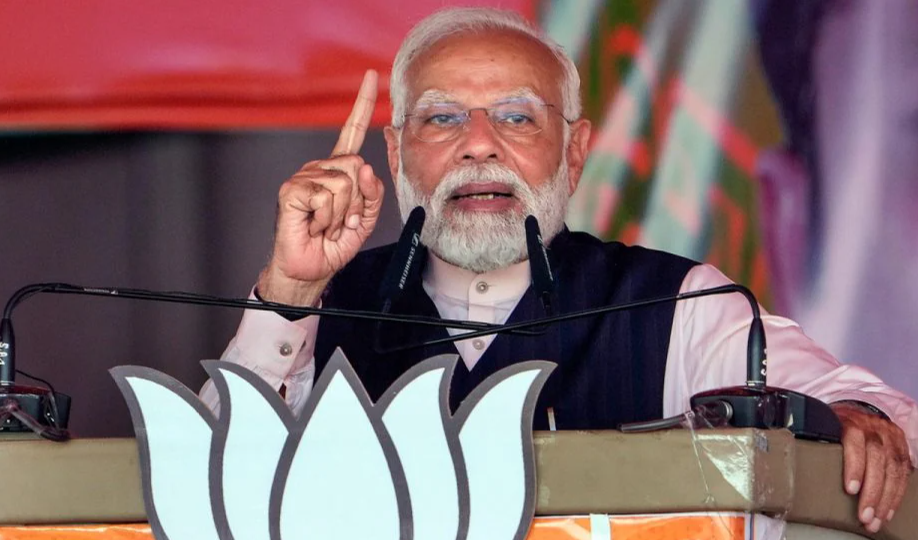
    The Central government has clarified that there are currently no plans to impose mandatory work-from-home measures or introduce formal import restrictions following Prime Minister Narendra Modi’s recent appeal urging citizens to adopt economic restraint amid rising global energy concerns.

    The clarification came after public discussions and market speculation intensified over remarks made by the Prime Minister during a recent national address, where he encouraged citizens to reduce fuel consumption and avoid non-essential spending for a temporary period. The comments had triggered widespread debate across business sectors, social media platforms, and financial markets regarding the possibility of stricter austerity-related measures.

    According to officials familiar with the matter, the government has not issued any advisory requiring companies to shift employees back to work-from-home arrangements. Authorities also reportedly stated that there is no proposal under consideration to introduce import bans or restrictions on consumer goods at this stage.

    Government Seeks to Ease Concerns

    The clarification is being viewed as an attempt to calm concerns among businesses, investors, and consumers after speculation emerged that the Centre could adopt aggressive cost-control measures in response to volatile global oil markets and geopolitical uncertainty.

    Officials indicated that the Prime Minister’s comments were intended as a broader public appeal encouraging responsible consumption rather than a policy announcement.

    In recent days, discussions surrounding possible austerity measures had gained momentum after rising crude oil prices created fears of increased inflationary pressure on the Indian economy. Market observers noted that several sectors, including aviation, travel, logistics, and retail, witnessed cautious investor sentiment following the Prime Minister’s remarks.

    However, government representatives emphasized that there is no immediate move toward regulatory restrictions affecting travel, imports, or workplace operations.

    Debate Around Work-From-Home Intensifies

    One of the key issues that emerged after the Prime Minister’s address was speculation regarding a possible return of large-scale work-from-home systems similar to those seen during earlier global crises.

    Some social media users and market commentators suggested that reducing office commuting could help lower national fuel consumption. The discussion quickly gained traction online, with several corporate employees and industry professionals debating the feasibility of such a move.

    However, government sources clarified that no nationwide directive regarding remote work is being planned.

    Industry experts noted that while hybrid work models remain common in sectors such as information technology and digital services, a mandatory shift back to remote work could create operational challenges for multiple industries that have already resumed full-scale office functioning.

    Corporate analysts also stated that businesses are currently focused on maintaining productivity and economic growth while balancing employee flexibility, making large-scale policy intervention unlikely unless economic conditions worsen significantly.

    Import Restrictions Not Under Consideration

    Authorities also addressed concerns over potential import curbs after the Prime Minister urged citizens to avoid unnecessary expenditure on imported goods during the current period of global uncertainty.

    According to officials, the statement should not be interpreted as a sign of impending trade restrictions or economic controls.

    Trade analysts believe such clarification was necessary because India remains heavily dependent on imports for several critical sectors, including energy, electronics, industrial machinery, and consumer products. Any formal import restriction could potentially affect supply chains, manufacturing operations, and market pricing.

    Economic experts observed that the government’s current approach appears focused more on encouraging voluntary conservation and responsible consumption rather than enforcing restrictions through policy measures.

    Several analysts also pointed out that India’s economic recovery and manufacturing growth remain closely linked to stable global trade relationships, making large-scale import barriers unlikely under present circumstances.

    Markets Reacted to Initial Remarks

    The Prime Minister’s earlier comments had reportedly led to temporary volatility in certain sectors of the stock market.

    Travel and tourism-related companies witnessed selling pressure amid concerns that calls for reduced foreign travel and lower fuel usage could affect consumer demand. Airline operators, travel booking platforms, and hospitality-linked businesses were among the sectors closely monitored by investors.

    Market participants interpreted the Prime Minister’s appeal as a sign that authorities were preparing for possible economic stress linked to elevated crude oil prices and geopolitical disruptions affecting energy supply routes.

    However, analysts said the government’s latest clarification may help stabilize investor sentiment by confirming that no immediate restrictive measures are planned.

    Financial experts noted that markets often react strongly to uncertainty, particularly during periods of geopolitical instability and inflationary pressure. Clear communication from policymakers, they said, plays an important role in reducing speculation-driven volatility.

    Rising Oil Prices Remain Key Concern

    The broader concern surrounding the government’s appeal continues to be linked to global crude oil prices, which have remained elevated due to ongoing geopolitical tensions affecting international energy supply chains.

    India, being one of the world’s largest importers of crude oil, remains vulnerable to fluctuations in global energy markets. Higher oil prices can impact transportation costs, inflation, industrial production, and household expenses across the country.

    Economists stated that appeals for fuel conservation are not unusual during periods of energy uncertainty and are often intended to encourage public awareness regarding economic challenges.

    Some experts also noted that voluntary reduction in discretionary spending and fuel consumption could help ease pressure on import bills without requiring direct intervention from authorities.

    Industry Leaders Seek Stability and Clarity

    Business groups and industry associations have welcomed the government’s clarification, saying it helps reduce uncertainty for companies planning operations and investments.

    Corporate leaders across sectors reportedly expressed concern earlier over speculation surrounding potential policy shifts affecting office operations, imports, and consumer demand.

    Several business analysts emphasized that policy predictability remains essential for maintaining economic confidence, particularly at a time when global markets are already dealing with inflationary pressure and supply-chain instability.

    Industry observers also stated that India’s economic outlook remains relatively stable compared to many global economies, though risks linked to energy prices continue to be closely monitored.

    Public Reaction Mixed Across Social Media

    The Prime Minister’s appeal triggered a wide range of reactions online, with some users supporting the message as a call for economic responsibility during a difficult global environment. Others questioned whether reduced spending and travel could negatively affect industries that are still recovering from earlier slowdowns.

    Social media discussions also focused heavily on the possibility of work-from-home measures returning, especially among professionals in metropolitan cities where commuting costs have risen significantly in recent months.

    However, after the government clarification, much of the speculation regarding mandatory restrictions appeared to ease.

    Political observers noted that public messaging during periods of economic stress often leads to multiple interpretations, especially when linked to sensitive subjects such as inflation, fuel prices, and consumer spending.

    Experts Say Situation Requires Monitoring

    Economic analysts believe the coming months will be crucial in determining whether global oil prices stabilize or continue rising.

    If international energy markets cool down, pressure on inflation and fuel-related costs may gradually reduce, helping restore consumer confidence across multiple sectors. However, prolonged geopolitical uncertainty could continue affecting travel, logistics, and import-dependent industries.

    For now, the Centre’s position indicates that no compulsory austerity framework is being introduced, and that recent remarks should be viewed as advisory rather than regulatory in nature.


    Analysts added that maintaining balance between economic caution and consumer confidence will remain important as India navigates global market uncertainty in the months ahead.

    Click here to Read More
    Previous Article
    India’s Outbound Travel Industry Faces Uncertainty After PM’s Appeal to Reduce Foreign Trips
    Next Article
    Congress Leadership Yet to Finalise Kerala Chief Minister Choice Amid Internal Consultations

    Related National Updates:

    Are you sure? You want to delete this comment..! Remove Cancel

    Comments (0)

      Leave a comment