Search

    Language Settings
    Select Website Language

    GDPR Compliance

    We use cookies to ensure you get the best experience on our website. By continuing to use our site, you accept our use of cookies, Privacy Policy, and Terms of Service.

    Lok Sabha Proceedings Disrupted Over West Asia Crisis; Motion on Speaker’s Removal Not Taken Up

    2 months ago

    Yugcharan News / 10 March 2026

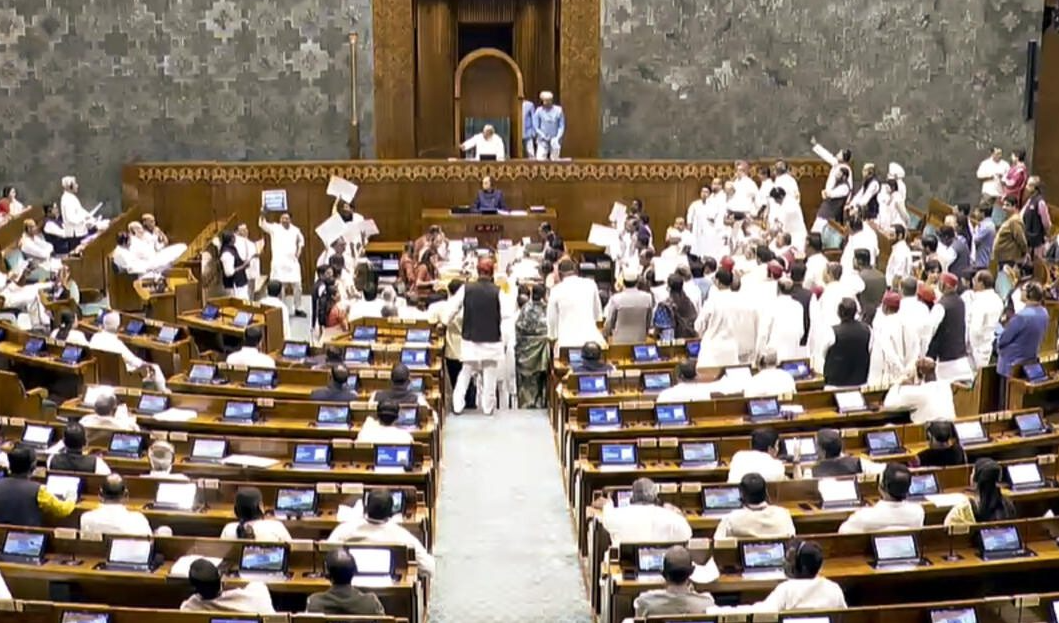
    The Lok Sabha witnessed repeated disruptions during the ongoing Budget Session on Monday as sharp disagreements between the government and the Opposition over the situation in West Asia dominated parliamentary proceedings. Amid persistent protests and adjournments, a resolution seeking the removal of Lok Sabha Speaker Om Birla was not taken up for discussion.

    The session, which resumed after a short break, quickly turned turbulent as Opposition members demanded an extensive debate on the evolving crisis in West Asia and its potential implications for Indian citizens living in the region. According to parliamentary sources, nearly 10 million Indians currently reside and work across countries in the West Asian region, raising concerns about their safety and economic stability amid ongoing geopolitical tensions.


    Opposition Pushes for Detailed Discussion

    Opposition parties insisted that Parliament must hold a comprehensive discussion on the situation in West Asia, arguing that the issue has significant implications for India’s foreign policy, energy security, and the welfare of Indian nationals abroad.

    Members from several Opposition parties repeatedly raised slogans and demanded that the government allocate time for a structured debate in the Lok Sabha. They argued that the escalating conflict in the region could affect remittances, employment opportunities, and the safety of Indian workers and professionals living in Gulf countries and other parts of West Asia.

    Parliamentary proceedings were repeatedly interrupted as Opposition lawmakers gathered in the well of the House to press their demand for a full-fledged debate.

    According to sources familiar with the proceedings, the Opposition also sought clarification from the government regarding contingency measures in place for the evacuation or assistance of Indian citizens if the situation in the region worsens.


    Government Maintains Position After Minister’s Statement

    The government, however, appeared reluctant to allow a separate extended discussion on the matter. Officials indicated that External Affairs Minister S. Jaishankar had already made a detailed suo motu statement in both Houses of Parliament addressing the developments in West Asia.

    Government representatives reportedly maintained that the minister’s statement had provided adequate information regarding India’s diplomatic stance and the steps being taken to monitor the situation.

    Parliamentary affairs officials suggested that since the issue had already been addressed through the minister’s briefing, the government did not consider it necessary to allocate additional time for another debate during the current schedule of the Budget Session.

    This position, however, did not satisfy Opposition members, who insisted that the matter required deeper parliamentary scrutiny and a formal discussion involving members from all parties.


    Repeated Adjournments in the House

    Due to the escalating protests, the Lok Sabha had to be adjourned multiple times during the day. The Speaker attempted to restore order and proceed with scheduled legislative business, but the ongoing commotion made it difficult to continue normal proceedings.

    As a result, several items listed on the day’s agenda could not be taken up.

    Among the most significant matters that remained pending was a resolution submitted by Opposition members seeking the removal of Speaker Om Birla. The resolution was expected to be taken up for consideration during the session, but repeated disruptions prevented the House from discussing it.

    Parliamentary experts note that such resolutions require a structured discussion in the House before any further procedural steps can be taken. With the House repeatedly adjourned, the resolution could not progress beyond the listing stage.


    Political Tensions Escalate in Parliament

    The developments highlight the increasingly tense political atmosphere in Parliament during the ongoing Budget Session. In recent days, multiple issues—including international developments, domestic economic concerns, and electoral matters—have triggered heated exchanges between the government and Opposition parties.

    Political observers say the West Asia issue has become particularly sensitive due to the large Indian diaspora in the region and India’s strategic interests there.

    India maintains strong diplomatic, economic, and energy ties with several West Asian countries. The region is also one of the largest sources of crude oil imports for India and hosts millions of Indian workers who contribute significantly to India’s economy through remittances.

    Given these factors, any escalation in regional conflict has the potential to affect India both economically and diplomatically.


    Concerns Over Indian Citizens Abroad

    Opposition members emphasized that the safety of Indian citizens living in West Asia should be treated as a top national priority.

    According to various estimates, millions of Indians work across Gulf nations and other parts of the region in sectors such as construction, healthcare, hospitality, and information technology.

    These workers send billions of dollars in remittances back to India each year, playing a critical role in supporting families and contributing to the country’s foreign exchange reserves.

    Opposition leaders argued that Parliament must be fully informed about the government’s preparedness to handle potential emergencies involving Indian citizens abroad.

    Some members also sought details regarding evacuation plans, diplomatic engagements with regional governments, and coordination with international partners to ensure the safety of Indian nationals.


    Government Monitoring Situation Closely

    Government officials have indicated that Indian diplomatic missions in West Asia are closely monitoring developments and remain in regular contact with Indian citizens and community organisations in the region.

    Sources within the government have suggested that contingency planning is underway in case evacuation or emergency assistance becomes necessary.

    India has previously conducted large-scale evacuation operations during regional conflicts. Notable examples include rescue missions carried out during crises in countries such as Yemen, Lebanon, and Kuwait in earlier decades.

    Officials say lessons from those operations continue to guide contingency planning for protecting Indian citizens abroad.


    Impact on Parliamentary Agenda

    The disruptions in the Lok Sabha have also affected the broader legislative agenda of the Budget Session.

    Parliament is expected to consider several key financial and legislative matters during the session, including discussions related to government spending, policy initiatives, and economic reforms.

    However, frequent disruptions have slowed the progress of parliamentary business.

    Political analysts note that prolonged stalemates between the government and Opposition can significantly delay legislative processes, especially when contentious political issues dominate the debate.

    The ongoing standoff over the West Asia crisis could continue to influence parliamentary proceedings in the coming days if consensus on discussion formats is not reached.


    Parliamentary Tradition and Debate

    Experts on parliamentary procedure point out that debates on international issues have historically been part of India’s legislative tradition. Major geopolitical developments affecting Indian interests have often been discussed in both Houses of Parliament.

    Such discussions allow elected representatives to raise concerns, seek clarification from the government, and express differing viewpoints on foreign policy.

    Observers say the current disagreement reflects broader political differences over how Parliament should address urgent global developments.


    What Happens Next

    It remains uncertain whether the government will eventually agree to allocate time for a formal debate on the West Asia situation.

    Parliamentary insiders suggest that informal discussions between government leaders and Opposition representatives may take place to find a possible compromise that allows the House to function smoothly.

    Meanwhile, the resolution seeking the removal of the Speaker may only be considered once normal proceedings resume and the House is able to conduct scheduled business.

    As the Budget Session continues, the coming days will likely determine whether political consensus can be achieved to move forward with legislative work while addressing concerns raised by Opposition members.

    For now, the West Asia crisis has emerged as one of the central issues shaping parliamentary debate in India, reflecting both the geopolitical significance of the region and the domestic political dynamics within Parliament.


    Click here to Read More
    Previous Article
    Mojtaba Khamenei Assumes Iran’s Supreme Leadership Amid Reports of Personal Losses During Ongoing Conflict
    Next Article
    Government Indicates Petrol Prices Unlikely to Rise Despite Surge in Global Crude Oil

    Related Politics Updates:

    Are you sure? You want to delete this comment..! Remove Cancel

    Comments (0)

      Leave a comment