Search

    Language Settings
    Select Website Language

    GDPR Compliance

    We use cookies to ensure you get the best experience on our website. By continuing to use our site, you accept our use of cookies, Privacy Policy, and Terms of Service.

    Mojtaba Khamenei Assumes Iran’s Supreme Leadership Amid Reports of Personal Losses During Ongoing Conflict

    2 months ago

    Yugcharan News / 10 March 2026

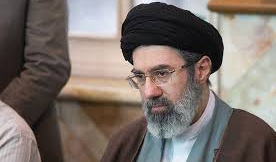
    Iran is undergoing a significant political transition as Mojtaba Khamenei, the son of long-time Supreme Leader Ali Khamenei, has reportedly been selected to assume the country’s highest religious and political position. His rise to power comes during a period of intense geopolitical tension and armed conflict in the region, with several reports indicating that members of his immediate family were among those affected during recent military strikes linked to the ongoing crisis involving Iran, Israel, and the United States.

    The developments mark a crucial moment in Iran’s contemporary history, as leadership changes at the highest level coincide with escalating regional instability and international scrutiny.


    Leadership Transition in Tehran

    According to multiple international reports, an 88-member clerical body responsible for selecting Iran’s Supreme Leader convened and voted to appoint Mojtaba Khamenei as the country’s new top authority. While details of the internal voting process were not publicly disclosed, sources familiar with the matter suggested that the decision followed a period of uncertainty surrounding the leadership structure after the death of former Supreme Leader Ali Khamenei.

    The Supreme Leader of Iran holds extensive powers under the country’s political system, exercising ultimate authority over the armed forces, judiciary, state broadcasting, and many key strategic decisions. The role is widely considered the most powerful office in the Islamic Republic’s governance framework.

    Observers say Mojtaba Khamenei had long been viewed as an influential figure within Iran’s political and religious circles. Although he did not hold a formal executive position comparable to government ministers or the president, analysts believe he played an important behind-the-scenes role in shaping political alliances and maintaining connections with powerful institutions within the country.

    Experts on Iranian politics note that his emergence as the new Supreme Leader may reflect continuity within the existing power structure rather than a sudden shift in ideological direction.


    Reports of Family Losses During the Conflict

    At the same time as the leadership transition, several reports circulating in international and regional media claim that Mojtaba Khamenei has suffered personal losses during the ongoing military conflict in the region.

    According to these reports, members of his immediate family were allegedly killed in airstrikes that occurred during the past few weeks. Among those reported to have died were his wife and one of his sons. Some media outlets have also suggested that his mother may have been among the casualties during earlier strikes.

    However, independent verification of these claims remains limited. International news agencies and observers have indicated that the exact circumstances and identities of those affected have not been fully confirmed by official authorities.

    There are also unverified claims that several extended family members—including relatives from the wider Khamenei family network—may have been affected by the conflict. Some reports mention additional relatives such as a sibling, nephew, niece, and a relative by marriage.

    Officials have not publicly released comprehensive details about these reports, and the exact number of family members reportedly killed remains unclear. Analysts caution that information emerging during active conflict can often be difficult to independently verify.


    Background of Mojtaba Khamenei

    Mojtaba Khamenei, believed to be in his mid-50s, is the second son of the late Ali Khamenei. Over the years he has been widely described by analysts as an influential cleric with strong connections within Iran’s religious establishment and security institutions.

    Though he maintained a relatively low public profile compared to senior government officials, experts say he gradually built influence within key networks linked to the country’s political and military leadership. Observers have suggested that his influence extended into strategic institutions and economic entities that operate alongside official government structures.

    Several analysts believe this network of influence contributed to his eventual elevation to the role of Supreme Leader.

    Political experts have long debated the possibility of leadership succession within Iran’s ruling establishment, particularly as Ali Khamenei’s age advanced. Some observers previously speculated that Mojtaba Khamenei could emerge as a potential successor due to his proximity to the existing power structure.

    However, Iranian officials had not publicly confirmed any succession plan before the recent developments.


    International Reactions and Strategic Implications

    The leadership change has drawn attention from governments and analysts worldwide. Some international observers believe the transition could influence the direction of Iran’s foreign policy, especially during a period marked by heightened tensions in the Middle East.

    According to diplomatic observers, countries such as China and Russia have reportedly acknowledged the leadership change and expressed cautious support for maintaining stability in the region.

    Meanwhile, statements from political figures in Western countries suggest continued scrutiny of Iran’s leadership and policies. Some officials have indicated that future diplomatic relations may depend on how the new leadership approaches ongoing conflicts and nuclear negotiations.

    Analysts note that global reactions remain measured, as governments assess the implications of the leadership change.


    Conflict Continues Despite Leadership Shift

    The leadership transition comes against the backdrop of continuing military operations and escalating tensions involving Iran and its regional adversaries.

    Reports indicate that military strikes and counter-operations have continued across parts of the Middle East in recent weeks. According to diplomatic sources and international observers, attacks targeting strategic infrastructure and military positions have been reported in several locations.

    These developments have intensified concerns about the humanitarian impact of the conflict.

    Iran’s representative at the United Nations reportedly indicated that civilian casualties have exceeded a thousand, with thousands more injured since hostilities escalated. Independent verification of these figures remains challenging, though humanitarian organisations have expressed concern over the rising toll.

    Meanwhile, reports from international sources indicate that military personnel from multiple countries have also been affected during the conflict, further underscoring the widening scope of the crisis.


    Humanitarian Concerns and Regional Stability

    Human rights observers and international organisations have warned that the ongoing conflict could lead to further humanitarian challenges across the region.

    In addition to casualties, the crisis has reportedly disrupted infrastructure, displaced civilians, and strained emergency services in several affected areas. Relief organisations have called for restraint and renewed diplomatic engagement to prevent further escalation.

    Experts say that leadership transitions during active conflicts often add an additional layer of uncertainty to geopolitical dynamics.

    For Iran, the new Supreme Leader’s approach to diplomacy, military strategy, and domestic governance will likely play a key role in shaping the country’s next phase.


    Political Future Under the New Leadership

    Political analysts believe Mojtaba Khamenei’s leadership will be closely watched both within Iran and internationally.

    Some experts suggest that continuity in policy may be expected in the short term, particularly in areas related to national security and regional alliances. Others argue that the leadership transition could open space for gradual adjustments in governance and diplomatic strategy.

    Inside Iran, the Supreme Leader’s role carries enormous influence over political institutions, meaning decisions made by the new leader could affect everything from economic policy to foreign relations.

    Observers say the coming months will be critical in determining how the new leadership consolidates authority and responds to the ongoing crisis.


    A Pivotal Moment in Iran’s Modern History

    The appointment of Mojtaba Khamenei as Iran’s Supreme Leader marks a historic moment for the country’s political system. It also comes at a time when the region is facing heightened geopolitical tensions and humanitarian concerns.

    As reports continue to emerge regarding both the leadership transition and the personal losses reportedly experienced by the new leader, global attention remains focused on Tehran.

    With the conflict showing little sign of immediate resolution, analysts say the decisions taken by Iran’s new leadership in the coming months could significantly shape the trajectory of regional politics and international relations.

    For now, the world watches closely as Iran enters a new chapter under its latest Supreme Leader while navigating one of the most challenging periods in its recent history.


    Click here to Read More
    Previous Article
    Scientists Urge Review of Project Cheetah, Suggest Ending Import of African Cheetahs
    Next Article
    Lok Sabha Proceedings Disrupted Over West Asia Crisis; Motion on Speaker’s Removal Not Taken Up

    Related International Updates:

    Are you sure? You want to delete this comment..! Remove Cancel

    Comments (0)

      Leave a comment