Search

    Language Settings
    Select Website Language

    GDPR Compliance

    We use cookies to ensure you get the best experience on our website. By continuing to use our site, you accept our use of cookies, Privacy Policy, and Terms of Service.

    Pakistan–Afghanistan Tensions Escalate Amid Air Strikes, Calls for Dialogue and Global Concern

    2 months ago

    Yugcharan News / 28 February 2026

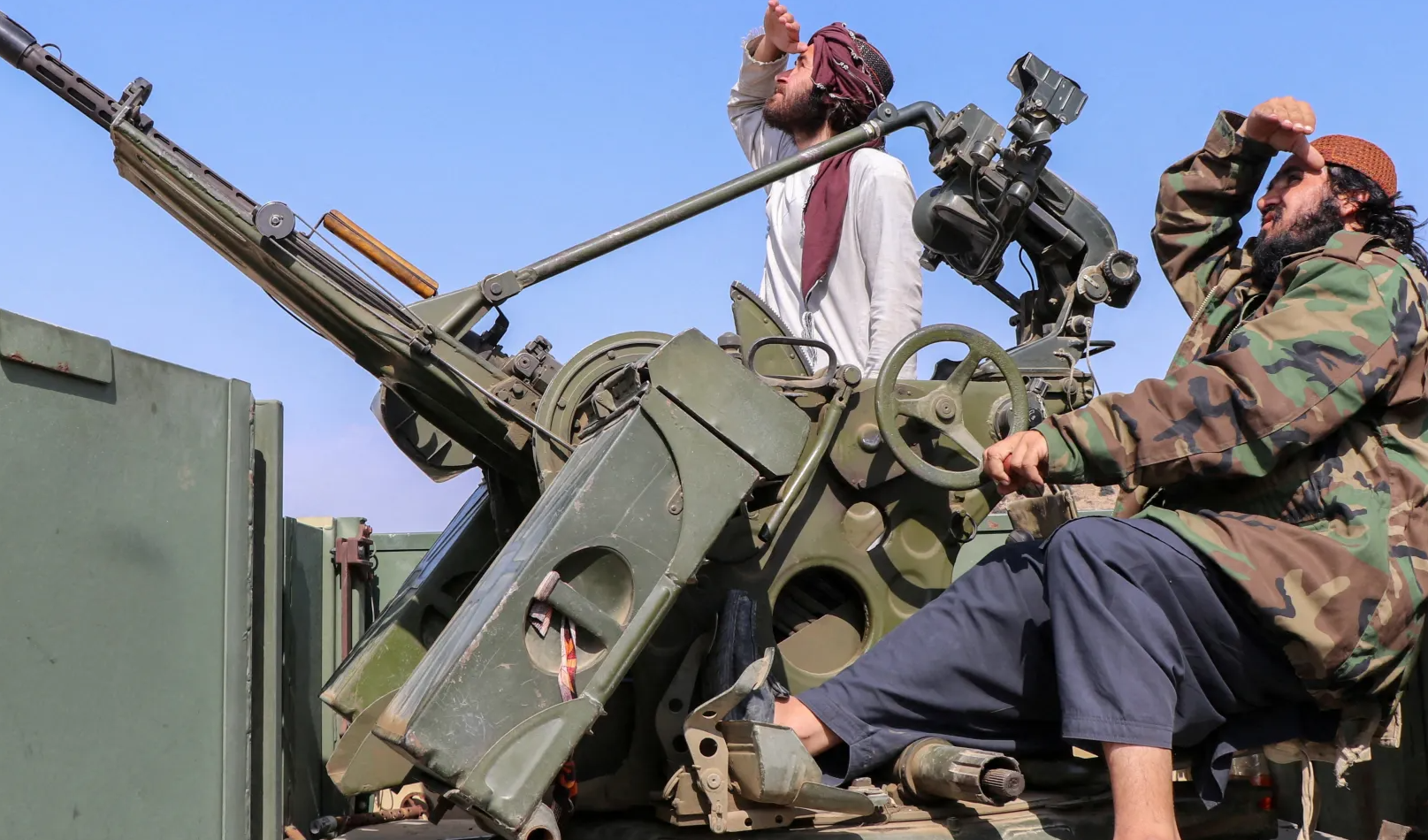
    Tensions between Pakistan and Afghanistan escalated sharply over the past two days following a series of cross-border military actions, prompting international concern and renewed calls for restraint. What began as retaliatory strikes along disputed border areas has now developed into one of the most serious confrontations between the two neighbours in recent years, raising fears of a wider regional instability.

    According to official statements from Islamabad, Pakistan carried out coordinated aerial operations targeting multiple locations inside Afghanistan late on Friday. The actions followed what Pakistani authorities described as attacks on their border personnel a night earlier. The situation has since drawn reactions from global leaders and international organisations, even as Afghan authorities indicated a willingness to pursue diplomatic engagement.


    Air Operations and Military Claims

    Pakistan’s defence establishment confirmed that its air force conducted strikes on several sites across Afghanistan, including locations near major urban centres. Officials characterised the targets as military installations and positions allegedly linked to armed groups operating along the border.

    A spokesperson for Pakistan’s military stated that more than 20 locations were hit during the operation, which Islamabad has described as a defensive response to repeated incidents along the frontier. According to these claims, the strikes were aimed at neutralising what Pakistan alleges are armed elements responsible for attacks on its security forces and civilians in recent months.

    On Saturday, Pakistan’s Information Minister Attaullah Tarar said that the ongoing military action had resulted in significant casualties among Afghan-based armed groups. He claimed that close to 300 fighters affiliated with the Afghan Taliban administration and allied militant factions had been killed, with several hundred more injured. The minister also stated that dozens of military posts had been destroyed or seized and that armoured vehicles and equipment were rendered inoperable.

    These figures, however, could not be independently verified, and Afghan authorities have not publicly confirmed the scale of losses described by Islamabad.


    Afghanistan Seeks Diplomatic Engagement

    In contrast to the hardline tone emerging from Pakistan’s defence leadership, officials in Kabul struck a more conciliatory note. Afghanistan’s interim administration said it was seeking dialogue to de-escalate the situation and avoid further civilian harm.

    A spokesperson for the Afghan government said that continued hostilities would only worsen humanitarian conditions in border regions already facing economic hardship and displacement. The statement emphasised that Afghanistan preferred diplomatic channels to resolve disputes and called on regional partners to support mediation efforts.

    Local reports from eastern Afghanistan suggested that some areas near border crossings experienced disruptions following the strikes, including damage to infrastructure used by civilians and traders. Humanitarian groups have expressed concern over the potential impact on cross-border movement and aid delivery if the situation deteriorates further.


    Civilian Impact and Security Concerns

    The latest escalation has raised alarm over the safety of civilian populations on both sides of the border. In Pakistan’s Khyber Pakhtunkhwa region, funeral processions were held for security personnel killed in recent clashes. Images from the area showed local residents attending last rites, underscoring the human cost of the conflict.

    Afghan sources, meanwhile, reported heightened fear among residents in affected provinces, with families relocating temporarily due to uncertainty over further air activity. While officials from both sides insist that military actions are aimed at armed elements, the proximity of operations to populated areas has intensified concerns about unintended consequences.

    Security analysts note that the Pakistan–Afghanistan border has long been volatile, with mutual accusations over militant movement and territorial violations. However, the scale and intensity of the current exchange mark a significant departure from previous episodes of tension.


    Pakistan’s Position and Official Messaging

    Pakistan’s Defence Minister Khawaja Asif described the situation as a point where, in his words, patience had been exhausted. In public remarks, he indicated that Pakistan viewed recent Afghan actions as a direct challenge to its sovereignty and security.

    Officials in Islamabad have repeatedly alleged that armed groups operating from Afghan territory have carried out attacks inside Pakistan. Kabul has denied providing support to such groups, stating that it does not allow its soil to be used against neighbouring countries.

    The Pakistani government maintains that its actions are limited, targeted, and necessary for national defence. At the same time, political observers within Pakistan have cautioned against a prolonged confrontation, pointing to economic pressures and the risk of diplomatic isolation.


    International Reactions and Global Concern

    The unfolding situation has drawn attention from the international community, with several global actors urging restraint. The United Nations expressed deep concern over the escalation and its potential humanitarian consequences.

    UN Secretary-General António Guterres, through his spokesperson, called for an immediate cessation of hostilities and encouraged both sides to resolve their differences through diplomatic means. The UN also highlighted reports of incidents affecting civilian facilities near border crossings, noting the vulnerability of displaced populations.

    Meanwhile, comments from the United States added another dimension to the evolving narrative. U.S. President Donald Trump remarked that he maintained a positive relationship with Pakistan and spoke favourably of its current leadership. Responding to questions about possible U.S. intervention, Trump indicated that he respected Pakistan’s leadership and did not signal any immediate diplomatic involvement.

    These remarks sparked discussion among regional analysts, with some interpreting them as a sign of Washington’s reluctance to play an active mediating role at this stage.


    Regional and Strategic Implications

    The escalation comes at a sensitive time for South and Central Asia, where regional stability remains fragile due to ongoing conflicts and economic uncertainty. Neighbouring countries such as Iran, China, and Russia have reportedly been monitoring the situation closely, with diplomatic sources suggesting that some may be open to facilitating dialogue if tensions persist.

    Experts warn that sustained military confrontation could disrupt trade routes, refugee movement, and counter-terrorism coordination in the region. Pakistan and Afghanistan share deep economic and social ties, particularly in border areas where communities are interlinked by family and commerce.

    There is also concern that militant groups could exploit the instability to strengthen their presence, undermining security efforts on both sides.


    Historical Context of Strained Relations

    Relations between Pakistan and Afghanistan have fluctuated for decades, shaped by border disputes, refugee flows, and differing security priorities. While the two sides have cooperated at various points, mistrust has remained a constant feature.

    The return of the Taliban to power in Kabul altered regional dynamics, initially raising hopes in Islamabad of improved coordination. However, subsequent incidents along the border and divergent expectations have gradually eroded that optimism.

    Analysts note that the current confrontation reflects deeper structural issues rather than a single trigger. Without sustained diplomatic engagement and confidence-building measures, they warn, cycles of retaliation are likely to continue.


    Outlook and the Road Ahead

    As of Saturday, military operations appeared ongoing, though neither side has formally announced further escalation. Diplomatic observers believe the coming days will be critical in determining whether the situation stabilises or spirals further.

    The international community’s response, particularly from major regional stakeholders, may influence the trajectory of the crisis. Calls for dialogue from Kabul and concern voiced by global institutions suggest there remains space for de-escalation, provided both sides are willing to step back from confrontation.


    For now, civilians along the border continue to bear the brunt of uncertainty, as governments exchange claims and counterclaims. Whether diplomacy can prevail over force will likely shape not only bilateral relations but also the broader security landscape of the region in the months ahead.

    Click here to Read More
    Previous Article
    समकालीन मीडिया रुझान : अवसर और चुनौतियाँ पर एक दिवसीय सेमिनार आज
    Next Article
    राजस्थान विज्ञान महोत्सव नवाचार, विज्ञान और विकसित भारत की ओर एक सशक्त कदम,कल MNIT में मैराथन के साथ होगा समापन

    Related International Updates:

    Are you sure? You want to delete this comment..! Remove Cancel

    Comments (0)

      Leave a comment