Search

    Language Settings
    Select Website Language

    GDPR Compliance

    We use cookies to ensure you get the best experience on our website. By continuing to use our site, you accept our use of cookies, Privacy Policy, and Terms of Service.

    Reservation Hatao Andolan’ Draws Crowd at Jantar Mantar as Delhi Police Shift Approved Venue

    10 hours ago

    Yugcharan News / 21-08-2026

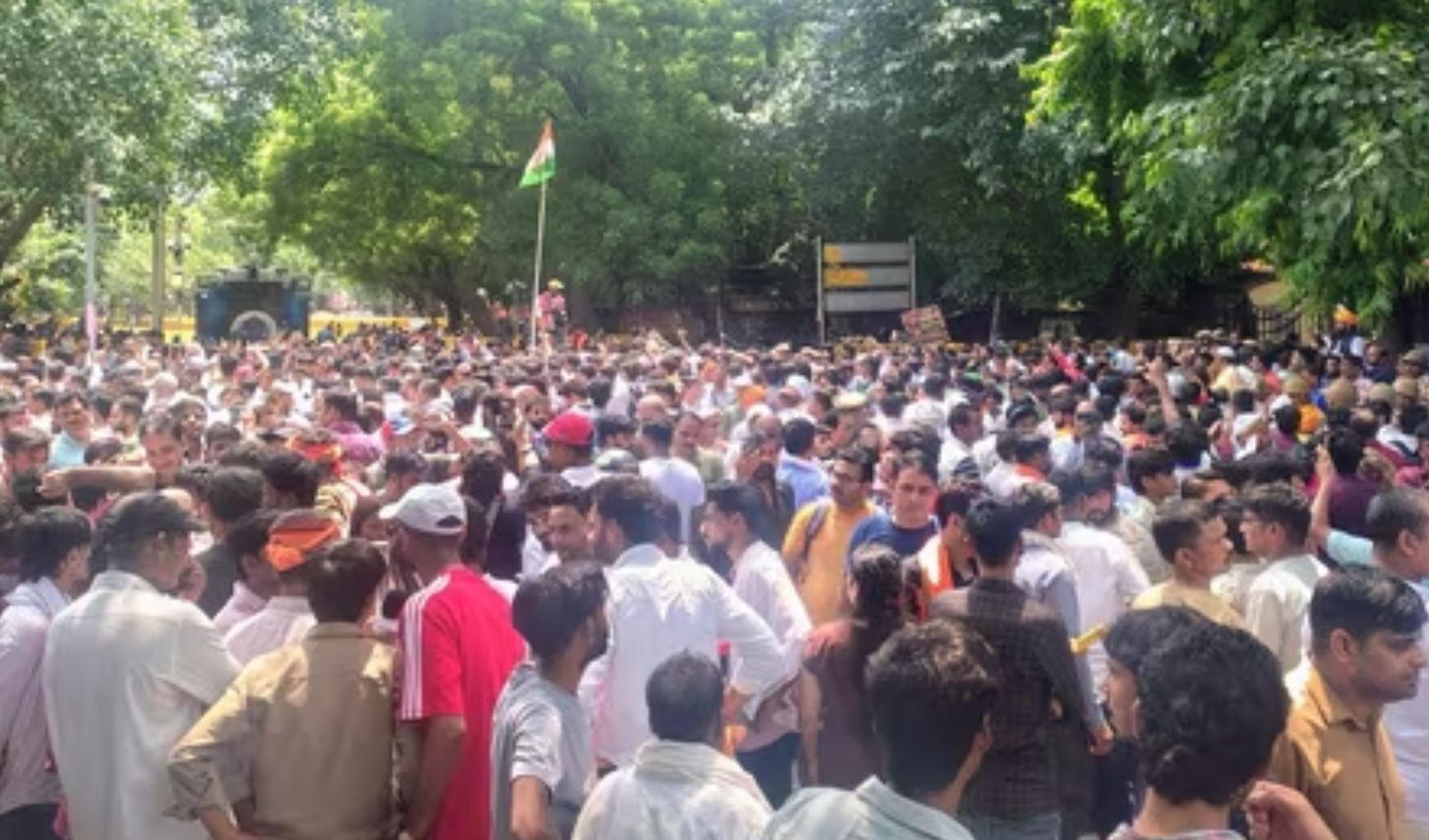
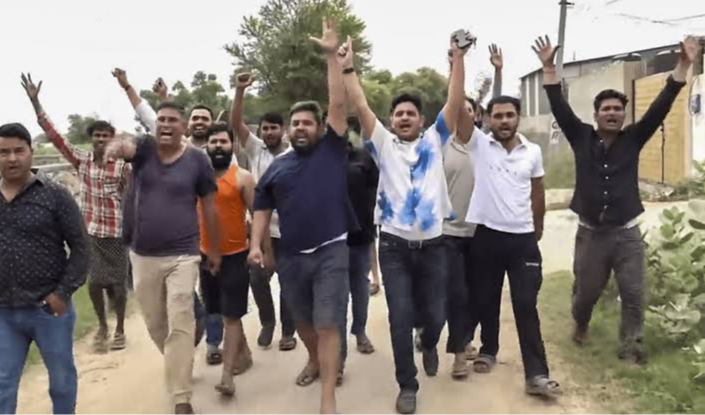
    New Delhi: A protest campaign calling for major changes to India’s caste-based reservation system gathered momentum in the national capital on Friday, with demonstrators assembling at Jantar Mantar despite the Delhi Police issuing permission for the agitation to be held at Ramlila Maidan.

    The protest, being organised under the banner of the ‘Reservation Hatao Andolan’ (RHA), has emerged from a wider digital campaign challenging the continuation of caste-based quotas in educational institutions and government employment. Organisers have argued that admissions and recruitment should increasingly be determined on the basis of merit and individual circumstances rather than caste-based categories.

    The developments in Delhi came amid disagreement between organisers and the police over the approved venue. According to the information available from the protest organisers and the police communication cited in reports, permission was granted for a gathering at Ramlila Maidan, with attendance capped at 500 people and the permitted period extending until 4 pm.

    However, a sizeable number of protesters were reported to have gathered at Jantar Mantar, a location that has traditionally been associated with demonstrations on political, social and public-policy issues.

    Dispute over protest venue

    The change in venue became one of the central issues surrounding Friday’s demonstration. The organisers claimed that they had originally sought permission to hold the protest at Jantar Mantar and questioned why the location was changed on the day of the demonstration.

    In a statement shared on social media, the RHA alleged that the venue was changed at short notice and argued that restricting the number of participants would limit the visibility of the campaign. The organisers maintained that their request had been made well in advance.

    The police position, as cited in the available report, was that the permission issued for Ramlila Maidan was subject to conditions designed to maintain public order. The NOC reportedly allowed a maximum of 500 people to assemble and stated that the police had no objection to the protest from a law-and-order perspective, provided the prescribed conditions were followed.

    The difference between the approved venue and the location where demonstrators assembled consequently became an important part of the day’s developments.

    What the Reservation Hatao Andolan is demanding

    The campaign advocates significant changes to the existing reservation framework. One of its principal demands is that admissions to educational institutions and recruitment for public-sector employment should be based primarily on merit and talent rather than caste-based reservation.

    The movement has also raised the issue of recording caste information in official and educational processes. Organisers have proposed a framework under which individuals would not be required to disclose caste details in government forms, job applications and educational procedures.

    The campaign has described this approach as part of a broader idea of “One Nation, One Identity.”

    Another proposal from the movement is that government assistance and affirmative measures should be determined by socio-economic or individual circumstances. The organisers have referred to factors such as financial condition, disability, orphanhood and the status of being a child of a martyr as possible criteria for support.

    These proposals challenge a reservation structure that has developed over decades and is closely linked to India's constitutional framework, social inequalities and historical discrimination. Any substantial change to the system would therefore involve complex legal, constitutional and political considerations.

    UGC rules also become part of protest

    The demonstration was not limited to the question of caste-based reservation. Protesters at Jantar Mantar also raised demands concerning rules issued by the University Grants Commission (UGC).

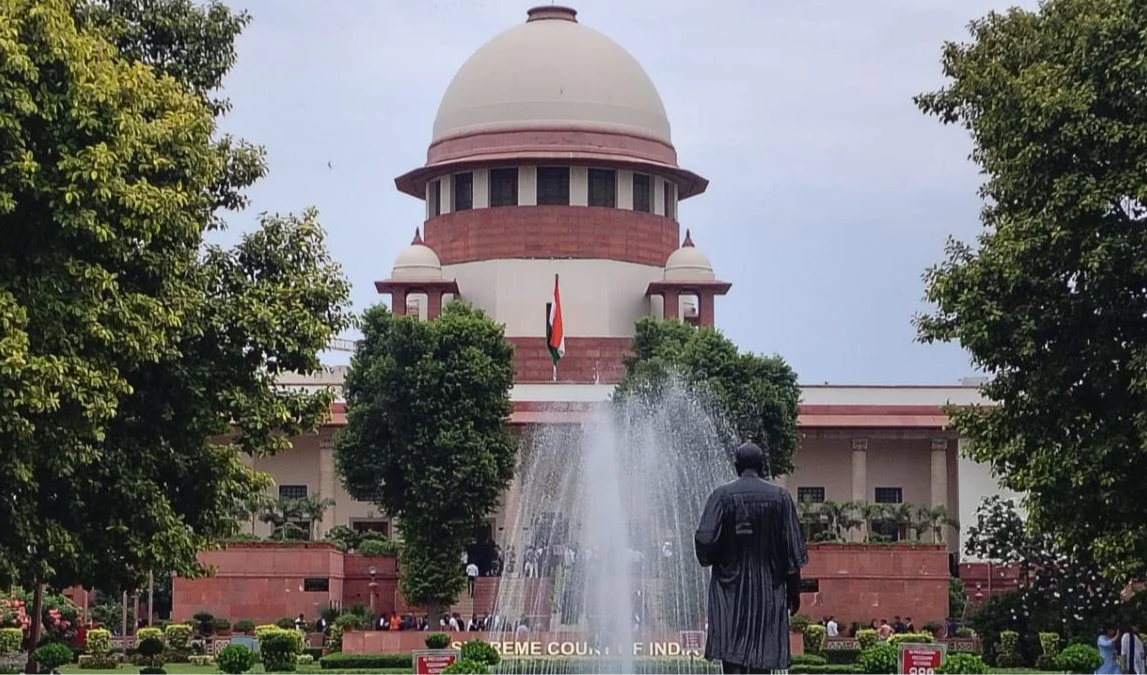
    According to the information provided in the source material, demonstrators called for the rollback of certain UGC rules that have been stayed by the Supreme Court. The issue has added an education-policy dimension to the wider protest.

    The inclusion of the UGC-related demand indicates that the gathering has brought together concerns about both reservation policies and broader questions surrounding education and institutional regulations.

    The protesters' demands are expected to remain a subject of public and political discussion as questions over higher education policy, access and affirmative action continue to receive attention.

    Rahul Gandhi holds separate protest nearby

    Friday's developments also coincided with a separate protest involving Congress leader and Leader of Opposition in the Lok Sabha, Rahul Gandhi.

    Gandhi reportedly sat on a dharna outside the office of the Deputy Commissioner of Police at Parliament Street Police Station. His protest was connected to a dispute over the registration of a police complaint concerning a student who the Congress claimed had suffered injuries from a pellet gun during earlier protests.

    The Congress has raised questions over the handling of the complaint and sought the registration of an FIR. Gandhi's demonstration took place a short distance from the area where supporters of the Reservation Hatao campaign had gathered.

    The two developments were separate in their immediate causes, but their proximity added to the political activity in central Delhi during the day.

    The Bharatiya Janata Party criticised Gandhi's protest, describing the Congress as an “anarchic” political force and alleging that the sit-in was intended to divert attention from other political issues. The BJP also linked the protest to the Congress's recent position on Vande Mataram.

    The allegations exchanged between political parties reflect the broader political environment surrounding the demonstrations, although the reservation campaign itself is being presented by its organisers as a movement focused on changes to public policy.

    Digital campaign gains wider visibility

    The Reservation Hatao Andolan has relied heavily on social media and digital mobilisation to build support. Its organisers have used online platforms to promote their arguments and encourage participation in physical demonstrations.

    The campaign's rapid expansion highlights the growing role of social media in organising public demonstrations in India. Digital platforms allow campaign groups to reach large audiences, circulate statements and coordinate events without relying solely on traditional political or organisational structures.

    The movement has also drawn attention because of its stated intention to challenge a longstanding policy framework rather than seek modifications to a particular government scheme.

    The organisers' approach has reportedly been influenced by protest mobilisation techniques used by another recently visible youth-led movement, although the two campaigns have distinct stated objectives.

    Reservation debate remains politically sensitive

    Reservation in India remains one of the country's most sensitive public-policy issues. Supporters of the existing system argue that affirmative action is necessary to address historical exclusion and continuing social and economic disadvantages faced by communities that have experienced discrimination.

    Critics, meanwhile, have argued that economic hardship and individual circumstances should receive greater weight when determining access to government support and educational or employment opportunities.

    The debate therefore extends beyond the question of whether reservation should continue. It also involves questions about equality, representation, social justice, merit, economic disadvantage and the constitutional responsibilities of the state.

    Any attempt to fundamentally alter the reservation system would require consideration of constitutional provisions, judicial precedents and existing laws and policies. The issue has historically generated strong political reactions, making it unlikely to be resolved through a single administrative decision.

    Friday's demonstration in Delhi has brought the debate back into public focus, particularly among young people and sections of society questioning the present system.

    What happens next

    For the organisers, the gathering at Jantar Mantar represents an effort to turn an online campaign into a visible public movement. Their immediate focus is likely to remain on increasing awareness of their demands and seeking political and institutional attention.

    The disagreement over the protest venue may also remain an issue, particularly because the organisers have argued that the change restricted participation. At the same time, the police are expected to continue monitoring demonstrations in central Delhi to ensure compliance with permission conditions and maintain public order.

    The campaign's future influence will depend on whether it can translate online support into sustained public participation and whether its demands gain traction among political parties, policymakers and the wider public.

    For now, the developments in Delhi have once again placed the country's reservation policy at the centre of public debate. While supporters of the Reservation Hatao Andolan are seeking a system based more heavily on merit and economic circumstances, opponents and supporters of affirmative action are likely to continue emphasising the historical and social reasons behind the existing framework.

    As the debate develops, legal and constitutional considerations will remain crucial. The competing arguments over reservation reflect a much larger national discussion about equality, opportunity and how public institutions should address social disadvantage in modern India.

    Click here to Read More
    Previous Article
    Centre Denies Permission for Telangana CM Revanth Reddy’s U.S. Visit, Citing Political Clearance
    Next Article
    CJP School Visit in Jaipur Faces Opposition, Team Alleges Political Interference

    Related National Updates:

    Are you sure? You want to delete this comment..! Remove Cancel

    Comments (0)

      Leave a comment