Yugcharan News / 13-11-2026
Serious questions have emerged over the accuracy and transparency of Delhi's official air pollution data after a BBC Verify investigation identified significant discrepancies between two government datasets recording air quality during Diwali celebrations on November 8. The investigation found that extremely high PM2.5 readings recorded by several pollution monitoring stations were missing from the data published by the Central Pollution Control Board (CPCB), raising concerns that the official figures may not have reflected the actual severity of pollution in the national capital.
According to the investigation, several monitoring stations recorded exceptionally high concentrations of PM2.5, a fine particulate pollutant capable of penetrating deep into the lungs and contributing to serious health problems. However, hourly readings exceeding 1,000 micrograms per cubic metre were excluded from the CPCB's published records, even though the corresponding measurements appeared in data maintained by the Delhi Pollution Control Committee (DPCC).
The discrepancy has intensified the debate over how India's pollution monitoring system records extreme pollution episodes, particularly during festivals such as Diwali, when firecracker emissions can add to the already severe winter pollution burden in Delhi.
BBC Verify compared readings from 30 monitoring stations over a 24-hour period covering Diwali night and found that the available CPCB readings averaged approximately 240 micrograms per cubic metre. In contrast, the corresponding DPCC dataset showed an average concentration of 551 micrograms per cubic metre.
The difference between the two datasets has raised questions about whether the existing reporting methodology adequately communicates the health risks faced by residents during short periods of extremely high pollution.
CPCB Excludes PM2.5 Readings Above 1,000 Micrograms
The central issue identified by BBC Verify concerns the treatment of PM2.5 measurements exceeding 1,000 micrograms per cubic metre.
According to the CPCB, its air quality monitoring equipment is calibrated to operate within a specified measurement range. Readings above 1,000 micrograms per cubic metre are therefore treated as outside the equipment's calibrated detection range and are excluded from the calculations used to publish air quality figures.
In a statement to BBC Verify, the CPCB defended its methodology and said it remained committed to transparent, scientific and reliable reporting.
The pollution control body explained that during occasional extreme episodes, including those associated with Diwali firecracker celebrations, readings exceeding the calibrated range could appear as data gaps for the affected monitoring stations.
It further stated that such hours do not contribute to the 24-hour average of the relevant pollutant for the particular station.
The explanation has highlighted an important distinction between readings that are unavailable because of equipment limitations and pollution levels that are genuinely low. When extremely high measurements are excluded, the resulting average may not fully represent the actual exposure experienced by people during those hours.
The CPCB's position is that the readings fall outside the validated measurement range of its equipment. However, environmental researchers have argued that excluding such observations without adequately communicating their significance could create an incomplete picture of pollution conditions.
Three Monitoring Stations Recorded PM2.5 Above 3,000
BBC Verify's examination of DPCC data found that pollution levels rose sharply during the peak of Diwali celebrations on the night of November 8.
Three separate monitoring stations recorded hourly PM2.5 concentrations exceeding 3,000 micrograms per cubic metre.
These readings indicate the scale of the pollution spike recorded at certain locations during the celebrations. The investigation also found that 116 hourly readings exceeding 1,000 micrograms per cubic metre from 30 DPCC-managed stations did not appear in the corresponding CPCB published records.
The difference is significant because CPCB data is widely cited by Indian media outlets and frequently used to communicate the overall air quality situation in Delhi.
When extreme readings are excluded, the publicly reported figures may not capture the full intensity of short-term pollution episodes.
Dr Manoj Kumar, a researcher at the Centre for Research on Energy and Clean Air (CREA), told BBC Verify that excluding exceptionally high readings could misrepresent actual pollution levels.
He also warned that such discrepancies could undermine public confidence in official air quality information.
According to environmental researchers, short-term exposure to extremely high concentrations of particulate matter can have adverse health consequences, even when the exposure does not continue throughout the day.
217 Hourly Observations Missing Across Delhi
The investigation also identified substantial gaps in the CPCB's hourly pollution monitoring records during the peak Diwali period.
Between 9 pm on November 8 and 7 am on November 9, a total of 217 hourly PM2.5 observations were missing across 59 CPCB monitoring stations in Delhi.
Only 16 stations provided complete data throughout this period. The remaining 43 stations recorded at least one missing hourly observation.
The gaps are particularly important because the CPCB's methodology requires a monitoring station to have at least 16 hours of valid PM2.5 measurements to calculate its daily average.
Consequently, stations with too many missing or invalid observations may not contribute to the official daily pollution calculations.
This means that extreme pollution episodes could potentially have a wider impact on the reported citywide air quality figures than the omission of individual hourly readings alone.
If a monitoring station records exceptionally high pollution levels but does not meet the minimum data requirements after those readings are excluded, its daily average may not be included in the overall calculation.
The investigation therefore raises questions about how the reporting system communicates such data gaps to the public, particularly when they occur during periods of severe pollution.
RK Puram Example Highlights the Difference
One of the clearest examples identified by BBC Verify came from the monitoring station at RK Puram in south Delhi.
According to DPCC data, pollution levels at the station reached nearly 2,500 micrograms per cubic metre during the Diwali period.
Using the hourly PM2.5 readings available from this station, BBC Verify calculated an average concentration of approximately 945 micrograms per cubic metre over the 24-hour period beginning at 5 pm on November 8.
However, when the corresponding CPCB published readings were examined, the average for the 14 available hours was approximately 299 micrograms per cubic metre.
The remaining 10 hours were missing from the CPCB dataset. Because of these missing observations, the station's data also failed to meet the minimum requirement for calculating its daily average.
The example illustrates how the exclusion of extremely high readings can produce a substantial difference between the pollution measurements available in separate government datasets.
It also demonstrates why the availability of complete hourly information is important when assessing the actual severity of pollution during exceptional events.
Delhi AQI Declined Despite Overnight Pollution Spike
Another issue highlighted by the investigation concerns the city's reported Air Quality Index on November 9.
Despite the sharp increase in PM2.5 concentrations recorded at several monitoring stations during Diwali night, the CPCB reported Delhi's AQI at 344 at 4 pm on November 9.
This was lower than the AQI of 376 recorded at the same time on November 8.
The reported decline came even as some monitoring locations had experienced exceptionally high pollution levels overnight.
However, the comparison between AQI figures and individual PM2.5 readings requires an understanding of how the two measurements work.
The AQI is a composite indicator calculated using pollutant concentrations and established averaging methods. It is not simply the highest hourly PM2.5 measurement recorded at any individual station.
Nevertheless, the missing observations identified by BBC Verify raise questions about whether the official reporting process adequately reflects extreme pollution episodes that can have significant short-term health consequences.
Health Experts Warn About Risks of Extreme Pollution
Environmental and public health experts have expressed concerns about the consequences of excluding exceptionally high pollution readings from public reporting.
Dr Sierra Clark, an environmental epidemiologist from City St George's, University of London, told BBC Verify that classifying extreme pollution readings as missing could result in the omission of days that contribute significantly to short-term health events.
These events can include asthma attacks and heart attacks, particularly among people who are vulnerable to air pollution.
Dr Clark suggested that Delhi's pollution reporting system could improve transparency by presenting two different scenarios: one including extreme pollution episodes and another excluding them.
According to her, figures excluding exceptional readings could provide an understanding of typical pollution conditions experienced during ordinary days.
However, displaying the impact of extreme episodes separately would also help residents understand the additional health burden created during particularly polluted periods.
Such an approach could provide the public with a more comprehensive understanding of both routine pollution exposure and occasional severe pollution spikes.
The World Health Organization's air quality guidelines recommend that annual average PM2.5 concentrations should not exceed five micrograms per cubic metre.
The recommendation highlights the seriousness of long-term exposure to fine particulate matter, although annual average guidelines should not be directly compared with short-term hourly measurements.
Firecrackers Add to Delhi's Existing Pollution Burden
Delhi's pollution problem is not limited to Diwali celebrations or firecracker emissions.
The national capital regularly experiences poor air quality during the winter months because of a combination of factors, including vehicle emissions, construction dust, industrial pollution, agricultural residue burning and unfavourable atmospheric conditions.
Firecrackers can add another layer of pollution during Diwali, particularly when emissions accumulate under weather conditions that restrict the dispersion of pollutants.
The problem becomes more complicated when several pollution sources operate simultaneously.
During winter, lower temperatures, reduced wind speeds and atmospheric conditions can contribute to the accumulation of pollutants close to the ground.
As a result, even a temporary increase in emissions from firecrackers can worsen an already difficult air quality situation.
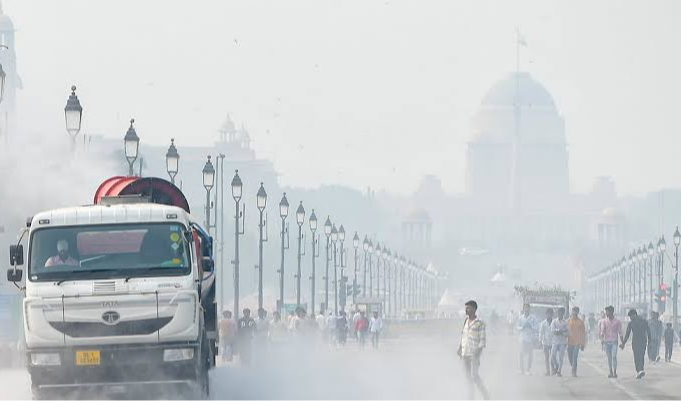
The BBC investigation also examined satellite imagery showing a thick pollution haze over Delhi on November 8 and 9.
Satellite measurements of pollutants such as nitrogen dioxide and carbon monoxide, along with atmospheric fire activity, showed increases on November 8.
However, the investigation noted that their overall averages during Diwali week were not particularly high compared with the corresponding periods in 2024 and 2025.
These satellite observations provide additional information about pollution activity, but they measure atmospheric conditions differently from ground-based monitoring stations and cannot directly replace local PM2.5 measurements.
Political Questions Over Transparency of Pollution Data
The findings have also added to the political debate surrounding Delhi's air pollution management.
Government critics and opposition parties have accused authorities of deliberately under-reporting pollution levels.
The CPCB has rejected the criticism and defended its approach by referring to the technical limitations of its monitoring equipment.
The discrepancy between CPCB and DPCC records, however, has brought renewed attention to the importance of transparency in environmental monitoring.
For residents, accurate pollution information is essential when making decisions about outdoor activities, school attendance, travel and precautions for children, elderly people and those with respiratory conditions.
The issue is particularly important in Delhi, where winter pollution frequently reaches dangerous levels and residents depend on official monitoring systems to understand changing air quality conditions.
The BBC Verify investigation does not establish that the CPCB deliberately manipulated pollution figures. Rather, it identifies differences between the two datasets and examines how the exclusion of readings above the equipment's calibrated range affected the published records.
The findings underline the need for clear communication about missing observations, equipment limitations and the effect of extreme pollution episodes on daily averages.
Greater Transparency Needed in Pollution Monitoring
The discrepancy identified by BBC Verify has renewed the discussion about whether India's existing pollution reporting framework is sufficient to communicate the severity of extreme pollution events.
While technical calibration limits are an important part of scientific monitoring, environmental experts argue that unusually high readings should not simply disappear from the public understanding of pollution conditions.
Clearly identifying such observations as exceeding the calibrated range, while separately communicating their possible significance, could help improve public awareness.
Presenting both conventional AQI calculations and additional information about extreme hourly pollution episodes may also provide a more complete picture of the risks faced by residents.
For Delhi, where air pollution remains a recurring public health and environmental challenge, confidence in official monitoring data is particularly important.
The central question raised by the investigation is not only how polluted Delhi became during Diwali, but also how effectively the existing monitoring and reporting systems communicate those conditions.
As the capital enters another winter pollution season, the differences between the CPCB and DPCC datasets are likely to intensify calls for clearer reporting standards, stronger monitoring transparency and greater public access to reliable environmental information.