Yugcharan News / 13-11-2026
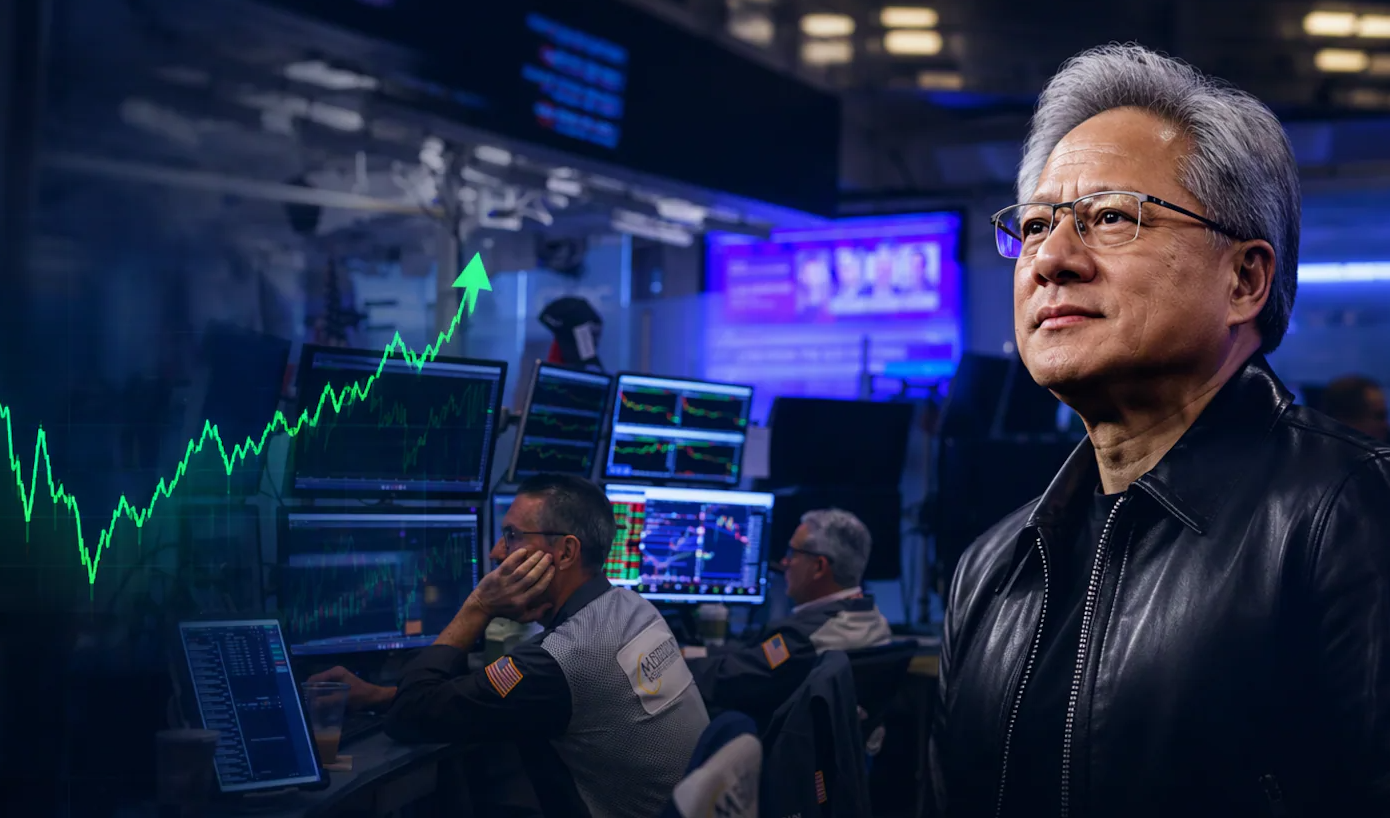
Nvidia has been plunged into an unprecedented corporate crisis following a series of allegations surrounding its co-founder and former chief executive Jensen Huang, including reports of multiple extramarital relationships and questions over possible national security risks. The controversy has coincided with a dramatic decline in the chipmaker’s share price, reportedly wiping out approximately $490 billion to $500 billion in market capitalisation over four trading days.
The 63-year-old executive, who led Nvidia for 33 years, stepped down as president, chief executive officer and board member with immediate effect on Thursday, November 12. The company appointed longtime Chief Financial Officer Colette Kress as interim CEO, while board member Harvey Jones was named its first independent chairman.
The developments have sent shockwaves through the technology and financial sectors, raising questions about corporate governance, investor confidence and the potential security implications of Nvidia’s business relationships.
According to the Hindustan Times report, the controversy began with allegations involving Alice Huang, a former executive at Singapore-based data centre operator Megaspeed International. It subsequently widened after reports emerged of another alleged relationship involving Kimberly Powell, Nvidia’s vice president of healthcare.
The company’s stock experienced sharp fluctuations throughout the week. Although shares briefly recovered during Wednesday’s trading session, fresh reports about the allegations and the board’s discussions concerning Huang’s position triggered another decline. The stock eventually closed Thursday at $166.19, leaving Nvidia with a market capitalisation of approximately $4.01 trillion.
November 8: Allegations emerge and board launches investigation
The crisis gathered momentum over the weekend of November 7–8, when reports about Huang’s alleged relationship with Alice Huang came into focus.
According to the report, Huang acknowledged in a letter to employees that he had been unfaithful to his wife. The admission came amid media reports concerning his alleged relationship with Alice Huang, who previously held an executive position at Megaspeed International. The two individuals are not related, according to the report.
The controversy also acquired a national security dimension after questions were raised about Alice Huang’s alleged links to China.
Reports published by The New York Times in October and the Financial Times on November 6 had referred to the alleged relationship and suspicions surrounding the former Megaspeed executive.
The Hindustan Times report said US intelligence officials had reportedly circulated a memo during the spring expressing concerns that Alice Huang may have been recruited by China's Ministry of State Security. The suspected objective, according to the reported assessment, was to collect intelligence and potentially help circumvent US restrictions on semiconductor exports.
These claims have not been established as proven facts in the information provided by the source. The allegations nevertheless prompted concerns about whether sensitive company information, proprietary technology or national security interests could have been exposed.
Nvidia’s board responded by announcing an independent investigation into whether any national security concerns or proprietary information had been compromised.
The investigation became a central part of the unfolding crisis, particularly because Nvidia occupies a strategically important position in the global artificial intelligence and semiconductor industries.
November 9–10: Nvidia loses more than $430 billion in two trading sessions
The controversy quickly affected investor sentiment when US markets opened on Monday, November 9.
Nvidia shares fell 4.3 per cent during Monday's session before declining another 5.5 per cent on Tuesday, November 10. The stock closed at $168.47 on Tuesday, representing a combined decline of approximately 9.6 per cent over the two sessions.
According to figures cited by CBS News and The Times in the Hindustan Times report, the two-day decline erased more than $430 billion in Nvidia's market value.
The impact was also reflected in Huang's personal wealth. Forbes reportedly estimated that his net worth fell by approximately $7.4 billion, equivalent to around ₹69,520.82 crore, within the first half-hour of trading on Monday.
The sharp fall illustrated how developments involving a company's leadership can influence investor confidence, particularly when the company is one of the world's most valuable technology businesses.
The controversy also attracted attention from the US government. President Donald Trump confirmed that the FBI was investigating the matter, while describing Huang as an "honourable man".
At the same time, Nvidia faced a proposed class-action lawsuit filed by a shareholder in California. The lawsuit reportedly alleged that the company had misled investors regarding national security risks.
The allegations and legal developments added further uncertainty for shareholders, who were already assessing the potential consequences of the board's investigation.
Another significant development came on Tuesday, when Microsoft overtook Nvidia to become the world's second-most valuable company, according to the report. The shift reflected the impact of Nvidia's falling valuation during the period.
November 11: Shares recover briefly before fresh allegations emerge
Nvidia shares showed signs of recovery on Wednesday, November 11, initially gaining between approximately 3 per cent and 4.5 per cent during regular trading.
The improvement in investor sentiment was supported by strong earnings from CoreWeave, an artificial intelligence cloud partner of Nvidia. The company's performance appeared to provide some reassurance to investors about continued demand in the AI infrastructure sector.
Nvidia shares closed Wednesday at $173.73, recovering some of the losses recorded earlier in the week.
However, the relief proved short-lived.
After the market closed, two major reports brought fresh pressure on the company's leadership and stock performance.
The New York Times reported that Huang had allegedly been involved in a second extramarital relationship, this time with Kimberly Powell, Nvidia's vice president of healthcare. The report described Powell as a direct subordinate of Huang.
Separately, The Wall Street Journal reported that Nvidia's board was preparing to remove Huang and was expected to meet soon to decide his future.
These reports intensified speculation about the company's leadership and the possible direction of its board-level response.
Following the developments, Nvidia shares reportedly fell nearly 8 per cent in after-hours trading, reaching approximately $160, according to Yahoo Finance.
The fresh allegations also shifted attention away from the company's short-term financial performance towards questions about executive conduct, internal oversight and the board's confidence in its leadership.
November 12: Jensen Huang steps down as Nvidia CEO
Thursday, November 12, became the defining moment of the crisis.
Ahead of the opening bell, Nvidia officially announced that Jensen Huang had stepped down from his positions as president, CEO and board member with immediate effect.
The company appointed Colette Kress, its longtime chief financial officer, as interim chief executive. Kress was also named to the board, while Harvey Jones was appointed Nvidia's first-ever independent chairman.
The leadership change marked a major turning point for a company that Huang had led for more than three decades.
Huang's departure also came at a particularly sensitive time for Nvidia, which has become a central player in the global artificial intelligence industry. Its semiconductor products are widely used in data centres and AI computing infrastructure, making the company's stability important to investors and technology businesses worldwide.
The market reaction was severe when trading began on Thursday.
Nvidia shares fell as much as 14.3 per cent during the session, reaching an intraday low of $148.80. According to figures cited by The Straits Times and Mint, the decline temporarily erased as much as $601 billion in market value.
The company's valuation also dropped below the $4 trillion mark for the first time since the middle of 2025.
However, the stock recovered a substantial portion of its losses before the closing bell. Nvidia finished Thursday's session at $166.19, down 4.3 per cent.
Despite the partial recovery, the company ended the day with a market capitalisation of approximately $4.01 trillion.
Compared with its valuation of around $4.498 trillion at the previous Friday's close, Nvidia had lost approximately $490 billion in market value, according to figures cited by Yahoo Finance and Forbes.
Huang's personal fortune declines after Nvidia shares fall
The sharp decline in Nvidia's share price also affected Huang's personal wealth.
According to the report, his net worth fell to approximately $144.7 billion, placing him around 13th on Forbes' billionaire list.
Forbes' figures as of Friday afternoon reportedly identified Huang as the biggest loser in terms of daily net-worth changes, with his personal fortune declining by approximately 4.25 per cent.
The reduction in his wealth reflects the close relationship between his personal fortune and the market valuation of Nvidia, whose shares have been a major contributor to his billionaire status.
Alice Huang's reported Singapore restrictions add to the controversy
The controversy surrounding Alice Huang also received fresh attention on November 12.
According to the AFP caption reproduced in the Hindustan Times report, Singapore's government said Alice Huang had been barred from entering the country in February after providing inaccurate information during an investigation.
The report also referred to footage showing Alice Huang attending a dinner hosted by Jensen Huang at a restaurant in Taipei on May 22, 2025, during Computex, Taiwan's major technology exhibition.
The reported entry restriction and the allegations concerning possible intelligence links have added another layer to the questions surrounding the Nvidia crisis.
However, the claims about alleged espionage and recruitment by Chinese intelligence remain allegations in the source material. They should not be treated as established findings without further official confirmation.
A corporate governance challenge for Nvidia
Huang's departure has created a significant leadership transition at a time when Nvidia remains one of the most influential companies in the global technology industry.
The immediate challenge for the company will be to maintain operational stability, reassure investors and address concerns raised by the independent investigation.
The board will also need to establish how the allegations involving its former chief executive were handled internally and whether any company policies or security procedures were breached.
The questions surrounding the alleged relationships are separate from the national security concerns, but both have contributed to the uncertainty affecting the company.
For investors, the central issue is whether Nvidia can maintain confidence in its leadership and business operations while the investigation continues.
The company's enormous market valuation and strategic importance in the artificial intelligence sector mean that developments involving its management are likely to remain under close scrutiny.
The events between November 8 and November 12 have transformed what began as reports about Huang's personal life into a wider corporate crisis involving market losses, legal questions, national security concerns and a sudden leadership change.
Although Nvidia shares recovered some ground after Thursday's steep decline, the company remains under pressure as investors await further clarity about the allegations, the board's investigation and the future of its leadership.