Yugcharan News / 12-11-2026
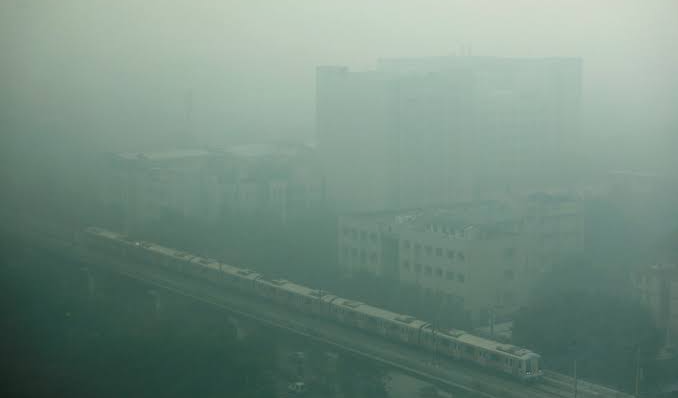
Delhi's air pollution crisis has once again brought the national capital under a thick blanket of smog, with air quality deteriorating in the days following Diwali. The combination of firecracker emissions, vehicle exhaust, industrial pollution, construction dust and unfavourable winter weather conditions has intensified the pollution situation across Delhi-NCR. While smog has become a familiar feature of the capital's winters, its repeated occurrence raises important questions about its causes, the difference between smog and fog, and the serious health risks associated with prolonged exposure to polluted air.
According to an assessment by the Indian Institute of Tropical Meteorology (IITM), Pune, firecrackers accounted for 71.1 per cent of Delhi's PM2.5 concentration between 1 am and 9 am on November 9, immediately after Diwali celebrations. The contribution was significantly lower at 43.4 per cent during the same period on November 8 and just 5.6 per cent on November 7.
The findings highlight the considerable impact of firecracker emissions during the post-Diwali period. However, the broader pollution problem is not limited to festive celebrations. Delhi experiences deteriorating air quality every winter because multiple pollution sources combine with meteorological conditions that prevent harmful particles from dispersing.
Understanding how smog develops, why it remains trapped over the city and how it affects human health is essential to understanding Delhi's recurring winter pollution crisis.
What Is Smog and How Is It Different From Fog?
The word smog is derived from two words, smoke and fog. It refers to polluted air containing a mixture of harmful particles and gases that can reduce visibility and affect human health.
Smog develops when pollutants accumulate in the atmosphere. These pollutants include particulate matter such as PM2.5 and PM10, along with gases released through vehicle emissions, industrial activities and other sources of pollution.
Certain pollutants, including nitrogen oxides and volatile organic compounds, can also react in the presence of sunlight to produce ground-level ozone. This chemical process results in photochemical smog, which is generally associated with sunny conditions.
Delhi's winter smog, however, is particularly linked to the accumulation of fine particulate matter under weather conditions that restrict the movement and dispersal of polluted air.
Fog and smog may look similar because both can create a thick layer of haze and reduce visibility. However, their composition and potential effects are different.
Fog consists primarily of tiny water droplets suspended close to the ground. It forms when moist air cools and water vapour condenses into droplets. This natural atmospheric phenomenon can occur without significant air pollution.
Smog, on the other hand, contains harmful pollutants that can enter the human respiratory system. It may contain dust, soot, smoke and particles formed through chemical reactions involving atmospheric gases.
Fog and smog can also occur simultaneously, making the atmosphere appear even denser. However, unlike ordinary fog, polluted smog presents a direct risk to public health.
Understanding PM2.5 and PM10
Particulate matter is among the most important components of Delhi's winter air pollution.
PM10 refers to airborne particles measuring 10 micrometres or less in diameter, while PM2.5 refers to finer particles measuring 2.5 micrometres or less.
These particles can originate from several sources, including road dust, construction activities, vehicle exhaust, industrial emissions, burning of biomass and firecrackers.
PM2.5 is particularly concerning because of its extremely small size. These particles can travel deep into the respiratory system and reach the lungs. Some particles can also enter the bloodstream, potentially affecting organs beyond the respiratory system.
The concentration of these pollutants can increase significantly when emissions rise and weather conditions prevent their dispersal.
This is one of the major reasons why Delhi's air quality frequently deteriorates during the winter months.
Why Does Smog Become Worse in Delhi During Winter?
Delhi's winter pollution problem is caused by a combination of emissions, geographical factors and changing weather conditions.
During warmer months, rising air and stronger winds help pollutants spread away from heavily polluted areas. These atmospheric movements support the dispersal of harmful particles and gases.
The situation changes during winter.
As temperatures fall, wind speeds often decline, reducing the movement and mixing of air. Consequently, pollutants remain concentrated closer to the ground instead of dispersing into the atmosphere.
This creates favourable conditions for the formation and persistence of dense smog.
Another major factor is temperature inversion, a meteorological phenomenon that plays an important role in Delhi's winter pollution.
Under normal atmospheric conditions, warmer air near the surface rises and helps carry pollutants upwards. However, during a temperature inversion, a layer of relatively warmer air forms above cooler air near the ground.
This warmer layer acts like a lid, restricting the upward movement of colder air and trapping pollutants close to the surface.
As a result, harmful particles and gases accumulate near the ground, increasing pollution levels and reducing visibility.
The geographical location of Delhi also contributes to the problem. Situated in the Indo-Gangetic Plain, the capital is part of a region where pollution from multiple states can accumulate.
When low wind speeds, temperature inversion and continued emissions occur together, pollutants can remain suspended over the region for several days.
This combination explains why Delhi frequently experiences prolonged periods of winter smog rather than short-lived episodes of poor air quality.
Where Does Delhi's Air Pollution Come From?
Delhi's pollution is generated by multiple sources throughout the year. Their relative contributions change depending on the season, weather conditions and geographical location.
Vehicle emissions are among the major sources of urban air pollution. Cars, buses, trucks and other vehicles release pollutants through fuel combustion and exhaust emissions.
Industrial activities also contribute through the release of harmful gases and particulate matter.
Construction work and road dust are additional sources, particularly in areas experiencing significant infrastructure development and heavy traffic movement.
Burning of waste and biomass further increases pollution levels. Such activities release smoke and fine particles into the atmosphere, adding to the existing pollution burden.
During the post-monsoon period, smoke from agricultural residue burning in neighbouring states can also contribute to Delhi's deteriorating air quality.
Before Diwali, other sources, including biomass burning, waste burning, vehicle emissions and secondary organic aerosols, contributed substantially to the capital's PM2.5 pollution.
Secondary organic aerosols are fine particles formed through chemical reactions involving gases in the atmosphere. Their formation adds another layer of complexity to the city's pollution problem.
The contribution of individual sources varies over time. Therefore, Delhi's air pollution cannot be attributed to a single activity or emission source.
Firecrackers Increased PM2.5 Pollution After Diwali
The post-Diwali period brought another major increase in particulate pollution across Delhi.
Firecracker emissions became a dominant contributor to PM2.5 concentrations during the early hours following the celebrations.
According to the IITM Pune assessment, firecrackers accounted for 71.1 per cent of Delhi's PM2.5 concentration between 1 am and 9 am on November 9.
The comparison with the preceding days indicates a substantial increase in their contribution.
During the same eight-hour period on November 8, firecrackers accounted for 43.4 per cent of PM2.5 concentration. On November 7, their contribution was recorded at only 5.6 per cent.
These figures demonstrate how concentrated emissions from firecrackers can significantly influence air pollution levels during a short period.
Firecrackers release smoke and fine particulate matter into the atmosphere. When these emissions occur under unfavourable weather conditions, their impact can become more pronounced because pollutants cannot disperse easily.
However, the contribution of firecrackers should be understood within the wider context of Delhi's pollution sources. Vehicle emissions, industrial activity, road dust, biomass burning and other pollutants continue to affect the city's air quality even after Diwali celebrations end.
Why Does Smog Remain Even After Firecracker Emissions Decline?
One of the most common questions during Delhi's winter pollution season is why the smog does not disappear immediately after Diwali.
The answer lies in the continued accumulation of pollutants and the atmospheric conditions that prevent them from dispersing.
Firecrackers may produce a sudden increase in pollution, but they are not the only source of emissions. Vehicles continue operating, industrial activities generate pollutants, and dust and biomass burning add further particulate matter to the atmosphere.
When wind speeds remain low and temperature inversion conditions persist, these pollutants can remain concentrated near the ground.
Consequently, even after temporary emission sources such as firecrackers have subsided, the existing pollution can continue to affect air quality.
This explains why Delhi may remain covered in smog for several days after major pollution events.
The persistence of smog is therefore linked not only to the quantity of pollutants released but also to the atmosphere's ability to disperse them.
How Does Smog Affect Human Health?
The health impact of smog is one of the most serious concerns associated with Delhi's winter pollution.
Fine particulate matter, particularly PM2.5, can penetrate deep into the respiratory system because of its extremely small size.
Unlike larger particles that may be filtered by the body's natural defence mechanisms, finer particles can travel deeper into the lungs. Some may also enter the bloodstream and affect other organs.
Short-term exposure to polluted air can cause irritation of the eyes and throat, coughing and breathing difficulties.
People with asthma and other respiratory conditions may experience worsening symptoms when pollution levels increase.
Prolonged exposure to fine particulate pollution is associated with a higher risk of several serious health conditions, including cardiovascular disease, stroke, lung cancer and chronic respiratory illnesses.
The effects are not restricted to people who already have medical conditions. Otherwise healthy individuals can also experience adverse effects from prolonged exposure to high concentrations of air pollution.
Children, older people, pregnant women and individuals with pre-existing heart or lung conditions are particularly vulnerable.
Children may face additional risks because their respiratory systems are still developing. Older people and those with existing medical conditions may also have a reduced ability to cope with the effects of polluted air.
Who Is Most Vulnerable During Delhi's Smog Season?
Although polluted air can affect everyone, certain groups face greater health risks during periods of severe smog.
Children are particularly vulnerable because their lungs and respiratory systems are still developing. Exposure to high levels of particulate pollution can aggravate respiratory problems and cause breathing discomfort.
Older people may also face greater risks, especially if they have existing heart or lung conditions.
Pregnant women are another vulnerable group requiring particular attention during periods of high pollution.
Individuals suffering from asthma, chronic respiratory illnesses or cardiovascular conditions may experience worsening symptoms when exposed to polluted air.
However, it is important to recognise that the impact of air pollution is not limited to these groups. People without any known medical conditions can also experience irritation, coughing and breathing difficulties during prolonged exposure.
Delhi's Winter Smog Is a Recurring Environmental Challenge
Delhi's annual winter smog problem reflects the interaction between pollution sources, geographical conditions and seasonal weather patterns.
The post-Diwali pollution spike highlights the immediate impact that firecrackers can have on particulate matter concentrations. The IITM assessment showing a 71.1 per cent contribution during the early hours of November 9 demonstrates the scale of that impact.
However, the city's wider air pollution crisis is more complex.
Vehicle emissions, industrial pollution, construction dust, waste burning, biomass combustion and agricultural residue burning all contribute to the problem. Winter weather conditions further intensify the situation by restricting the movement of polluted air.
Temperature inversion, low wind speeds and the accumulation of emissions across the Indo-Gangetic Plain create conditions in which smog can remain over Delhi for several days.
The health consequences make the issue particularly serious. Fine particles can penetrate deep into the lungs, and prolonged exposure is associated with respiratory and cardiovascular diseases.
Delhi's winter smog is therefore not simply a seasonal visibility problem. It is a recurring environmental and public health challenge driven by multiple sources of pollution and atmospheric conditions that allow harmful pollutants to accumulate near the ground.