Search

    Language Settings
    Select Website Language

    GDPR Compliance

    We use cookies to ensure you get the best experience on our website. By continuing to use our site, you accept our use of cookies, Privacy Policy, and Terms of Service.

    Delhi High Court Seeks Formal Intimation to AAP Leaders on Bench Transfer in Excise Policy Matter

    8 hours ago

    Yugcharan News / 19 May 2026

    Proceedings linked to the Delhi excise policy case witnessed another significant development on Tuesday after the Delhi High Court directed the Central Bureau of Investigation (CBI) to formally inform senior leaders of the Aam Aadmi Party (AAP) about the reassignment of the matter to a different bench. The case, which has remained under national attention for several years, was recently transferred following judicial developments connected to separate contempt proceedings.

    The High Court, now hearing the matter under Justice Manoj Jain, observed that several respondents, including former Delhi Chief Minister Arvind Kejriwal, former Deputy Chief Minister Manish Sisodia, and AAP leader Durgesh Pathak, were not represented during Tuesday’s hearing.

    The court noted that although media reports had widely covered the transfer of the case from Justice Swarana Kanta Sharma to Justice Manoj Jain, the prosecution should nevertheless ensure that all concerned parties are formally notified. The bench remarked that once the respondents appear before the court, it would become clear whether they have any reservations regarding the reassignment of the matter.

    Court Emphasises Proper Communication

    During the hearing, Justice Manoj Jain reportedly observed that the matter had already received substantial public and media attention, suggesting that the parties were likely aware of the change in bench allocation. However, the court maintained that official communication remained necessary to avoid procedural ambiguity.

    According to courtroom observations, the judge stated that the court would not hesitate to issue formal notices if required and added that the prosecution should inform all concerned respondents about the current status of the proceedings.

    Solicitor General Tushar Mehta, appearing on behalf of the CBI, informed the court that necessary steps would be taken to notify the respondents regarding the transfer and upcoming proceedings.

    The High Court subsequently listed the matter for further hearing next week. The bench also indicated that once all parties are represented before the court, a structured schedule for hearing the case would likely be framed.

    Background of the Bench Transfer

    The reassignment of the case came after Justice Swarana Kanta Sharma recused herself from hearing the excise policy matter amid parallel contempt proceedings initiated against certain AAP leaders and others. The contempt proceedings reportedly stemmed from allegations concerning statements and social media comments directed at the court in connection with the ongoing litigation.

    Sources familiar with the proceedings stated that Justice Sharma had considered the situation appropriate for transferring the primary excise policy matter to another bench to ensure fairness and avoid any procedural complications arising from the contempt case.

    The transfer has since become a major talking point within legal and political circles, given the high-profile nature of the case and the involvement of prominent political figures.

    Origin of the Excise Policy Investigation

    The excise policy case dates back to 2022, when the CBI registered a First Information Report (FIR) concerning the Delhi government’s excise policy for 2021-22. Investigative agencies alleged that irregularities occurred during the formulation and implementation of the policy.

    According to official claims made by investigative authorities, certain provisions within the policy allegedly created advantages for select business entities involved in the liquor trade. Agencies further alleged that financial benefits and undue favours may have been exchanged during the process.

    The Enforcement Directorate (ED) later initiated a separate money laundering investigation linked to the same matter under provisions of the Prevention of Money Laundering Act (PMLA).

    The allegations triggered one of the most closely watched political and legal controversies in recent years, leading to multiple arrests, searches, and lengthy court proceedings involving several political leaders and businesspersons.

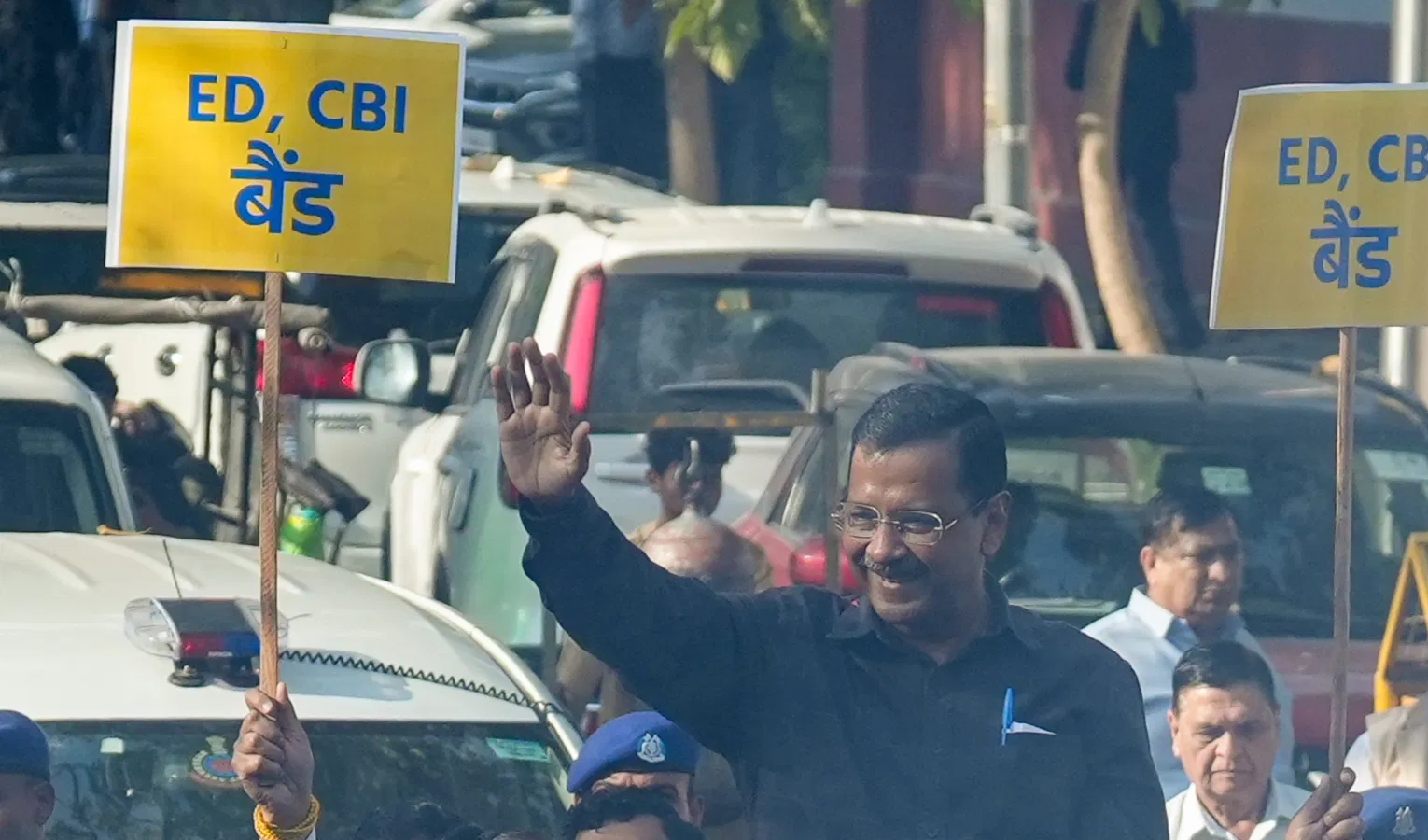
    However, leaders associated with the AAP have consistently denied wrongdoing and maintained that the investigation was politically motivated. Party representatives have repeatedly argued that the allegations were fabricated to target opposition figures ahead of major elections.

    Trial Court Relief Earlier This Year

    A major development in the case occurred earlier this year when a trial court reportedly discharged Kejriwal and several other accused persons from proceedings linked to the CBI’s case. The order was viewed as a substantial relief for the AAP leadership.

    The trial court’s observations reportedly questioned certain aspects of the investigative process and the evidentiary basis presented before it. Following the decision, the CBI moved the Delhi High Court challenging the discharge order.

    The appeal subsequently came before Justice Swarana Kanta Sharma, who issued notices and made preliminary observations regarding portions of the trial court’s findings.

    Legal experts at the time noted that the High Court’s intervention significantly revived attention around the case, especially after the trial court’s earlier order had temporarily shifted the momentum in favour of the accused.

    Recusal Pleas and Allegations of Bias

    The proceedings took another complicated turn after Kejriwal, Sisodia, and several co-accused reportedly filed applications seeking Justice Sharma’s recusal from the case. The applications cited concerns relating to alleged conflict of interest and apprehensions of bias.

    According to legal submissions reported at the time, the applicants raised concerns regarding perceived associations and previous judicial observations. They argued that certain circumstances could create doubts in the minds of litigants regarding impartiality.

    The court, however, rejected the recusal requests in April, stating that there were no valid grounds warranting withdrawal from the matter. Justice Sharma subsequently decided to continue hearing the case.

    Following the rejection of the recusal applications, some AAP leaders reportedly stopped participating in the proceedings before the bench. This development later became linked to the contempt proceedings initiated by the court.

    Contempt Proceedings Intensify Legal Tensions

    On May 14, Justice Sharma reportedly initiated contempt proceedings against several AAP leaders, including Kejriwal, Sisodia, Durgesh Pathak, Sanjay Singh, Vinay Mishra, and Saurabh Bharadwaj.

    The proceedings were connected to statements and online posts allegedly viewed by the court as defamatory or aimed at undermining judicial authority. Legal analysts noted that the initiation of contempt proceedings significantly escalated tensions surrounding the already sensitive matter.

    Following the contempt action, Justice Sharma directed that the main excise policy case be reassigned to another bench of the Delhi High Court.

    The move was interpreted by observers as an attempt to maintain procedural neutrality while separating the primary criminal proceedings from the parallel contempt matter.

    Political and Legal Significance

    The Delhi excise policy matter continues to carry major political implications due to the stature of the leaders involved and the broader debate surrounding investigative agencies and opposition politics in India.

    Supporters of the ruling establishment have maintained that investigative agencies are functioning independently and that the legal process should be allowed to continue without political interference. Meanwhile, opposition parties have repeatedly accused central agencies of selective targeting.

    Legal experts believe the coming hearings before Justice Manoj Jain may prove important in determining the future trajectory of the CBI’s challenge to the discharge order.

    At the same time, the separate contempt proceedings may continue to attract attention because of the sensitive questions they raise regarding judicial criticism, public commentary, and political discourse.

    Next Hearing Scheduled

    The Delhi High Court is expected to resume hearings in the matter next week after notices are formally communicated to all respondents. The court may then finalise procedural timelines and determine the framework for future arguments.

    Given the complexity of the case and the multiple proceedings connected to it, legal observers expect the matter to remain under close public scrutiny in the months ahead.

    For now, the latest development signals another chapter in a long-running legal and political battle that continues to shape conversations around governance, accountability, judicial process, and institutional independence in the country.


    Click here to Read More
    Previous Article
    San Diego Mosque Shooting Under Investigation As Authorities Probe Possible Hate Crime
    Next Article
    Delhi-NCR Faces Intense Heatwave as Temperatures Touch 45 Degrees Celsius, IMD Issues Fresh Warning

    Related National Updates:

    Are you sure? You want to delete this comment..! Remove Cancel

    Comments (0)

      Leave a comment