Yugcharan News / 18-09-2026
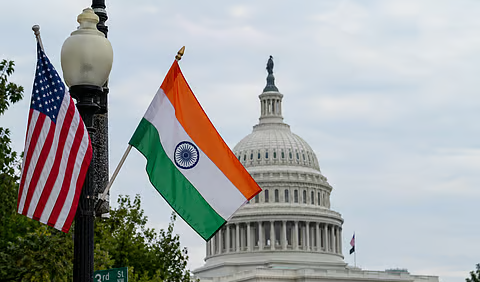
New Delhi: The United States House of Representatives has advanced legislation that could give the Donald Trump administration the authority to impose tariffs of up to 100% on countries purchasing Russian oil and natural gas, putting India among the countries that could potentially face higher trade barriers over their energy ties with Moscow.
The development comes at a sensitive point in India-US relations, with the two countries continuing discussions on trade and economic cooperation. The proposed legislation, formally known as the Lindsey O. Graham Sanctioning Russia and Iran Act of 2026, is aimed at increasing economic pressure on Russia and countries that continue significant commercial engagement with it.
The House moved the legislation forward on September 16 in a closely contested procedural vote, which passed 214-211. The move cleared an important hurdle and paved the way for a final vote in the chamber.
The bill had already been approved by the US Senate in August after more than a year of discussions and negotiations. If it ultimately becomes law, the legislation would provide the Trump administration with substantially broader authority to use tariffs as a tool against countries continuing to purchase Russian energy.
India Among Countries Identified Under the Bill
India is one of the major buyers of Russian crude oil and has increased the importance of Russian supplies in its energy import mix since disruptions to global energy markets following Russia's invasion of Ukraine.
Under the proposed legislation, the US administration would have the authority to impose tariffs of as much as 100% on the five largest purchasers of Russian oil or natural gas. India and China are among the countries specifically identified in connection with the provision, along with Slovakia, Hungary and Azerbaijan.
The legislation would also provide a mechanism for imposing tariffs on countries considered to be among the five largest contributors to efforts to help Russia evade existing US sanctions.
Importantly, passage of the legislation would not automatically mean that India would immediately face a 100% tariff. Instead, the bill would create the legal authority for the administration to impose such measures. The actual tariff rate and whether it is imposed would depend on subsequent decisions by the US administration and relevant American authorities.
This distinction has become particularly important for Indian exporters and businesses that depend on access to the US market.
House Vote Followed Months of Debate
The legislation has faced opposition in the House from lawmakers belonging to both major US political parties.
Some Democrats have objected to giving President Trump expanded authority to impose tariffs on US trading partners. Their concerns have focused on the possible economic consequences of granting the administration wider discretion over tariff policy.
Some Republicans have also expressed reservations, particularly about the possibility that stronger sanctions against Russian energy exports could contribute to higher energy prices in the United States.
Despite these concerns, the bill cleared the House's procedural vote by a narrow margin.
The House action came earlier than some observers had expected. The legislation had been widely expected to face delays, particularly because lawmakers were preparing for the upcoming midterm election period.
However, the House Rules Committee cleared a key procedural hurdle on Monday, allowing the bill to proceed towards a vote.
The subsequent 214-211 vote demonstrated that the measure had secured sufficient support to move forward despite opposition within the chamber.
Senate Had Already Approved the Measure
The US Senate passed the sanctions legislation in August with a large majority, following an extended period of negotiations and legislative discussions.
The measure has attracted bipartisan support in Congress because of its stated objective of increasing pressure on Russia. At the same time, concerns over presidential tariff authority and the potential impact on energy prices have contributed to resistance among some lawmakers.
The legislation is named after Senator Lindsey Graham, who was a prominent supporter of stronger sanctions against Russia and other countries involved in activities viewed by Washington as undermining existing sanctions.
The measure seeks to give the US administration additional economic tools at a time when Washington continues to pursue policies aimed at putting pressure on Moscow.
Why Russian Oil Matters to India
Russian crude has become an important component of India's energy imports over the past several years.
India is heavily dependent on imported crude oil to meet domestic energy requirements. As a result, the government and Indian refiners closely monitor international prices, availability and geopolitical developments affecting major oil-producing countries.
Following the disruption of global energy markets in 2022, Russian crude became more prominent in India's import basket. Indian refiners purchased Russian oil under prevailing commercial conditions, while New Delhi maintained that its energy procurement decisions were guided by national interests and energy security.
The possibility of US tariffs linked to Russian energy purchases could therefore create a complicated situation for India.
If Washington ultimately imposes significant tariffs on Indian exports, companies selling goods and services in the US market could face higher costs and increased competition.
At the same time, any substantial pressure on India's Russian oil purchases could require refiners to adjust their sourcing arrangements.
Potential Impact on India-US Trade
The legislation arrives as India and the United States continue to work on strengthening their economic relationship.
Trade and tariff issues have been an important part of discussions between the two countries. The proposed Russia sanctions legislation adds another potentially sensitive issue to the bilateral economic agenda.
For Indian exporters, the possibility of additional US tariffs could increase uncertainty over future market access.
Industries that rely significantly on American customers could be particularly attentive to the legislation and any subsequent executive action.
However, the final impact cannot be determined solely from the House vote because the legislation would first have to complete the remaining legislative process and then be implemented through decisions by the US administration.
The distinction between congressional authority and actual tariff imposition is therefore central to understanding the current situation.
India Balances Energy and Trade Interests
For New Delhi, the issue involves both energy security and international trade.
India has repeatedly maintained that access to reliable and affordable energy is an important national priority. The country has also pursued a diversified energy sourcing strategy to reduce its dependence on any single supplier.
Russian crude has formed part of that strategy, particularly during a period of significant volatility in international energy markets.
If the US administration eventually uses the authority proposed under the bill, India could be required to assess the economic consequences of maintaining its current energy purchases from Russia.
Such a decision would involve multiple factors, including crude prices, shipping costs, availability of alternative supplies and the potential effect on India's exports to the United States.
Global Energy Market Could Also Be Affected
The proposed US legislation could have consequences beyond the bilateral relationship between Washington and New Delhi.
Russia remains one of the world's major energy producers. Any substantial restrictions on its ability to sell oil and natural gas to major customers could alter global trade flows.
Countries affected by such restrictions could look for alternative suppliers, potentially changing demand patterns across international energy markets.
For India, increased competition for supplies from alternative producers could influence crude prices and transportation costs.
Higher international oil prices could have broader consequences for India's economy because crude oil affects transportation, manufacturing, logistics and other sectors.
The impact would ultimately depend on the scale of any restrictions imposed and how global producers and buyers respond.
What Happens Next
The next stage will be the final consideration of the legislation in the US House and, if approved, its subsequent movement through the remaining legislative process.
If the bill becomes law, the Trump administration would have to decide whether and how to use the powers granted under it.
For India, the immediate focus is likely to remain on diplomatic engagement with Washington, developments in bilateral trade discussions and the future of Russian energy purchases.
The proposed legislation does not establish that India will automatically face a 100% tariff. Rather, it creates the possibility of such action by giving the US administration broader tariff authority.
That leaves considerable uncertainty over the eventual outcome for Indian businesses and the country's energy procurement strategy.
The issue also highlights the increasingly interconnected nature of international trade, sanctions and energy security. A policy intended to increase pressure on Russia could have consequences for major energy buyers such as India and China, while also affecting businesses and consumers in countries involved in the resulting trade adjustments.
As the US legislative process moves forward, Indian policymakers and exporters will be watching closely for any indication of how Washington intends to use the proposed powers. The outcome could have implications for India-US trade, India's energy sourcing decisions and the broader economic relationship between New Delhi and Washington.