Search

    Language Settings
    Select Website Language

    GDPR Compliance

    We use cookies to ensure you get the best experience on our website. By continuing to use our site, you accept our use of cookies, Privacy Policy, and Terms of Service.

    Questions On Press Freedom Surface During Prime Minister’s Norway Visit Amid Diplomatic Media Exchange

    14 hours ago

    Yugcharan News / 19 May 2026

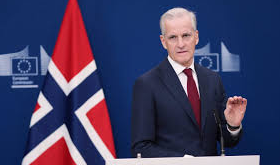
    A diplomatic interaction during Prime Minister Narendra Modi’s visit to Norway has sparked widespread discussion after questions related to press freedom, media access, and human rights were raised by foreign journalists during official engagements in Oslo.

    The exchange, which took place during the Prime Minister’s multi-nation diplomatic tour, drew attention both in India and abroad after journalists attempted to seek responses on issues connected to media freedom and democratic accountability. While the Prime Minister did not take questions during a joint appearance with Norway’s leadership, later interactions involving Indian diplomatic officials became the focus of public debate.

    The developments quickly generated reactions across political circles, media organisations, and social media platforms, with supporters and critics interpreting the events through sharply different perspectives.

    Question Raised During Public Appearance

    According to reports from Oslo, the Prime Minister attended official meetings and public engagements alongside Norway’s Prime Minister during the state visit. As the leaders concluded one of their appearances, a journalist from a Norwegian media outlet reportedly called out a question concerning press freedom and the absence of direct media interaction.

    The question reportedly referenced global press freedom rankings and asked whether the Indian Prime Minister would take questions from journalists. However, the Prime Minister exited the venue without responding publicly.

    The moment was later widely circulated online, drawing commentary from journalists, political leaders, and members of civil society.

    Observers noted that high-level diplomatic visits often involve tightly controlled public schedules, though critics argued that direct engagement with the media remains an important aspect of democratic transparency.

    Embassy Invites Journalist To Official Briefing

    Following the incident, the Indian Embassy in Norway reportedly invited the journalist to attend an official media briefing scheduled later in the evening. Diplomatic representatives stated that questions could be raised during that interaction with senior officials from the Ministry of External Affairs.

    The invitation itself became a point of discussion online, with some users praising the willingness to engage while others questioned why the Prime Minister did not directly respond during the earlier appearance.

    Later that evening, officials from the Indian delegation, including senior diplomatic representatives, addressed the media at a hotel in Oslo. During the interaction, questions related to human rights, media independence, and minority concerns were raised by foreign journalists.

    Diplomatic Exchange Draws Attention

    One of the most discussed moments came when a journalist reportedly asked why international audiences should place trust in India amid concerns raised by certain global organisations regarding human rights and press freedom.

    The Indian official responded by highlighting India’s democratic traditions, constitutional framework, cultural diversity, and institutional systems. According to reports, the response included references to India’s historical legacy, democratic processes, judicial structure, and contributions in areas such as global healthcare support and international diplomacy.

    During the exchange, tensions reportedly rose briefly when interruptions occurred while the official was answering. The diplomat asserted his right to complete the response in his own manner and requested that the interaction proceed without interruption.

    The exchange quickly spread across social media and international news discussions, with clips of the briefing being widely shared online.

    India’s Democratic Structure Highlighted

    During the briefing, Indian representatives reportedly defended the country’s democratic framework and constitutional protections. Officials pointed to the existence of a large and diverse media ecosystem in India, including hundreds of television channels and publications operating in multiple languages across the country.

    The diplomatic delegation also emphasised that India’s Constitution guarantees legal remedies and fundamental rights for citizens. Officials argued that concerns regarding rights violations can be addressed through judicial institutions and democratic mechanisms available within the country.

    According to reports, references were also made to India’s historical diversity and long-standing traditions of social coexistence. Officials suggested that the country’s pluralistic character reflects democratic values developed over centuries.

    Analysts observed that such responses are consistent with the Indian government’s broader international messaging strategy when faced with criticism from global advocacy groups or foreign commentators.

    Political Reactions In India

    The incident also triggered reactions from opposition leaders in India, some of whom questioned the Prime Minister’s decision not to directly engage with media queries during the foreign visit.

    Political critics argued that elected leaders should regularly address unscripted questions from journalists, especially during international engagements where democratic values are often discussed openly.

    Supporters of the government, however, defended the Prime Minister, stating that official diplomatic visits operate according to carefully planned schedules and security protocols. Some also accused sections of foreign media of selectively focusing on negative narratives about India.

    The exchange soon became a subject of debate on television channels and digital platforms, with discussions focusing on press interactions, international perceptions, and political communication strategies.

    Press Freedom Debate Continues

    The Oslo interaction is not the first time questions about press access and media engagement have surfaced during international diplomatic events involving Indian leadership.

    According to observers, similar concerns were reportedly raised during earlier engagements in Europe, where foreign journalists questioned India’s media environment and treatment of dissenting voices.

    Press freedom rankings published by international organisations have often been debated within India. Government representatives and supporters frequently argue that such rankings fail to fully understand India’s social complexity, linguistic diversity, and democratic structure.

    At the same time, independent media groups and rights organisations continue to advocate for stronger protections for journalists, greater transparency, and wider access to public institutions.

    Media experts note that discussions around press freedom have become increasingly global in nature, with governments across several countries facing scrutiny over relations with journalists and information access.

    Online Reactions And Digital Backlash

    Following the Oslo briefing, the journalist involved in the exchange reportedly faced extensive online criticism and trolling across social media platforms. According to reports, she later issued a clarification denying allegations circulating online about foreign influence or political affiliations.

    Digital harassment of journalists covering politically sensitive topics has become an increasing concern internationally. Media rights organisations have repeatedly highlighted how online abuse can create pressure on reporters and discourage critical questioning.

    Several commentators urged restraint in online discussions, stating that disagreement with journalists should not result in targeted abuse or misinformation campaigns.

    Others argued that robust questioning of political leaders is a standard practice in democratic societies and should not automatically be viewed as hostile behaviour.

    Diplomatic Communication Under Global Spotlight

    Experts in international relations believe the episode reflects the growing scrutiny faced by political leaders during foreign visits in an era dominated by real-time social media coverage.

    Unlike earlier decades, even brief interactions during diplomatic tours can rapidly become international talking points within minutes through online video clips and commentary.

    Political communication analysts note that global leaders today operate under constant public observation, where media handling, public statements, and even non-verbal interactions can influence international narratives.

    At the same time, diplomats often attempt to balance national image management with maintaining constructive engagement with foreign media and governments.

    Broader Conversation Around Media And Governance

    The Oslo exchange has once again sparked wider conversations about the relationship between governments and the press in democratic societies.

    Supporters of stronger media access argue that regular questioning by journalists helps improve accountability and public trust. Others maintain that governments must also guard against misinformation, politically motivated narratives, or selective international criticism.

    In India, debates over media independence, journalistic freedom, and public communication strategies have remained politically sensitive topics for several years.

    For now, the diplomatic exchange in Norway continues to attract attention as part of a broader international conversation surrounding governance, media engagement, and democratic transparency in the modern political landscape.


    Click here to Read More
    Previous Article
    Supreme Court Declines To Alter Earlier Directions On Stray Dogs, Calls Rising Attack Cases A Serious Concern
    Next Article
    Delhi Court Rejects Interim Bail Plea Of Activist In 2020 Riot-Linked Case

    Related International Updates:

    Are you sure? You want to delete this comment..! Remove Cancel

    Comments (0)

      Leave a comment