Yugcharan News / 04-11-2026
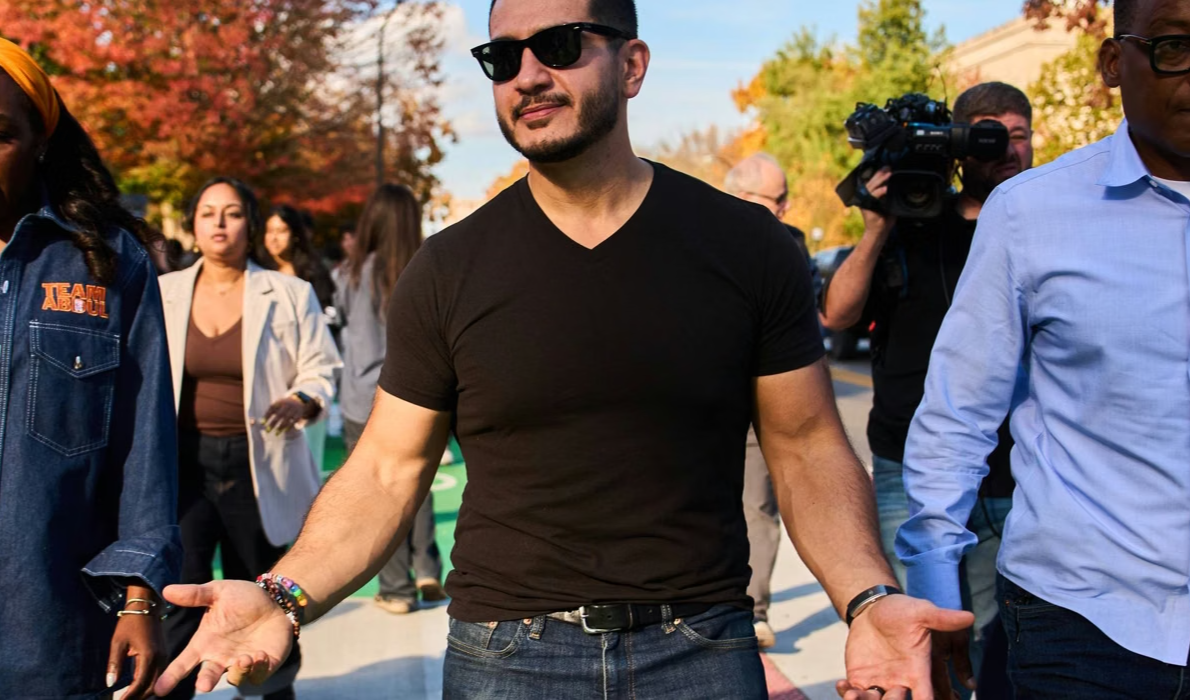
Democrat Abdul El-Sayed has defeated Republican Mike Rogers in Michigan’s closely contested US Senate election, marking a significant victory for the Democratic Party and a historic milestone in American politics. El-Sayed becomes the first Muslim ever elected to the United States Senate, following a campaign centred on universal healthcare, reducing the influence of money in politics and addressing the rising cost of living.
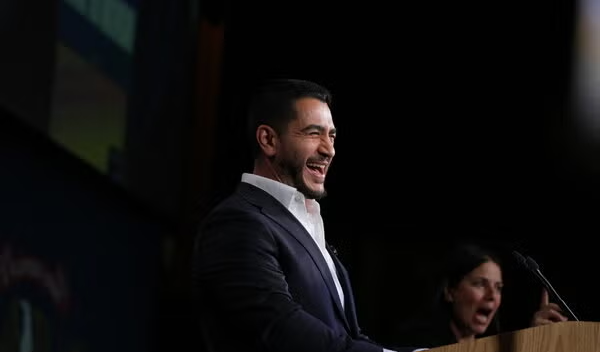
The Associated Press called the race for El-Sayed at 2:27 am on Wednesday, November 4, after he established a lead of nearly six percentage points with approximately 85% of ballots counted. El-Sayed had declared victory about an hour before the AP announcement, addressing supporters at a Michigan Democratic Party election-night gathering in Detroit.
“Michigan, we did it,” he told supporters, thanking voters for backing what he described as an unlikely candidacy. He said he looked forward to serving the state with the same openness, determination and sincerity that voters had demonstrated during the campaign.
The victory represents an important moment for the progressive wing of the Democratic Party. El-Sayed had faced internal opposition during the Democratic primary and sustained attacks from Republicans throughout the general election campaign. His win demonstrates that a progressive candidate can compete successfully in a politically competitive state by building a coalition around economic concerns and public services.
Historic victory amid a closely watched national election
Michigan's Senate contest attracted national attention because the result was expected to influence the balance of power in Congress. The seat became particularly competitive after Democratic Senator Gary Peters decided not to seek re-election, creating an open contest that Republicans viewed as an opportunity to gain ground.
Rogers, a former member of Congress, had previously contested the Senate election in 2024, when he narrowly lost to Democrat Elissa Slotkin. His return to the race in 2026 gave Republicans an experienced candidate with an established political profile.
However, El-Sayed ultimately prevailed despite concerns among some Democrats that his progressive positions could make it difficult to win over independent voters and moderate Republicans.
The Associated Press projected Democratic gains in several states as the party moved towards securing a new majority in Congress. El-Sayed's victory added to the Democratic Party's national success, although the party did not ultimately need the Michigan result alone to secure control of the chamber.
For progressives, the result carries significance beyond the Senate seat itself. It offers an example of a candidate who campaigned on policies such as Medicare for All, taxing the wealthy and stronger regulation of major corporations, while successfully competing in a state where both parties have substantial electoral support.
Healthcare and economic concerns at the centre of El-Sayed’s campaign
A former public health official and doctor by training, El-Sayed made healthcare one of the defining issues of his campaign. His central message was captured in the slogan: “Money out of politics, money in your pocket, Medicare for All.”
He advocated a government-backed, single-payer healthcare system that would provide coverage to Americans while reducing the financial burden associated with medical treatment.
Drawing on his professional experience in public health, El-Sayed argued that healthcare should be accessible to everyone rather than being determined by income or employment status. His position distinguished him from several other Democratic candidates during the primary campaign.
His record in public service also formed an important part of his electoral appeal. During his work in local government, he collaborated with a nonprofit organisation to provide free eyeglasses to thousands of children. He also helped establish a free Narcan distribution programme aimed at preventing overdose deaths. According to Bridge Michigan, both initiatives continue to operate.
Another prominent initiative associated with El-Sayed was a medical debt relief programme for residents of Wayne County. Since 2024, the programme has cleared more than $95 million in medical bills for over 100,000 residents.
However, the initiative fell short of his original target of eliminating $700 million in medical debt. This led him to revise early campaign messaging that had suggested the target had already been achieved.
Despite that shortfall, the programme remained an important example of his emphasis on using public policy and institutional partnerships to address financial difficulties faced by ordinary residents.
Calls for stronger regulation of artificial intelligence
Beyond healthcare and economic inequality, El-Sayed also made artificial intelligence regulation a significant part of his political platform.
He called for public ownership and strict regulation of AI companies, arguing that the growing influence of artificial intelligence businesses required stronger public oversight.
He also proposed establishing clear conditions for data centre projects. Under his approach, companies would be held accountable for meeting requirements related to electricity consumption and environmental standards.
The issue reflects growing political debate in the United States over the expansion of data centres, rising electricity demand and the environmental consequences of large-scale technology infrastructure.
El-Sayed's position sought to connect technological development with public accountability, presenting AI regulation as another area where government intervention could protect communities and public resources.
His campaign also appealed to younger voters and people concerned about the influence of large corporations, access to public services and the unequal distribution of economic opportunities.
Progressive campaign backed by Bernie Sanders and Alexandria Ocasio-Cortez
El-Sayed openly embraced his progressive credentials throughout the election campaign. He received support from prominent figures associated with the progressive movement, including US Senator Bernie Sanders and Representative Alexandria Ocasio-Cortez.
Their participation helped strengthen his standing among progressive voters and gave national visibility to his campaign.
However, El-Sayed also understood that winning the general election would require support beyond the Democratic Party's progressive base. He therefore attempted to reach voters who had previously supported Donald Trump but felt disappointed with the political and economic outcomes of his administration.
His campaign spent considerable time in rural and northern Michigan, areas that are not traditionally regarded as Democratic strongholds.
El-Sayed argued that his political coalition should include anyone who felt excluded from the political system and wanted government to respond to their concerns.
This approach helped him connect with voters whose political choices were influenced less by party loyalty and more by issues such as living costs, economic opportunity and the performance of elected leaders.
The campaign also benefited from support among voters who believed Republicans had failed to challenge Trump's administration.
One such voter, Jerrilyn Mathews, a retiree from Manton and former Republican, said she had left the party after Trump took it over. Although she initially had doubts about El-Sayed, she ultimately voted for him and other Democratic candidates.
Another voter, 21-year-old Ethan Harbin from Eaton County, had supported Trump in his first election in 2024 but chose El-Sayed in the 2026 Senate race. He said he felt disappointed by promises that had not translated into the changes he expected.
These accounts illustrated the campaign's effort to attract voters who were willing to reconsider their political preferences.
Barack Obama and Kamala Harris lend support
El-Sayed also received support from prominent Democratic figures, including former President Barack Obama and former Vice President Kamala Harris.
During a Detroit rally in October, Obama compared El-Sayed's political journey with his own and expressed confidence in his ability to advance healthcare reforms.
Obama said El-Sayed could finish the work begun through the Affordable Care Act and help guarantee quality, affordable healthcare for every American.
The endorsement was particularly significant because healthcare had been one of the central themes of El-Sayed's campaign.
El-Sayed described Obama's support as an honour, while continuing to promote his long-standing position in favour of a Medicare for All system.
Democratic divisions and Republican attacks
Despite his eventual victory, El-Sayed's campaign faced considerable challenges within his own party.
His biggest task was to unite Democrats after a divisive primary and persuade independent voters, moderate Democrats and supporters of his former primary rival Haley Stevens to back him in the general election.
Stevens had been one of his most prominent opponents during the primary campaign. She and her supporters repeatedly questioned whether El-Sayed could defeat a Republican candidate in a competitive state.
Their argument centred on electability, with concerns that his progressive positions could make it difficult for Democrats to win the Senate seat.
The disagreement became more significant when Stevens endorsed Rogers just two days before Election Day. The move highlighted the divisions within the Democratic Party and created an additional challenge for El-Sayed during the final stage of the campaign.
Rogers and conservative groups also repeatedly attacked El-Sayed's positions on healthcare, law enforcement and other issues, describing them as too extreme for Michigan.
Republicans attempted to exploit Democratic divisions by establishing a “Democrats for Rogers” coalition and appealing to Black and Jewish voters in the Detroit metropolitan area.
The campaign also faced repeated attacks from Trump, Rogers and other conservatives over alleged links between El-Sayed or his family and the Muslim Brotherhood, a transnational Islamic organisation.
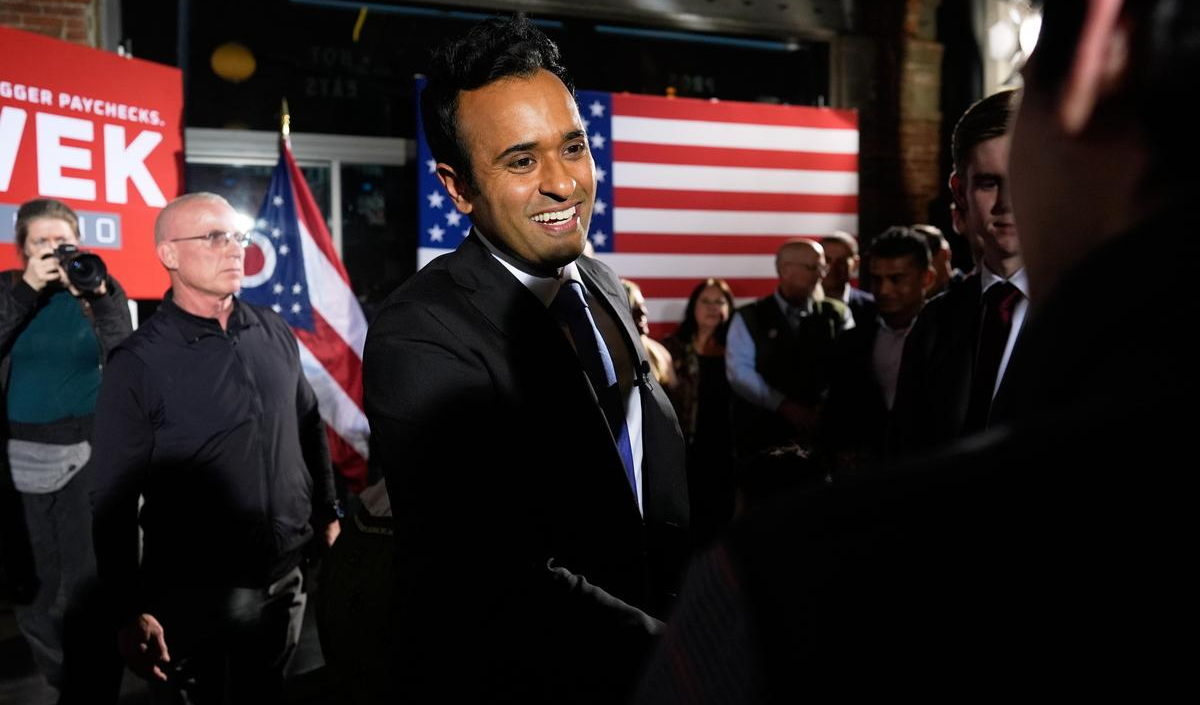
El-Sayed rejected the political attacks and criticised the rhetoric directed at him. During his victory speech, he specifically addressed Trump, Vice President JD Vance and Rogers over their claims concerning alleged Muslim Brotherhood associations.
He accused them of choosing hate while saying Michigan had chosen hope.
The controversy also created discomfort among several prominent Arab American leaders, including some who had supported Trump in the 2024 election. The rhetoric became a factor in the wider political debate involving Arab American voters and the Republican Party.
Expensive Senate contest draws record campaign spending
Michigan's Senate election was also one of the most expensive political contests in the state's history.
Candidates, political organisations and outside groups spent heavily on television advertisements, digital campaigns and other forms of voter outreach.
According to Bridge Michigan, more than $270 million in disclosed spending had been recorded by the previous month. The figure did not include additional undisclosed spending, commonly referred to as dark money.
The total exceeded the $217 million in disclosed spending during Rogers' 2024 Senate campaign against Elissa Slotkin.
The scale of spending reflected the national importance of the contest, with both parties recognising that the result could influence control of Congress.
El-Sayed addressed the financial pressure surrounding the campaign during his victory speech. Referring to the outside money spent against him, he argued that voters had built a movement larger than the financial resources deployed to defeat his candidacy.
He described the result as a victory for ordinary people over powerful financial interests, saying the campaign had demonstrated that voters could prevail in a contest dominated by money.
What El-Sayed’s victory means for American politics
El-Sayed's victory marks an important development for progressive Democrats and the wider political landscape in the United States. His election as the first Muslim member of the US Senate is a historic milestone, while his campaign offers progressives an example of a candidate winning in a competitive state with a platform focused on healthcare, economic fairness and corporate accountability.
The result also highlights the potential importance of voters who have become dissatisfied with established political parties. El-Sayed's outreach to rural communities and former Trump supporters suggests that economic concerns can create opportunities for candidates to build coalitions across traditional political boundaries.
His victory does not mean that every progressive policy he supports will automatically receive congressional backing. However, his presence in the Senate is likely to bring greater attention to debates over universal healthcare, medical debt, artificial intelligence regulation and the influence of wealthy donors in American politics.
For Michigan Democrats, the result is a major political achievement after a divisive primary campaign. For Republicans, Rogers' defeat represents a missed opportunity to capture a Senate seat that had been considered competitive.
As the Democratic Party moves into a new congressional majority, El-Sayed will face the challenge of translating his campaign promises into legislative action. His victory speech focused on unity, public service and the power of ordinary voters. The extent to which he can turn that message into policy will now shape the next phase of his political career.