Search

    Language Settings
    Select Website Language

    GDPR Compliance

    We use cookies to ensure you get the best experience on our website. By continuing to use our site, you accept our use of cookies, Privacy Policy, and Terms of Service.

    Assembly Elections 2026: Major Political Shift Across States as Leadership Changes and Allegations Surface

    16 hours ago

    Yugcharan News / 05 May 2026

    India’s political landscape witnessed a significant transformation following the results of the 2026 Assembly elections, with multiple states entering a phase of transition, leadership changes, and intense political reactions. The outcomes in key states such as West Bengal, Tamil Nadu, Kerala, and Assam have not only reshaped regional power dynamics but also triggered broader discussions on governance, electoral processes, and opposition realignment.

    West Bengal: Leadership Response Amid Electoral Defeat

    In West Bengal, outgoing Chief Minister Mamata Banerjee addressed the media after her party’s defeat, stating that she would not step down despite the electoral outcome. She suggested that the results were influenced by factors beyond a straightforward public mandate, indicating concerns about the electoral process. While making these remarks, she emphasized that her party’s struggle extended beyond conventional political rivalry.

    According to statements made during a press interaction, Banerjee claimed that her party had faced challenges that went beyond competing political forces. She also expressed concern over reported incidents targeting party offices across the state. These incidents, which reportedly included vandalism and attempts to occupy party premises, have raised questions about post-election law and order.

    She further stated that, despite the results, her party retains a considerable number of elected representatives and continues to represent a substantial segment of the electorate. While acknowledging the official outcome, she maintained that the party would remain active in political discourse and organizational work.

    BJP Prepares for Government Formation

    The Bharatiya Janata Party (BJP), which secured a decisive victory in West Bengal, has initiated steps toward government formation. Senior leader Amit Shah has been appointed as the party’s central observer for the selection of the legislative party leader in the state. Similarly, party president J.P. Nadda has been assigned a comparable role in Assam.

    Political observers note that these appointments are part of the BJP’s structured approach to leadership selection following electoral victories. The party’s performance in West Bengal marks a historic milestone, as it is set to form its first government in the state after a prolonged period of regional dominance by other political forces.

    The scale of the victory has been described by analysts as a reflection of shifting voter sentiment, possibly influenced by a combination of governance issues, campaign strategies, and broader national political trends.

    Concerns Over Post-Poll Violence

    In the aftermath of the election results, reports of isolated incidents of violence and vandalism have emerged from various parts of West Bengal. Political leaders across party lines have called for restraint and adherence to law and order.

    State BJP leadership has publicly urged authorities to take strict action against those involved in such incidents, regardless of political affiliation. Officials have indicated that any individual found engaging in unlawful activities would face consequences under the law.

    Administrative authorities have also been requested to ensure swift intervention in affected areas to prevent escalation. While investigations are ongoing, these developments highlight the recurring challenge of maintaining peace during politically sensitive periods.

    Tamil Nadu: Leadership Transition and Hung Assembly

    In Tamil Nadu, a major political development unfolded with the resignation of Chief Minister M.K. Stalin. The resignation was formally communicated to the Governor, marking the end of the current administration and paving the way for the formation of a new government.

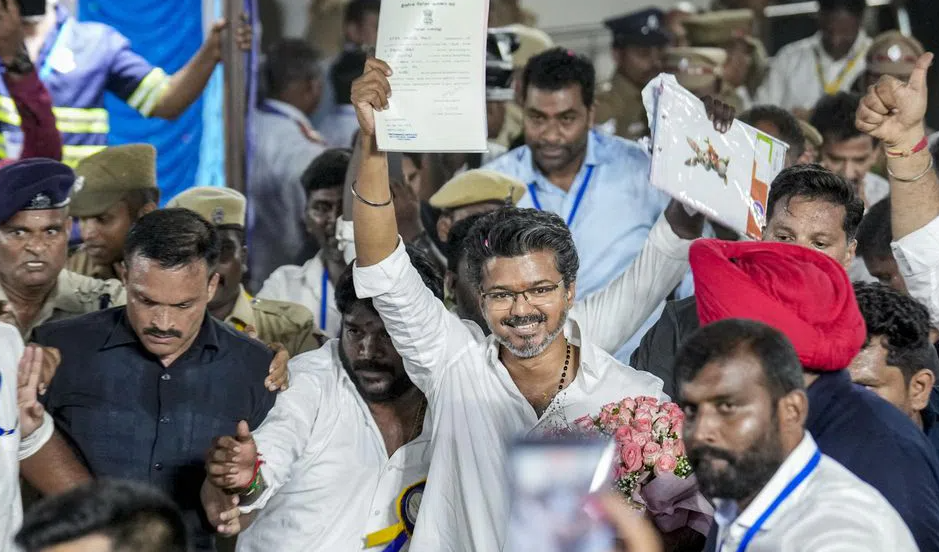
    The election results in the state produced a hung Assembly, with actor-turned-politician Vijay’s party emerging as the single-largest political entity. The party secured a substantial number of seats but fell short of the majority mark, leading to ongoing discussions regarding possible alliances and government formation strategies.

    Sources indicate that internal meetings have been conducted among newly elected representatives to decide on leadership roles and future course of action. Political analysts believe that the situation may lead to coalition negotiations, which could shape the next phase of governance in the state.

    Meanwhile, leaders from other parties have expressed differing views on the feasibility of forming a stable government under the current circumstances. Some have suggested that additional support from other political groups would be necessary, while others have indicated the possibility of fresh elections if consensus is not reached.

    Kerala: Political Realignment and Leadership Speculation

    Kerala has also entered a period of political transition following the election results, which saw a change in power dynamics. The Congress-led alliance has made significant gains, while the outgoing administration has faced electoral setbacks.

    Within the Congress party, discussions are underway regarding the selection of the next Chief Minister. Senior leaders are reportedly engaged in consultations to arrive at a consensus candidate. While no official announcement has been made, sources suggest that multiple names are under consideration.

    The developments have sparked internal deliberations within the party, reflecting both the opportunities and challenges associated with forming a new government. Observers note that leadership decisions in the coming days will play a crucial role in shaping the state’s governance trajectory.

    Assam: Electoral Trends and Representation

    In Assam, the election results have reaffirmed the position of the ruling alliance, with the BJP and its partners maintaining a strong presence. The composition of the new Assembly reflects continuity in governance, although certain demographic and representational aspects have drawn attention.

    For instance, the number of women legislators remains relatively low compared to the overall electorate. Despite women constituting nearly half of the voting population, their representation in the Assembly has not seen a significant increase.

    Political analysts have highlighted this aspect as an area requiring further focus, emphasizing the need for greater inclusivity in candidate selection and political participation.

    Broader National Implications

    The 2026 Assembly election results across multiple states indicate a broader shift in India’s political environment. The outcomes suggest changing voter priorities, evolving campaign strategies, and the increasing importance of regional dynamics within the national framework.

    The emergence of new political players, particularly in states like Tamil Nadu, points to a diversification of the political landscape. At the same time, established parties are reassessing their strategies in response to electoral setbacks.

    Experts believe that these developments could influence future electoral contests, including national elections, by shaping alliances, policy priorities, and voter engagement approaches.

    Opposition and Alliance Dynamics

    Another key aspect of the post-election scenario is the evolving nature of opposition alliances. Leaders from various parties have expressed the need for greater coordination and unity in addressing common political challenges.

    Statements from opposition figures indicate a willingness to strengthen collaborative efforts, although the specifics of such alliances remain under discussion. The coming months are expected to witness negotiations and strategic planning aimed at consolidating political influence.

    Governance and Public Expectations

    As states move toward government formation, the focus is gradually shifting from electoral outcomes to governance. Newly elected representatives and incoming administrations are expected to address key issues such as economic development, employment, infrastructure, and social welfare.

    Public expectations remain high, particularly in states that have witnessed significant political change. Analysts note that the ability of governments to deliver on promises will play a crucial role in shaping future electoral outcomes.

    Conclusion

    The 2026 Assembly elections have marked a turning point in India’s political journey, with multiple states experiencing shifts in leadership, party dominance, and voter alignment. While the immediate focus remains on government formation and political negotiations, the long-term implications of these results are likely to unfold over time.

    As political parties adapt to the new landscape, the emphasis on governance, accountability, and public engagement is expected to intensify. The developments in the coming weeks will be closely watched, as they will determine not only the direction of individual states but also the broader trajectory of Indian politics.


    Click here to Read More
    Previous Article
    Bengal की जीत से गदगद Modi-Shah | अब क्या करेंगे Rahul, Akhilesh & Kejriwal ? | Yugcharan
    Next Article
    Tamil Nadu Assembly 2026: TVK Explores Alliance Options to Form Government Amid Hung Verdict

    Related National Updates:

    Are you sure? You want to delete this comment..! Remove Cancel

    Comments (0)

      Leave a comment