Search

    Language Settings
    Select Website Language

    GDPR Compliance

    We use cookies to ensure you get the best experience on our website. By continuing to use our site, you accept our use of cookies, Privacy Policy, and Terms of Service.

    Tamil Nadu Debt Debate Intensifies as MK Stalin Responds to Chief Minister Vijay’s Financial Claims

    9 hours ago

    Yugcharan News / 11 May 2026

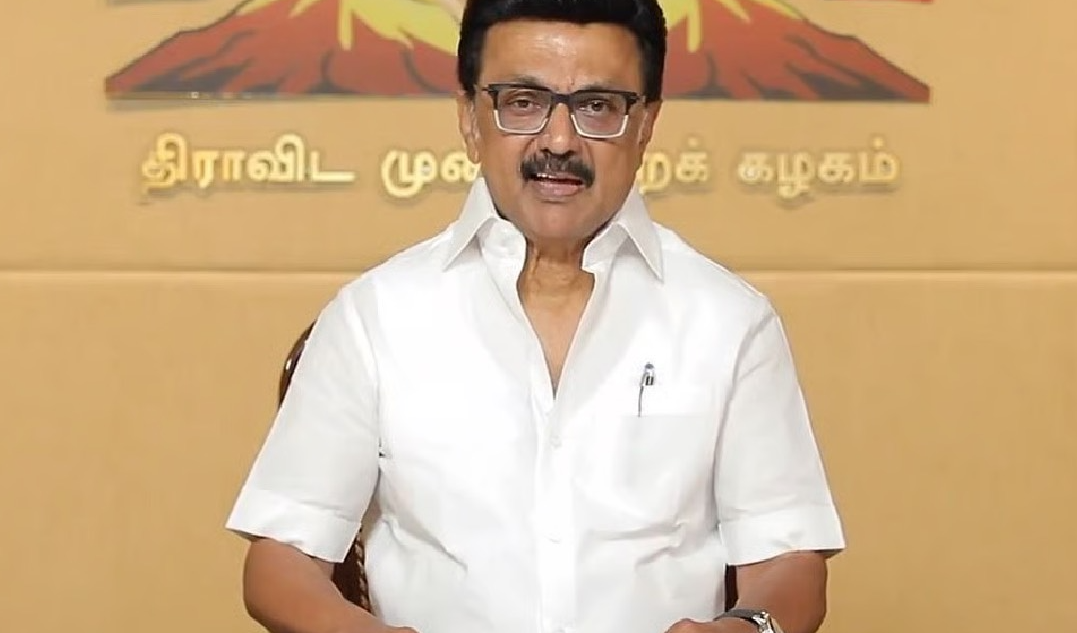
    A political exchange has emerged in Tamil Nadu over the state’s financial condition after newly sworn-in Chief Minister C Joseph Vijay alleged that the previous administration had left behind a massive debt burden. Former Chief Minister MK Stalin responded sharply to the remarks, asserting that Tamil Nadu’s finances remain within permissible limits and accusing the new government of creating unnecessary alarm over the state’s economic position.

    The remarks come shortly after Vijay officially took oath as the Chief Minister of Tamil Nadu following his party’s victory in the recently concluded Assembly elections. The transition of power has marked a significant political shift in the state, with the new administration promising transparency, administrative reforms, and a detailed review of the previous government’s financial management.

    However, even before the new cabinet begins full-scale governance, the issue of Tamil Nadu’s debt and fiscal management has already become a major political talking point.

    Vijay Raises Concerns Over State Debt

    During statements made after assuming office, Chief Minister Vijay reportedly claimed that the previous government had left Tamil Nadu under a financial burden amounting to nearly ₹10 lakh crore. He indicated that the new administration would examine the state’s fiscal position in detail and present a “white paper” outlining the financial condition inherited from the earlier regime.

    According to political observers, the announcement was intended to signal the beginning of a more transparent financial administration under the new government. Vijay also reportedly stressed that his administration would prioritise accountability and clarity regarding state finances.

    The comments immediately triggered political reactions, particularly from leaders of the outgoing government, who questioned both the accuracy and intent of the statements.

    MK Stalin Rejects Allegations

    Former Chief Minister MK Stalin publicly rejected the claims, stating that Tamil Nadu’s debt levels remain within legally and economically acceptable limits. In remarks shared through social media and public statements, Stalin said the state’s financial status had already been detailed in the budget presented earlier this year.

    He argued that the financial data was already available in the public domain and questioned why the current administration appeared surprised about the numbers after making extensive electoral promises during the campaign.

    “The financial condition of the state has already been presented transparently,” Stalin reportedly stated, while cautioning the new government against portraying the treasury as empty.

    Political analysts noted that Stalin’s response was aimed not only at defending his government’s economic record but also at countering a narrative that could potentially affect public confidence in the state’s economy.

    Debate Over Fiscal Responsibility

    The exchange has reopened a broader political debate regarding state borrowing, welfare expenditure, and long-term fiscal sustainability in Tamil Nadu.

    Over the years, Tamil Nadu has consistently ranked among India’s leading states in terms of industrial growth, welfare spending, and infrastructure development. However, like several major states, it has also relied significantly on borrowing to finance social schemes, subsidies, public projects, and development programmes.

    Experts point out that state debt by itself is not unusual in a large economy, particularly when governments invest heavily in infrastructure and welfare initiatives. The more important factor, economists argue, is whether borrowing remains within fiscal responsibility norms and whether revenue generation can support future liabilities.

    According to reports, Stalin maintained that Tamil Nadu’s debt ratio remains within limits permitted under existing fiscal frameworks.

    Political commentators say the disagreement reflects differing approaches to economic messaging between the outgoing and incoming governments.

    White Paper Announcement Gains Attention

    One of the major announcements made by the new administration is the proposed release of a white paper covering Tamil Nadu’s financial condition during the 2021–2026 period.

    A white paper is generally considered an official government document intended to present detailed information about a specific issue, often including financial data, administrative decisions, policy outcomes, and institutional performance.

    The proposed document is expected to become an important political and administrative tool for the Vijay-led government.

    Supporters of the new administration argue that the white paper could help increase transparency and provide clarity regarding public spending, liabilities, and pending commitments.

    Opposition leaders, however, appear cautious about the move, with some alleging that such exercises are often used politically to criticise previous governments rather than objectively assess fiscal realities.

    Political Transition Marks New Era in Tamil Nadu

    The developments come at a time when Tamil Nadu is witnessing one of its most significant political transitions in recent years.

    Actor-turned-politician C Joseph Vijay assumed office as Chief Minister after leading his party to an electoral victory that altered the state’s traditional political landscape. His rise to power has drawn massive public attention, especially among younger voters and first-time participants in the electoral process.

    The swearing-in ceremony witnessed enthusiastic public celebrations, large crowds, and widespread discussion across television and social media platforms.

    Political observers believe Vijay’s administration now faces the dual challenge of fulfilling ambitious campaign promises while also establishing administrative credibility in governance.

    Issues related to economic management, welfare delivery, employment generation, infrastructure expansion, and state finances are expected to dominate the initial phase of the government’s tenure.

    Governance Challenges Ahead

    Analysts suggest that managing public expectations could become one of the biggest challenges for the new government.

    Tamil Nadu has traditionally maintained a strong welfare model involving subsidised schemes, social support programmes, and extensive public spending. At the same time, maintaining fiscal discipline remains critical for long-term economic stability and investor confidence.

    The current debate over debt is therefore being viewed as more than just a political disagreement. Economists believe it could shape public perception about how the new administration plans to balance welfare commitments with financial prudence.

    Some experts have also pointed out that several Indian states witnessed increased borrowing during recent years due to economic slowdowns, pandemic-related expenditures, infrastructure expansion, and rising welfare demands.

    Against this backdrop, the Tamil Nadu government’s financial disclosures and future economic roadmap are likely to receive close scrutiny from policymakers, industry stakeholders, and rating agencies.

    Opposition and Public Reactions

    The political exchange between Vijay and Stalin has generated strong reactions from party workers and supporters on both sides.

    Supporters of the former administration argue that Tamil Nadu’s economic growth, industrial investments, and social indicators improved substantially during Stalin’s tenure, making accusations of financial collapse misleading.

    Meanwhile, supporters of the new government maintain that citizens deserve a transparent assessment of state finances and believe the white paper could offer greater accountability.

    The debate has also spread widely across digital platforms, where discussions about debt figures, state budgets, taxation, and welfare spending continue to trend among politically engaged audiences.

    Political analysts believe such debates are likely to intensify as the new government begins reviewing departmental finances and administrative records.

    NEET Opposition Remains Common Ground

    Interestingly, despite the sharp disagreement over finances, both Stalin and Vijay appear to share a common position on one major issue — opposition to the National Eligibility cum Entrance Test (NEET).

    The issue has remained politically sensitive in Tamil Nadu for years, with multiple regional parties arguing that the examination disadvantages students from rural and state-board backgrounds.

    Observers believe that while political rivalry between the two leaders may continue on governance and economic issues, certain state-specific concerns such as NEET could still see overlapping political positions.

    Focus Shifts to First Policy Decisions

    With the government now officially in place, attention is expected to shift toward the administration’s first major policy announcements.

    The release of the proposed white paper, cabinet-level financial reviews, and possible administrative audits may provide clearer insight into how the new leadership intends to shape Tamil Nadu’s economic and governance framework.

    Political experts say the first few months of the Vijay government will be crucial in determining whether campaign-era rhetoric transitions smoothly into practical governance.

    At the same time, the opposition is expected to closely monitor every major move, especially on issues relating to welfare spending, public borrowing, and economic performance.

    For now, the debate surrounding Tamil Nadu’s finances has become one of the earliest and most closely watched political confrontations in the state’s new political chapter.


    Click here to Read More
    Previous Article
    Congress Leadership Faces Tough Choice as Kerala CM Race Intensifies After UDF Victory
    Next Article
    Trinamool Congress Suspends Three Spokespersons Following Internal Dissent After Bengal Poll Defeat

    Related Politics Updates:

    Are you sure? You want to delete this comment..! Remove Cancel

    Comments (0)

      Leave a comment