Yugcharan News / 02-09-2026
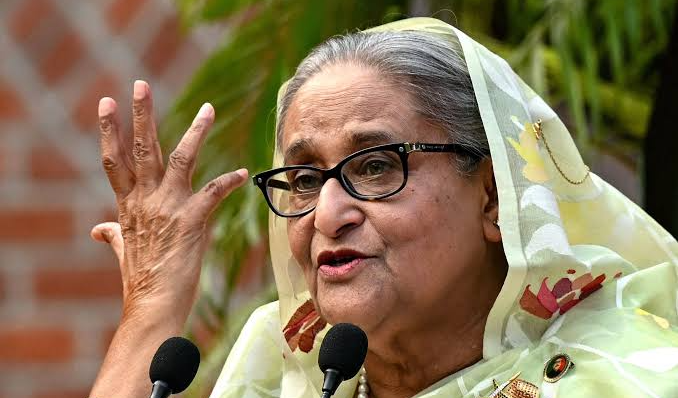
Former Bangladesh Prime Minister Sheikh Hasina has rejected speculation that her proposed return to Bangladesh is connected to any condition surrounding BNP leader Tarique Rahman’s possible visit to India. In a recent interview with Hindustan Times, Hasina discussed her plans to return to Bangladesh, the state of bilateral relations between India and Bangladesh, the political situation under the current government in Dhaka and the continued restrictions on the Awami League.
Hasina has repeatedly said in recent months that she intends to return to Bangladesh before December. However, the exact date of her return has not been announced. Her latest remarks come amid continuing political uncertainty in Bangladesh and renewed discussion over her future, particularly in the context of ongoing legal proceedings and the possibility of Tarique Rahman travelling to India for the upcoming BRICS summit.
According to reports, Bangladesh has been invited to participate in the forthcoming BRICS-related engagement in India, and Tarique Rahman has been invited to visit Delhi. It remains unclear whether he will accept the invitation. Against that backdrop, speculation has emerged that Dhaka may have linked Rahman’s possible India visit to the issue of Hasina’s extradition.
Hasina, however, has dismissed the suggestion that her return has been made a condition for Rahman’s visit.
Hasina Rejects Link Between Her Return and Tarique Rahman’s India Visit
In her interview, Hasina questioned why her return should be considered a condition for Tarique Rahman’s proposed visit to India. She referred to her own public appearances from India and argued that such activities should not automatically be treated as a factor affecting bilateral relations.
She also drew a comparison with Rahman’s political activities while living in the United Kingdom. According to Hasina, Rahman had previously undertaken political activities from abroad despite an earlier commitment that he would stay away from politics. She alleged that he subsequently became involved in BNP activities, assumed an important leadership role within the party and participated in political programmes through video conferencing.
Hasina argued that she had never asked the British authorities to prevent Rahman from participating in political activities while he was outside Bangladesh. In that context, she questioned why her own political statements and public appearances from India should be viewed differently.
The former prime minister said she could not understand how her return could become a condition connected to Rahman’s travel plans, particularly when she believes that political developments in Bangladesh have created serious concerns for members and supporters of the Awami League.
Why Does Hasina Want to Return to Bangladesh?
Hasina has been living in India since leaving Bangladesh in August 2024 following the political upheaval that brought an end to her long tenure in government.
Since then, she has periodically spoken about her intention to return. In the latest interview, she explained that her stated reason for wanting to go back is not a bid to regain political power but what she described as a desire to stand alongside the people of Bangladesh.
According to Hasina, Bangladesh is being pushed away from the path of development and democracy. She expressed concern that any slowdown in economic development could affect employment opportunities, while deterioration in law and order could leave ordinary citizens feeling increasingly insecure.
She also warned about the possible resurgence of extremist groups in the country. Hasina argued that such developments would not only have consequences within Bangladesh but could also become a wider regional concern.
Her comments indicate that she continues to view the political situation in Bangladesh through the lens of the country's long-term stability, economic development and democratic institutions.
Former Prime Minister Says She Is Not Afraid of Threats
Hasina also addressed concerns surrounding her personal safety should she return to Bangladesh. She said threats to her life are not new and referred to several traumatic events from her political career.
She recalled the assassination of most of her family members in 1975, when her father, Sheikh Mujibur Rahman, and several members of the family were killed. Hasina and her sister Sheikh Rehana survived because they were outside Bangladesh at the time.
She also referred to the August 21, 2004 grenade attack in Dhaka, when an attack targeted an Awami League political rally. Hasina survived the incident, although several people around her were killed.
According to her, such experiences have shaped her approach to political life, and she does not intend to allow threats to determine her decisions.
Hasina maintained that she is not primarily concerned about her own future or political position. Instead, she said her stated objective in returning to Bangladesh is to remain connected with the country's people.
Although she has indicated that she wants to return before December, she has not disclosed a specific date. She said the date and time of her return would be announced at an appropriate time.
Continued Ban on Awami League Remains a Major Issue
Another major issue raised by Hasina was the continued restriction on the activities of the Awami League.
The party's activities were prohibited during Bangladesh's interim administration following the political upheaval of 2024. According to the article, the restriction has remained in place even after the BNP came to power.
Hasina strongly criticised the continued prohibition, questioning the basis for preventing one of Bangladesh's oldest political parties from operating.
She argued that if the Awami League had committed wrongdoing, the people of Bangladesh should have the opportunity to express their judgment through elections. She questioned whether those who came to power following the political transition had the authority to permanently restrict the party's political activities.
Her comments reflect the continuing political divide between the Awami League and the authorities that emerged following the fall of her government.
Claims of Widespread Cases Against Awami League Members
Hasina also spoke about legal cases involving former Awami League leaders and supporters. She claimed that a very large number of cases had been filed against members of the party and questioned whether sufficient attention was being given to their concerns.
She also raised allegations concerning violence that took place across Bangladesh from July 15, 2024, onwards. Hasina questioned why cases relating to incidents of arson, attacks and killings during that period had not, in her view, received comparable attention.
These claims form part of a broader political dispute over responsibility for the violence and unrest that preceded the change in government. Different political groups in Bangladesh have offered sharply different accounts of the events, and allegations made by political figures should therefore be viewed in the context of the wider dispute.
Hasina additionally accused extremist and violent groups of operating in Bangladesh, expressing concern that their presence could have implications for national security and regional stability.
Hasina Says Awami League Will Survive Political Restrictions
Despite the continued ban on party activities, Hasina expressed confidence that the Awami League would remain politically relevant.
She argued that restrictions imposed on the party could not automatically eliminate its support among sections of the Bangladeshi population. She said the Awami League had existed for decades and would continue to exist despite government action against it.
Hasina also claimed that she remains in regular contact with party members and supporters. According to her, the difficulties faced by Awami League workers have not necessarily erased the party's support base.
The statement underlines the former prime minister's continued political engagement despite her absence from Bangladesh. Her remarks also suggest that the Awami League's future remains one of the central unresolved questions in Bangladesh's post-2024 political landscape.
Tensions Between Dhaka and New Delhi
Hasina's latest comments also come against the backdrop of strained relations between Bangladesh and India.
Bangladesh's authorities have previously expressed objections to Hasina making political statements and holding public programmes from Indian territory. Dhaka reportedly argued that allowing such activities could have an adverse effect on bilateral relations.
India, however, has maintained that political activities undertaken by Hasina from Indian soil are not organised or endorsed by the Indian government. New Delhi has also sought to distinguish between the presence of the former Bangladeshi prime minister in India and the statements she makes in her personal or political capacity.
The issue has therefore become sensitive for both countries, particularly because India and Bangladesh share extensive economic, geographic and security interests.
Hasina's proposed return could add another layer to those diplomatic discussions. Any decision concerning extradition, legal proceedings or her movement is likely to attract considerable political attention in both countries.
Return Plans Remain Uncertain
For now, Hasina's intention to return to Bangladesh before December remains a political declaration rather than a confirmed travel plan. She has not announced a specific date or provided details about how the return would take place.
Her latest interview nevertheless provides a clear indication of how she views the situation. She rejects the suggestion that her return is connected to Tarique Rahman's possible India visit and insists that her motivation is linked to what she describes as concerns over Bangladesh's democratic institutions, economic progress, security environment and treatment of Awami League supporters.
At the same time, the political and legal circumstances surrounding her possible return remain complicated. Questions concerning her legal status, ongoing cases, the future of the Awami League and relations between Dhaka and New Delhi could all influence developments in the coming months.
Tarique Rahman's decision on whether to travel to India will also be closely watched, particularly given the speculation surrounding his possible visit and the wider diplomatic context.
As Bangladesh continues to navigate its post-2024 political transition, Sheikh Hasina's future remains a significant issue in the country's domestic politics as well as in India-Bangladesh relations. Her latest remarks suggest that, despite remaining outside Bangladesh, she does not intend to withdraw from the political debate surrounding the country's future.