Yugcharan News / 25-09-2026
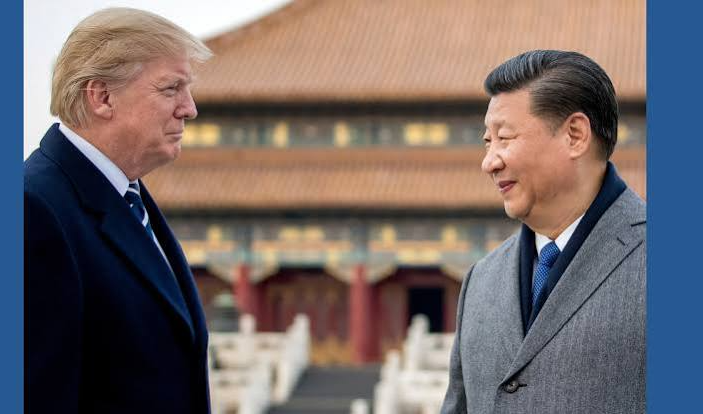
US President Donald Trump and Chinese President Xi Jinping have signalled a renewed effort to maintain stable relations between the world’s two largest economies, while major disagreements over Iran, Taiwan, trade and other strategic issues remain unresolved. The two leaders met at the White House on September 24 during Xi’s three-day state visit to the United States, his first trip to Washington in 11 years.
The meeting came after a period of intense friction between Washington and Beijing, including tariff disputes and broader competition between the two countries. Despite those tensions, both leaders used the latest meeting to emphasise dialogue and the need to prevent disagreements from escalating into a wider confrontation.
Trump described his meeting with Xi as a “great meeting” and referred to the relationship between the two leaders as a friendship built over several years. Xi, meanwhile, called for competition between the United States and China to remain within limits and warned against the dangers associated with confrontation between an established power and a rising power.
Trump and Xi Stress Need for Stable Relations
The summit followed a difficult period in US-China relations. After Trump returned to the White House, his administration introduced severe tariffs on Chinese goods, contributing to a renewed trade confrontation between Washington and Beijing and raising concerns about wider economic consequences.
Despite the earlier tensions, Trump and Xi have sought to reduce friction and maintain direct communication. The latest meeting reflected that approach, although the underlying disagreements between the two countries remain.
Trump told reporters that the two sides had held a “great meeting”, but did not provide detailed information about the discussions. Xi took a broader approach, stressing the importance of preventing strategic competition from turning into direct confrontation.
The Chinese president referred to the “Thucydides Trap”, a term used in international relations to describe the risk of conflict when a rising power challenges an established power. Xi argued that the relationship should instead involve competition in which both countries seek to improve rather than attempt to defeat each other.
He said the United States and China should engage in “healthy” competition that remains within boundaries, while recognising that the two economies and societies are deeply interconnected.
Iran War Remains a Major Point of Difference
The US conflict with Iran was another important issue surrounding Xi’s visit. The war, launched by the United States and Israel in February, has had consequences extending well beyond the immediate region, including the closure of the Strait of Hormuz and a rise in global energy prices.
Washington has sought Chinese support for efforts to economically isolate Tehran and reopen the strategically important waterway. China, however, has been hesitant to become directly involved in the US campaign against Iran.
Beijing has significant economic ties with Tehran and is described in the source material as Iran’s largest trading partner. This relationship has complicated Washington’s efforts to persuade China to support its pressure campaign against the Iranian government.
No breakthrough on the Iran issue was reported following the Trump-Xi talks on Thursday. Xi indicated support for the United States and Iran returning to an interim agreement that was intended to provide a pathway towards a broader peace arrangement.
That earlier truce collapsed shortly after it was announced in June, leaving the issue unresolved.
The absence of a reported breakthrough underlined the broader difficulty facing Washington and Beijing. While both governments have an interest in preventing their bilateral relationship from deteriorating further, they continue to have different positions on major international and security issues.
Xi's Washington Visit Draws Mixed Reaction in Congress
Xi’s state visit received a mixed response from lawmakers in Washington. While the White House presented the visit as an opportunity for high-level diplomacy, some members of both the Republican and Democratic parties criticised the scale of the welcome extended to the Chinese president.
Republican Senator Roger Wicker questioned whether Xi should have been invited to Washington for such a high-profile state visit, citing what he described as serious concerns involving Xi and the Chinese Communist Party.
Democratic Senator Chris Van Hollen also criticised Trump’s approach to dealing with authoritarian leaders, arguing that closer personal engagement would not necessarily produce the outcomes sought by Washington. These comments reflected concerns among some lawmakers about the United States’ approach to China and the broader strategic competition between the two countries.
At the same time, other lawmakers defended the importance of maintaining diplomatic communication.
Republican Senator Rand Paul said he was pleased that the meeting was taking place and described diplomacy as important. His comments reflected the view that sustained dialogue between Washington and Beijing can help reduce the possibility of a direct conflict between the two countries.
The differing reactions in Congress showed that the summit is taking place against a complicated domestic political backdrop in the United States, where there are competing views over how Washington should manage its relationship with Beijing.
Taiwan Remains a Core Flashpoint
Taiwan continues to be one of the most sensitive issues in US-China relations. China claims Taiwan as part of its territory, while the island operates with its own elected government and maintains extensive economic and unofficial international relations.
During Thursday’s meeting, Xi urged Trump to oppose Taiwanese independence and handle the issue carefully, according to China’s state news agency Xinhua. The White House had not released its own summary of the discussions or remarks concerning Taiwan at the time of the source report.
Taiwan has remained a central point of strategic competition between Washington and Beijing. China has repeatedly objected to actions it considers supportive of Taiwanese independence, while US policy has sought to maintain relations with Taiwan and encourage a peaceful resolution of the dispute.
The issue has also become linked to US arms sales to Taiwan. Trump said after an earlier meeting with Xi in May that final approval of a $14 billion arms package for Taipei would be postponed. He also described arms sales as a negotiating tool in dealing with China.
That approach has drawn criticism from some US officials and lawmakers who regard American military support for Taiwan as an important component of Washington’s long-standing commitments in the region.
Washington Balances Relations With Beijing and Taipei
The United States has historically attempted to manage two parallel objectives: maintaining an important relationship with Beijing while also supporting Taiwan’s security and encouraging a peaceful resolution of cross-Strait differences.
China’s growing economic and military power has made the relationship increasingly complex. Taiwan has expressed concerns about possible Chinese economic and military pressure aimed at bringing the island under Beijing’s control.
The source material also cites a May Economist/YouGov poll showing that Americans were more likely to view Taiwan as an ally than China. When respondents were asked whether the United States should prioritise better relations with Beijing or preventing China from taking control of Taiwan, the results were closely divided, with 36 percent choosing better relations with Beijing and 35 percent choosing preventing Chinese control of Taiwan. Fewer than 40 percent said the United States should be prepared to use military force to stop China from taking control of Taiwan.
These figures illustrate the complexity of public opinion in the United States on the Taiwan issue, particularly regarding the question of how far Washington should go in responding to a potential conflict.
A Summit Focused on Dialogue Despite Unresolved Differences
The Trump-Xi meeting demonstrated an effort by Washington and Beijing to maintain dialogue despite deep differences in their strategic interests.
Trade remains an important area of competition, while the conflicts and disputes involving Iran and Taiwan add further complications to the bilateral relationship. The two countries also remain competitors in areas including advanced technology and artificial intelligence.
For Trump, closer engagement with Xi offers an opportunity to manage disagreements directly while pursuing US interests. For Beijing, maintaining stable relations with Washington can help prevent competition from escalating into a broader confrontation.
The summit therefore did not remove the fundamental disputes between the two countries. Instead, the meeting highlighted an effort by both governments to keep those differences from overwhelming the broader relationship.
Xi’s warning against the “Thucydides Trap” and his call for competition to remain within limits reflected Beijing’s emphasis on avoiding confrontation. Trump’s positive description of the meeting similarly indicated a willingness to maintain high-level engagement.
However, major questions remain unresolved, particularly over Iran, Taiwan, trade and the wider strategic competition between Washington and Beijing. The White House and Chinese leadership will now face the challenge of translating diplomatic engagement into practical arrangements while managing disagreements that extend across economic, security and geopolitical issues.
For the moment, the Washington summit has provided another channel for direct communication between Trump and Xi. Whether that dialogue can produce lasting agreements on the most contentious issues will depend on subsequent negotiations and decisions by both governments.