Search

    Language Settings
    Select Website Language

    GDPR Compliance

    We use cookies to ensure you get the best experience on our website. By continuing to use our site, you accept our use of cookies, Privacy Policy, and Terms of Service.

    Venezuela Earthquake Death Toll Reaches 235 as Massive Rescue Operation Continues

    3 hours ago

    Yugcharan News / June 26, 2026

    Venezuela is confronting one of the deadliest natural disasters in its recent history after two powerful earthquakes struck the country's northern region, leaving at least 235 people dead and more than 4,300 injured. Rescue teams are working around the clock in a desperate search for survivors as thousands of people remain unaccounted for. The disaster has caused widespread destruction across several cities, with collapsed buildings, damaged roads, disrupted communications, and overwhelmed hospitals complicating relief efforts.

    Authorities have warned that the casualty count is likely to rise as emergency workers continue clearing debris in the worst-affected areas. Families across northern Venezuela are anxiously searching for missing relatives while international assistance begins arriving to support one of the country's largest emergency response operations in decades.

    What Happened

    The disaster unfolded on the evening of June 24 when two powerful earthquakes struck within a minute of each other near Venezuela's Caribbean coastline. Seismological agencies recorded the first earthquake at a magnitude of 7.2, followed almost immediately by a stronger 7.5-magnitude tremor.

    The earthquakes originated near the coastal city of Morón, west of Caracas, at relatively shallow depths. Experts say the combination of two strong earthquakes occurring in quick succession significantly intensified the shaking, leading to extensive structural damage across a large part of northern Venezuela.

    The tremors were felt hundreds of kilometres away, with reports of evacuations in neighbouring regions and disruptions extending beyond Venezuela's borders.

    Death Toll Continues to Rise

    Health authorities confirmed that at least 235 people have lost their lives while more than 4,300 others have been injured. Hospitals across the affected regions remain under immense pressure as doctors and emergency medical teams continue treating victims suffering from fractures, crush injuries and other trauma caused by collapsing buildings.

    Officials have cautioned that the confirmed death toll may increase considerably because rescue teams are still searching through destroyed residential buildings, commercial complexes and public facilities. Thousands of people are believed to be missing, making it one of the country's most severe humanitarian emergencies in recent years.

    Emergency shelters have also been established for residents who lost their homes or are unable to return due to structural damage.

    La Guaira Among the Worst-Hit Regions

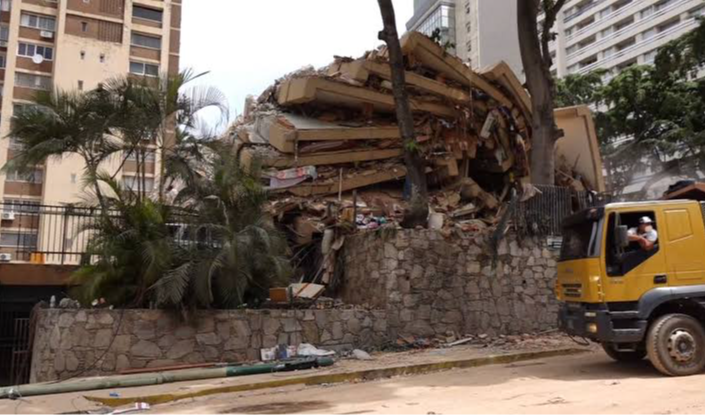
    The coastal state of La Guaira has emerged as one of the areas suffering the greatest devastation. Numerous residential neighbourhoods experienced building collapses, while roads, public infrastructure and utilities sustained heavy damage.

    The closure of the country's main international airport, located in La Guaira, has complicated the arrival of humanitarian supplies and rescue personnel. Authorities are working to restore essential transportation links while coordinating relief efforts through alternative routes.

    Residents described scenes of widespread destruction as entire streets were reduced to rubble. Many survivors spent the night outdoors, fearing additional structural failures and possible aftershocks.

    Communities Lead Initial Rescue Efforts

    Before heavy rescue equipment could reach several affected locations, local residents began digging through collapsed buildings using basic tools and their bare hands in an effort to locate trapped neighbours and relatives.

    Eyewitnesses described emotional scenes as families searched desperately for missing loved ones. Volunteers joined emergency responders in clearing debris while rescue workers continued searching for signs of life beneath collapsed structures.

    Many survivors have appealed for additional heavy machinery, medical assistance and temporary shelter as rescue operations continue.

    Government Declares Emergency

    The Venezuelan government has declared a national state of emergency following the disaster. Acting President Delcy Rodríguez announced the creation of a reconstruction fund to support repairs to damaged hospitals, public infrastructure and residential housing.

    Authorities have appealed to private companies to provide heavy construction equipment that can accelerate rescue operations in severely damaged areas. Additional rescue personnel have also been deployed from different parts of the country to reinforce local emergency teams.

    Government officials have emphasized that saving lives remains the immediate priority while assessments of infrastructure damage continue.

    International Community Responds

    Several countries have announced humanitarian assistance for Venezuela following the earthquake. Search-and-rescue teams, emergency medical personnel, field hospitals, rescue dogs, water purification systems and medical supplies are being mobilized to support ongoing operations.

    International cooperation has become particularly important because damaged transportation infrastructure has complicated domestic relief efforts. Humanitarian organizations are coordinating with Venezuelan authorities to ensure aid reaches the communities most severely affected.

    The United States also announced temporary measures to ease certain sanctions related to humanitarian transactions, allowing assistance connected with earthquake relief efforts to move more efficiently during the emergency.

    Hospitals Face Enormous Pressure

    Medical facilities across northern Venezuela continue treating thousands of injured patients as doctors work under difficult conditions. Some hospitals have experienced infrastructure damage while others are operating beyond normal capacity due to the large number of casualties.

    Medical professionals have established emergency treatment areas to accommodate patients requiring urgent care. Authorities continue transferring critically injured individuals to facilities capable of providing specialized treatment where possible.

    Health officials have urged citizens to donate blood and cooperate with emergency response measures while avoiding unnecessary travel in heavily affected areas.

    Infrastructure Suffers Major Damage

    The earthquakes caused widespread disruption to essential infrastructure throughout northern Venezuela. Roads developed significant cracks, electricity supplies were interrupted in several districts, telecommunications experienced outages, and public transportation services were suspended in some areas.

    Educational institutions have temporarily closed, with several school buildings being converted into emergency shelters and relief distribution centres for displaced families.

    Officials are conducting structural inspections of bridges, hospitals, government buildings and residential complexes to determine whether they remain safe for public use.

    Experts Explain the Scale of Destruction

    Seismologists say the exceptional damage resulted not only from the strength of the earthquakes but also from their shallow depth and the extremely short interval between the two seismic events.

    When powerful earthquakes occur close together, the ground experiences repeated intense shaking before structures have an opportunity to stabilize. This significantly increases the likelihood of building failures, particularly in older or vulnerable construction.

    Experts expect aftershocks to continue in the coming days and have advised residents to remain cautious, especially around damaged buildings.

    A Difficult Recovery Ahead

    Beyond the immediate rescue operation, Venezuela now faces the enormous challenge of rebuilding communities affected by the disaster. Thousands of residents have lost homes, businesses and essential services, while public infrastructure will require extensive repairs.

    The recovery process is expected to involve rebuilding hospitals, transportation networks, schools and housing while providing long-term support for displaced families. Economic pressures already facing the country may further complicate reconstruction efforts, making sustained international cooperation an important component of recovery.

    Conclusion

    As rescue teams continue searching for survivors, Venezuela remains focused on saving lives and supporting communities devastated by the twin earthquakes. With the confirmed death toll standing at 235 and thousands still missing or displaced, authorities expect rescue operations to continue for several days.


    The disaster has prompted an unprecedented emergency response involving government agencies, volunteers and international partners. While humanitarian aid is beginning to reach affected regions, the coming weeks will be critical as Venezuela transitions from emergency rescue operations to long-term recovery and reconstruction. The scale of the destruction underscores the immense challenges ahead, but ongoing rescue efforts continue to offer hope that more survivors may still be found beneath the rubble.

    Click here to Read More
    Previous Article
    पशुपालन मंत्री जोराराम कुमावत की अध्यक्षता में विभागीय योजनाओं की समीक्षा बैठक आयोजित
    Next Article
    Ram Temple Donation Row Sparks Political Debate as Probe Intensifies

    Related International Updates:

    Are you sure? You want to delete this comment..! Remove Cancel

    Comments (0)

      Leave a comment