Search

    Language Settings
    Select Website Language

    GDPR Compliance

    We use cookies to ensure you get the best experience on our website. By continuing to use our site, you accept our use of cookies, Privacy Policy, and Terms of Service.

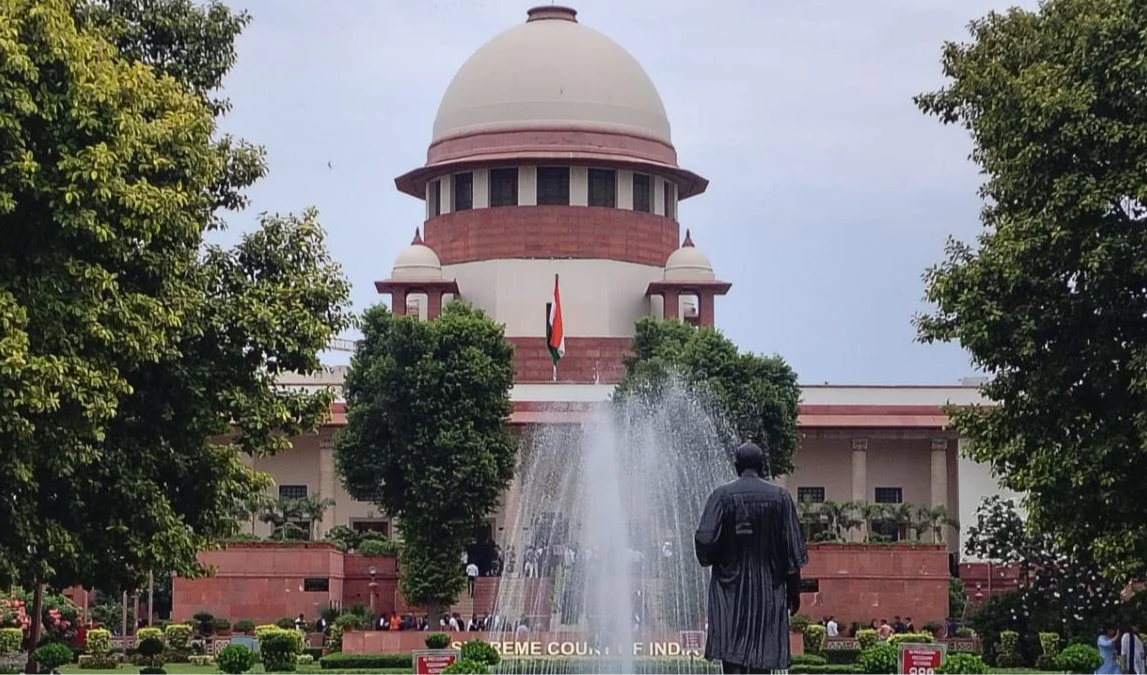
    Supreme Court Says Peaceful Protests Are Constitutionally Protected, Mere Agitation Cannot Justify Lathi-Charge: CJI Surya Kant

    18 hours ago

    Yugcharan News | 27-07-2026

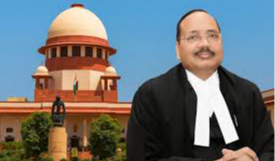
    The Supreme Court of India on Monday made significant observations on the constitutional right to peaceful protest while hearing a batch of petitions concerning the alleged use of excessive police force during demonstrations held over examination paper leak issues. Chief Justice of India (CJI) Surya Kant stated that peaceful and lawful protests are protected under the Constitution, and that the mere existence of an agitation cannot be used as a justification for resorting to lathi-charge or excessive police action.

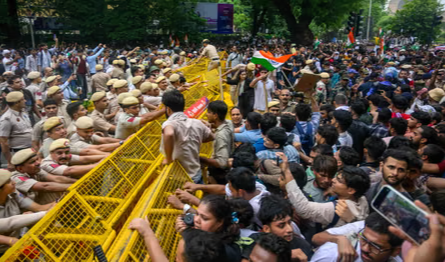
    The remarks came during the hearing of multiple petitions relating to police action against students and other demonstrators who participated in nationwide protests, including the events that unfolded at Delhi's Jantar Mantar. The case has raised wider constitutional questions regarding citizens' right to assemble peacefully, police accountability, and the need for uniform guidelines governing crowd control across India.

    Supreme Court Reaffirms the Right to Peaceful Protest

    A Bench comprising Chief Justice Surya Kant, Justice Joymalya Bagchi, and Justice V. Mohana was hearing the matter after several petitions were mentioned before the Court.

    During the proceedings, the Chief Justice orally observed that the Constitution guarantees every citizen the right to participate in peaceful and lawful protests. He emphasized that democratic societies recognize dissent as an important part of governance and that authorities must distinguish between peaceful demonstrations and situations that genuinely threaten public order.

    The Bench further remarked that if allegations of excessive police force are made, they deserve an independent examination. The Court also indicated that this issue is not confined to Delhi alone and highlighted the need for uniform police protocols to deal with public demonstrations across the country.

    According to the Court's oral observations, merely because a protest is taking place does not automatically justify the use of force. At the same time, the Bench stressed that maintaining discipline remains an essential aspect of democratic functioning.

    Injuries to Both Protesters and Police Are Equally Important

    During the hearing, the Court permitted a lawyer representing the families of police personnel who were reportedly injured during the protests to participate in the proceedings.

    Justice Joymalya Bagchi observed that injuries sustained by any individual—whether a police officer or a protester—are matters of equal concern. The Court also suggested that governments may be asked to explain whether police personnel are being provided with adequate protective equipment, including helmets and other safety gear, while handling large public gatherings.

    The observation reflected the Court's approach of considering the concerns of all parties involved rather than focusing solely on one side of the dispute.

    Batch of Petitions to Be Heard Together

    The Supreme Court decided that all petitions relating to the issue would be heard together. Given the constitutional importance of the questions involved, the Bench felt that a comprehensive hearing would allow all stakeholders to present their arguments before any judicial directions are issued.

    The matter had earlier been mentioned by Senior Advocate Gopal Sankaranarayanan, who sought urgent listing in view of the ongoing protests and allegations of police excess. The Court had agreed to hear the matter.

    Background of the Case

    The petitions arise from demonstrations held on July 20, 2026, when students and several citizens reportedly marched toward Parliament to raise concerns regarding examination paper leaks and broader issues related to the education system. Reports indicate that some protesters were also demanding the resignation of Union Education Minister Dharmendra Pradhan.

    According to the petitions, heavy police deployment, barricades, tear gas, baton charges, and detentions followed during the protests. The petitioners have alleged that several demonstrators suffered injuries and that some women protesters were subjected to inappropriate conduct during the police action.

    These allegations are currently before the Supreme Court and have not been judicially established. The petitions primarily seek an independent inquiry into the events.

    What the Petitioners Have Requested

    The petitions filed before the Supreme Court seek several directions concerning police conduct during public demonstrations.

    Among the principal requests are:

    • Framing national guidelines regulating police action during peaceful protests.
    • Restricting the deployment of plainclothes personnel for crowd-control operations.
    • Issuing Standard Operating Procedures (SOPs) governing the use of prohibitory orders under Section 163 of the Bharatiya Nagarik Suraksha Sanhita (BNSS).
    • Ordering an independent investigation into the police action during the July 20 protest.
    • Strengthening police accountability mechanisms across the country.
    • Ensuring appropriate legal action wherever violations are established following due process of law.

    The petitioners argue that constitutional rights should not become dependent on routine administrative permissions or repeated prohibitory orders.

    Questions Raised Over Section 163 of BNSS

    One of the major constitutional issues raised in the petitions concerns Section 163 of the Bharatiya Nagarik Suraksha Sanhita (BNSS), which replaced the earlier Section 144 of the Code of Criminal Procedure (CrPC).

    The petitioners contend that repeated and prolonged use of prohibitory orders effectively restricts citizens' constitutional right to assemble peacefully. They argue that such powers should only be exercised when there is a genuine and immediate threat to public order.

    The Court is expected to examine whether existing practices are consistent with constitutional safeguards.

    Concerns Regarding Section 152 of the Bharatiya Nyaya Sanhita

    The petitions have also questioned the application of Section 152 of the Bharatiya Nyaya Sanhita (BNS), which relates to acts affecting the sovereignty, unity, and integrity of India.

    According to the petitioners, the provision may be interpreted broadly and could potentially impact peaceful political dissent or criticism of government policies if not applied carefully.

    The Supreme Court is yet to express any final opinion on these submissions, and the matter remains under consideration.

    Demand for Police Identification and Accountability

    Another important issue raised before the Court concerns the deployment of plainclothes personnel during crowd-control operations.

    The petitioners argue that police officers involved in arrests or the use of force should display clear identification in accordance with principles laid down in earlier judicial decisions. They have requested nationwide guidelines requiring visible identity badges during protest-related policing.

    Such measures, they argue, would improve transparency and accountability in law enforcement operations.

    Concerns Over Metro Closures and Internet Restrictions

    The petitions also refer to the temporary closure of metro services and reported internet restrictions imposed during the protests.

    According to the petitioners, these measures affected not only protesters but also office workers, students, patients, commuters, and businesses that rely on digital connectivity. They contend that restrictions of this nature should only be imposed in exceptional circumstances and should follow clearly defined legal standards.

    The Court may examine whether such measures satisfy constitutional requirements relating to proportionality and necessity.

    A Broader Constitutional Debate

    Legal experts believe that the matter extends beyond a single protest and touches upon larger constitutional principles governing the relationship between citizens and the State.

    The Supreme Court's observations suggest that while maintaining public order remains an essential responsibility of law enforcement agencies, the constitutional guarantee of peaceful protest must also be protected. The Court's emphasis on independent scrutiny of alleged excesses and the possibility of introducing uniform national protocols indicates that the outcome of this case could have significant implications for future public demonstrations across India.

    As all connected petitions are scheduled to be heard together, the Supreme Court is expected to consider submissions from the Union Government, the Delhi administration, police authorities, and the petitioners before deciding whether nationwide guidelines or additional directions are required.


    The Court's oral observations have already reinforced an important constitutional principle—that peaceful protest is an integral part of India's democratic framework, and any allegation of excessive force must be examined through an independent and fair process.

    Click here to Read More
    Previous Article
    प्रधानमंत्री के विचारों को केवल सुनें नहीं, बल्कि अपने जीवन में उतारें” “मन की बात” कार्यक्रम के बाद कैबिनेट मंत्री जोराराम कुमावत का आह्वान
    Next Article
    Cockroach Janta Party's Protest Victory Signals Political Challenge for PM Modi, Say Analysts

    Related National Updates:

    Are you sure? You want to delete this comment..! Remove Cancel

    Comments (0)

      Leave a comment