Yugcharan News / 21-10-2026
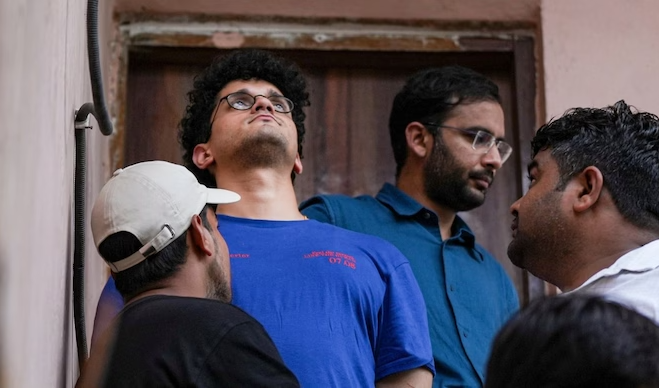
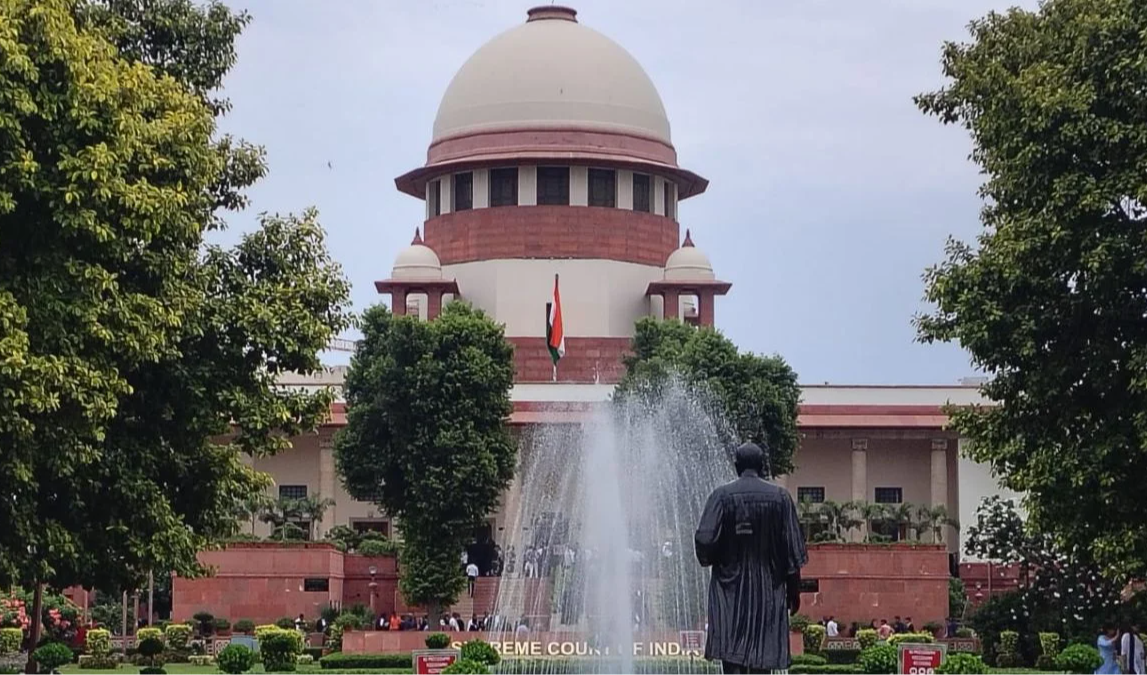
Cockroach Janta Party (CJP) leaders Saurav Das and Ashutosh Ranka on Wednesday withdrew their petition before the Delhi High Court challenging the extension of their judicial custody in connection with protests against Chief Election Commissioner Gyanesh Kumar. The withdrawal came after Justice Subramonium Prasad expressed reservations about entertaining the writ petition, observing that an alternative legal remedy was available under the law.
The petition challenged an October 19 order passed by a Special Executive Magistrate (SEM), which extended the judicial custody of the two leaders by two days. Their custody was due to expire on October 21, when they were scheduled to be produced before the magistrate for further proceedings.
The High Court permitted the petitioners to withdraw the case without expressing any opinion on the merits of their arguments. The development leaves the immediate question of their custody and the validity of the magistrate's order to be addressed through the appropriate legal proceedings.
During the hearing, Justice Prasad emphasised that personal liberty is a fundamental consideration but must be pursued through the remedies provided by law. The judge observed that where a statutory mechanism is available to challenge an order, the court must consider whether a writ petition is the appropriate route.
"Liberty is sacrosanct. But if the Code provides for remedy… when there is already provision available," the judge remarked during the proceedings.
The court subsequently suggested that the petitioners withdraw their plea, appear before the Special Executive Magistrate later in the day and decide on their next legal step based on the outcome of those proceedings.
High Court Questions Maintainability of Writ Petition
Advocate Abhik Chimni, appearing for Das and Ranka, sought the setting aside of the October 19 order extending their judicial custody. He argued that the order did not adequately explain the alleged imminent threat that made continued custody necessary.
According to the counsel, the magistrate's order referred to submissions made by the State and an apprehension of a breach of peace but did not provide sufficient reasons to justify the decision. Chimni maintained that the continued custody of the petitioners was legally unsustainable.
The High Court, however, questioned why the petitioners had approached it under Article 226 of the Constitution when the magistrate's order could potentially be challenged through revision proceedings.
Justice Prasad observed that there was a distinction between the maintainability of a writ petition and whether the court should entertain it in the circumstances of a particular case. The judge indicated that the appropriate legal remedy needed to be considered before examining the substantive allegations.
The court also observed that an appellate or revisional forum could examine the relevant facts within its jurisdiction, whereas the scope of judicial review in a writ petition was different. According to the judge, the High Court would ordinarily examine the decision-making process in such proceedings rather than undertake the same factual assessment as an appellate court.
The observations formed an important part of the hearing, although the court did not issue a final ruling on the legality of the custody extension because the petition was withdrawn.
Dispute Over Peace Bonds and Preventive Proceedings
The case arises from preventive proceedings initiated against Das and Ranka ahead of protests announced in Delhi against the Chief Election Commissioner.
According to the background presented in the case, the two leaders were apprehended at an airport on October 10 and subjected to preventive proceedings under Sections 126 and 170 of the Bharatiya Nagarik Suraksha Sanhita (BNSS).
They were released the same day after being required to furnish peace bonds of ₹50,000. Such bonds are intended to secure an undertaking to maintain peace and comply with applicable legal requirements.
The two were subsequently apprehended again on October 14 following an alleged attempt to stage a Tiranga protest at Jantar Mantar. Authorities alleged that their actions violated the earlier undertakings and the restrictions applicable to the location.
They were then remanded to five days of judicial custody by Executive Magistrate Mahesh Kumar Meena on October 14. Their case came up for further proceedings on October 19, when their custody was extended by another two days.
The magistrate's order reportedly stated that the petitioners had deliberately breached their peace bonds and had immediately committed a breach of peace. It also referred to concerns raised by the investigating officer about their alleged pattern of organising protests at locations where demonstrations were no longer permitted.
The order further recorded that the assurance given by the petitioners that they would not repeat the alleged conduct did not inspire confidence in view of the material placed on record by the police.
These observations formed part of the administrative and judicial record underlying the custody proceedings. The allegations, however, were not finally adjudicated by the High Court in the withdrawn writ petition.
Jantar Mantar Restrictions Figure in Court's Observations
During the hearing, the High Court referred to the alleged attempt to unfurl the national flag at Jantar Mantar in violation of prohibitory orders. The court noted that the location had been de-notified as a protest site on October 11, according to the material discussed during the proceedings.
The court also noted that the challenge to the de-notification of Jantar Mantar was pending before the Supreme Court and that the relevant notification had not been stayed.
Against this background, Justice Prasad questioned whether the alleged breach of the peace bonds could be examined independently of the circumstances in which the petitioners had undertaken the protest.
The judge referred to the allegation that the petitioners had gone to Jantar Mantar and broken a barricade. The court observed that an unauthorised gathering could attract additional participants, potentially creating circumstances that might be difficult for organisers to control.
The judge explained that obtaining police permission for a protest served, among other purposes, to help prevent unwanted individuals from joining a gathering and disrupting its intended character.
The observations did not amount to a final determination that the petitioners were guilty of the alleged violations. Instead, they reflected the court's consideration of the circumstances relevant to the preventive proceedings and the restrictions imposed on public demonstrations.
The court also observed that where an organisation's stated causes change over time, the factual circumstances surrounding its activities could become relevant when authorities assess a possible threat to public peace and tranquillity.
Court Refers to Earlier Protests and Questions Organisational Context
During the hearing, Justice Prasad referred to the involvement of Das and Ranka in protests in July concerning the alleged NEET examination paper leak.
The judge noted that the petitioners were aged 27 and 31, respectively, and questioned the relevance of describing their subsequent activities as Gen Z protests when the nature of the cause and the participants' roles could differ.
The court raised questions about the organisation's identity, its objectives and the circumstances in which its members organised demonstrations.
Justice Prasad observed that the assessment of a possible breach of peace could require consideration of the particular group involved, the purpose of its activities and the likelihood of disturbances.
The judge indicated that such broader questions should be addressed in an appropriate proceeding rather than in a writ petition whose immediate focus was the insistence on peace bonds and the challenge to the custody order.
The observations arose in the context of determining the proper scope of the proceedings. The High Court did not issue a final finding on the nature or legitimacy of the organisation's activities.
Section 135(3) BNSS and the Scope of Preventive Action
Another significant issue during the hearing concerned Section 135(3) of the BNSS, which provides for an interim bond for keeping the peace in specified circumstances during an inquiry when immediate preventive action is considered necessary.
Chimni questioned the legal consequences of the alleged violation of the petitioners' personal bonds and argued that preventive custody could not be imposed arbitrarily. He maintained that the magistrate's order did not adequately establish the immediate threat required to justify the action.
The court, however, asked whether the alleged violation of an earlier peace bond could itself be relevant to assessing the possibility of a further breach of peace.
Justice Prasad noted that the petitioners had given an undertaking on October 11 to maintain peace and that the authorities alleged they had breached it by returning to Jantar Mantar.
The judge questioned whether the authorities could reasonably adopt stricter conditions after an alleged violation of the earlier undertaking.
The court also distinguished preventive custody from preventive detention, observing that the legal remedies available in the two situations were not necessarily identical. It referred to habeas corpus proceedings in the context of preventive detention while emphasising that the petitioners' challenge needed to be pursued through the remedy appropriate to the order under consideration.
No final determination was made on whether the magistrate had correctly applied the relevant BNSS provisions.
Dispute Over Sureties and Personal Bond
The suitability of the sureties furnished by the petitioners emerged as another central issue during the proceedings.
According to the October 19 order, the Special Executive Magistrate had directed Das and Ranka to furnish fresh sureties after finding the persons presented as sureties unfit for the purpose. The order reportedly referred to discrepancies between photographs appearing on the bond documents and those on the sureties' Aadhaar cards.
It also noted that the individuals concerned had allegedly failed to provide satisfactory answers during the inquiry into their suitability.
Chimni challenged the rejection of the sureties, describing the decision as arbitrary and legally unsustainable. He sought the petitioners' release upon furnishing personal bonds.
The High Court asked whether the petitioners intended to furnish fresh sureties on October 21 and whether the decision rejecting the existing sureties could be challenged through an appeal or another statutory remedy.
The counsel argued that withdrawing the writ petition could leave the petitioners needing to return to court if their fresh sureties were rejected again. He reiterated that preventive custody should not be applied in an arbitrary manner.
The judge nevertheless indicated that the existence of an alternative remedy under the BNSS was an important consideration in deciding whether the High Court should entertain the petition at that stage.
Petition Withdrawn Without Ruling on Merits
As the hearing progressed, Justice Prasad suggested that the petitioners first appear before the Special Executive Magistrate, whose decision later in the day could determine the next course of action.
The judge indicated that if the petitioners obtained relief from the magistrate, the immediate dispute could come to an end. If relief was refused, they could consider filing revision proceedings on the following day.
Although Chimni initially maintained that the custody order was unsustainable and that the rejection of the sureties required judicial intervention, he eventually sought permission to withdraw the petition after receiving instructions from his clients.
The High Court allowed the withdrawal without expressing an opinion on the merits of the challenge.
The immediate legal question concerning the October 19 custody extension was therefore not conclusively decided by the High Court. The petitioners' position would depend on the proceedings before the Special Executive Magistrate and any subsequent challenge pursued through the appropriate legal channel.
The case highlights the distinction between challenging the substance of a preventive order and determining whether a particular court proceeding is the proper mechanism for that challenge. It also underscores the importance of statutory remedies in disputes involving personal liberty, preventive action and alleged breaches of peace bonds.
As the petitioners were scheduled to be produced before the magistrate on October 21, the outcome of those proceedings remained the next significant development in the matter.