Search

    Language Settings
    Select Website Language

    GDPR Compliance

    We use cookies to ensure you get the best experience on our website. By continuing to use our site, you accept our use of cookies, Privacy Policy, and Terms of Service.

    Delhi High Court Suggests CJP Leaders Remove Posts Targeting Gaurav Bhatia Amid Defamation Dispute

    8 hours ago

    Yugcharan News / 10-09-2026

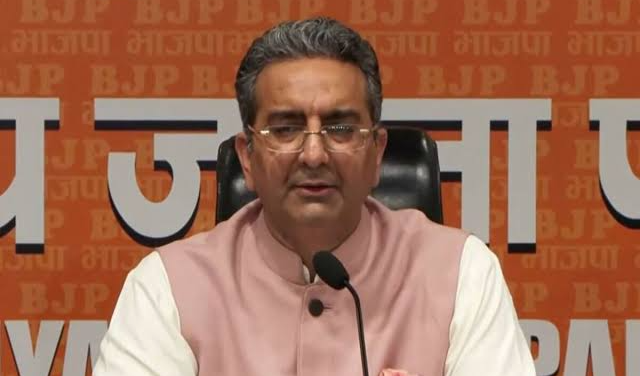
    The Delhi High Court on Thursday suggested that Cockroach Janta Party (CJP) leaders Saurav Das and Ashutosh Ranka voluntarily remove social media posts concerning Bharatiya Janata Party (BJP) leader and senior advocate Gaurav Bhatia, observing that publishing allegations without proper verification was not appropriate.

    The oral observations were made by Justice Tushar Rao Gedela while hearing a defamation suit filed by Bhatia against CJP's Abhijit Dipke, Saurav Das and Ashutosh Ranka. The dispute relates to social media posts published on X, formerly known as Twitter, following the arrest of Swatantra Bhardwaj, who has been accused of assaulting a teenage participant associated with a CJP protest.

    According to Bhatia's suit, a post published by Das and Ranka on September 5 contained an AI-generated communication that falsely attributed certain statements to him. The alleged statements described Bhardwaj using terms including “dimagi naxali” and “jaatiwaadi.” Bhatia has maintained that he never made those remarks.

    During the hearing, the court indicated that the matter could potentially be resolved without the need for a formal takedown order if the concerned defendants were willing to remove the disputed material themselves.

    “There are different ways of protesting,” the court observed, while noting that the defendants were young and might have concerns that motivated their actions. The court nevertheless emphasised that making allegations or attacks without verification was not appropriate.

    The court suggested that if the defendants were prepared to take down the posts voluntarily and file their responses, it would prefer that course rather than immediately issuing a judicial direction requiring removal of the material.

    The matter involves broader questions concerning free speech, political criticism, social media conduct and the boundaries of defamation law. The dispute has emerged against the backdrop of heightened political and public debate surrounding protests organised by the CJP and criticism directed at public institutions and individuals.

    At the beginning of the proceedings, the court also noted that there appeared to be no specific allegation against CJP leader Abhijit Dipke. Dipke's counsel, Advocate Nakul Gandhi, therefore requested that his client be removed from the array of defendants.

    According to the submissions made before the court, the disputed relief in the suit primarily concerns posts attributed to Das and Ranka. Bhatia, however, has alleged that the controversy is part of a wider social media campaign against him.

    Counsel appearing for Saurav Das informed the court that the disputed tweet had already been deleted. The court, however, noted that other material had also been published and stressed that while individuals have a right to express their views, the manner in which those views are communicated can affect how their intended message is understood.

    The court observed that expressions sometimes need to be articulated more carefully so that the intended meaning is conveyed appropriately. It also indicated that the parties could potentially have addressed the disagreement directly instead of immediately approaching the court.

    Bhatia, however, maintained that the matter amounted to aggravated defamation and argued that the posts could not simply remain accessible online because of the defendants' substantial social media reach. He submitted that the material had the potential to damage his public reputation and said he had already given the defendants an opportunity to address the issue.

    The court subsequently asked the counsel representing Das and Ranka to obtain instructions regarding whether the remaining posts could be taken down voluntarily.

    The proceedings also included discussion about why Abhijit Dipke and the CJP had been included as defendants. Bhatia's side argued that the alleged conduct should be viewed in the context of a broader ecosystem of online content targeting him. Dipke's counsel, however, maintained that there was no tweet by Dipke forming the basis of the allegations.

    Bhatia has alleged that the disputed material was not merely an instance of criticism or disagreement with a statement actually made by him. Instead, he claims that the defendants falsely presented statements as having been made by him and associated those statements with his photograph, thereby creating what he described as a false connection between him and the allegedly defamatory content.

    The suit seeks damages of Rs 2 crore and raises allegations concerning a series of public statements allegedly made by the defendants and the CJP.

    According to the pleadings, Bhatia has accused the CJP and its leaders of repeatedly publishing material that, in his view, goes beyond legitimate criticism and could lower his dignity and standing, as well as undermine respect for judicial institutions.

    The suit also refers to earlier social media activity involving Saurav Das. Bhatia has specifically mentioned Das's criticism of Justice Swarna Kanta Sharma in connection with a matter involving the Central Bureau of Investigation's challenge to a decision concerning Aam Aadmi Party leader Arvind Kejriwal and others in the liquor policy case.

    Bhatia has also referred to a post concerning Umar Khalid, who is an accused in the larger conspiracy case relating to the 2020 Delhi riots. According to Bhatia, the nature of the posts cited in the suit demonstrated a pattern of commentary that, in his assessment, crossed the boundary between criticism of an individual judicial decision and broader criticism of the judiciary as an institution.

    The plaintiff has further alleged that the defendants operate under the banner of an unregistered collective that publicly describes itself as having no political links and claims to be pursuing a cause larger than any individual political party.

    Bhatia's case is that social media platforms have allegedly been used by the defendants to make repeated comments and attacks against judicial institutions. He argues that some of the material amounts to institutional aspersion rather than protected criticism of particular judgments or proceedings.

    The allegations remain part of the pleadings in the defamation proceedings and have not been finally adjudicated on merits.

    The High Court's observations on Thursday were directed primarily toward resolving the immediate dispute concerning the social media posts. Rather than ordering an immediate takedown, Justice Tushar Rao Gedela encouraged the defendants to consider removing the material voluntarily and responding to the allegations.

    The court also emphasised the importance of responsible expression while recognising that individuals are entitled to protest and express disagreement. The observations indicate an effort to balance the right to free speech with the potential consequences of publishing unverified allegations about another person.

    The court told the lawyers representing Das and Ranka to take instructions and return with their position. It also questioned why the young defendants would want to spend considerable time engaged in litigation when the dispute might be addressed through removal of the disputed content and appropriate responses.

    The case illustrates the growing legal challenges arising from social media posts, particularly where artificial intelligence-generated content, manipulated material or falsely attributed statements are alleged to have been circulated publicly.

    The dispute also highlights the legal importance of verification before publishing allegations involving identifiable individuals. A social media post can potentially reach a large audience within minutes, and the resulting reputational consequences can be significantly greater than those associated with a private or limited communication.

    At the same time, the proceedings demonstrate that courts must carefully distinguish between legitimate criticism and statements that may constitute actionable defamation. Political figures, lawyers and public officials are frequently subjected to criticism on social media, but the legal question can become more complex when a statement is allegedly fabricated or falsely attributed to the person concerned.

    In the present case, Bhatia's principal grievance is that statements he says he never made were presented to the public as though they had originated from him. The alleged use of his photograph alongside the disputed content has also been cited as contributing to the claimed false association.

    For now, the Delhi High Court has given the defendants an opportunity to consider voluntary removal of the posts rather than immediately imposing a takedown direction. The matter is expected to return before the court after the defendants' counsel obtains instructions.

    The proceedings in Gaurav Bhatia v. Saurav Das & Ors. therefore remain significant not only for the parties involved but also for the broader debate over online speech, political protest, artificial intelligence-generated content and the responsibility of social media users to verify information before publication.

    The court's approach underscores that while public criticism and protest remain important elements of democratic discourse, those exercising such rights may also be expected to act responsibly when making factual claims about identifiable individuals. The final legal position on the allegations raised in Bhatia's defamation suit will depend on the further proceedings and determination of the case.

    Click here to Read More
    Previous Article
    Supreme Court Rejects Abu Salem’s Plea for Premature Release in 1993 Mumbai Blasts Case
    Next Article
    BRICS Summit 2026 Sparks Political Row as Chidambaram Questions India’s Tangible Gains, BJP Hits Back

    Related National Updates:

    Are you sure? You want to delete this comment..! Remove Cancel

    Comments (0)

      Leave a comment