Yugcharan News / 10-09-2026
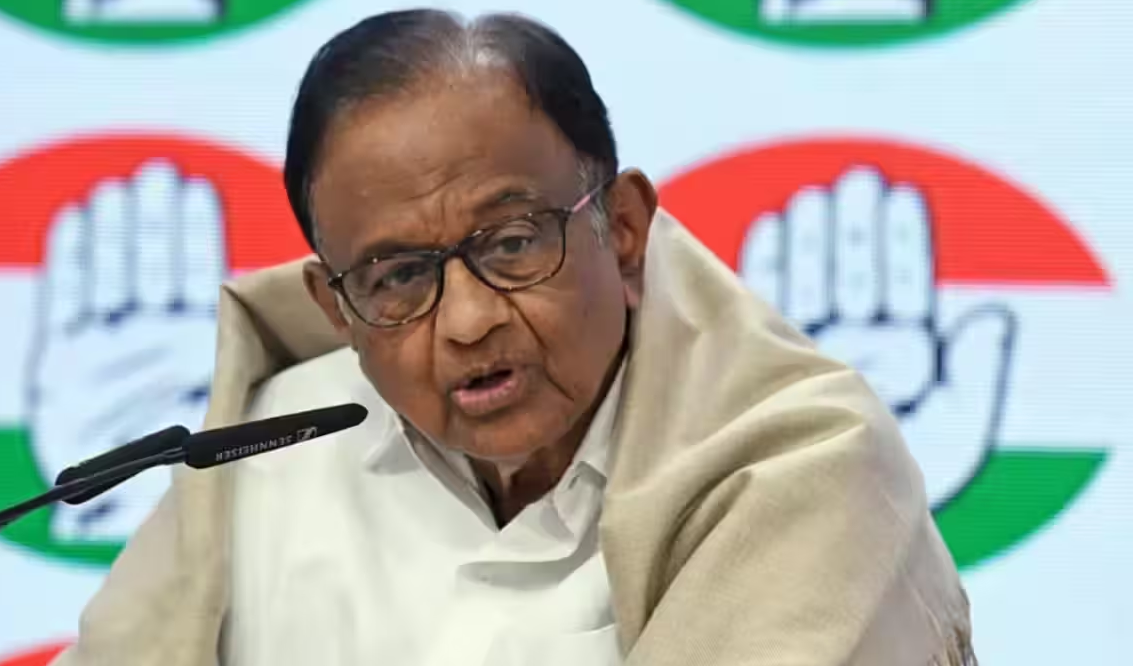
A political controversy has emerged ahead of the 18th BRICS Summit in New Delhi after senior Congress leader and Rajya Sabha MP P Chidambaram questioned whether India has secured enough concrete benefits from its participation in major international groupings, including BRICS, the G20, the Shanghai Cooperation Organisation (SCO) and the Quad.
Chidambaram’s remarks came just before India hosts the BRICS Summit, which is scheduled to begin on Friday evening at Bharat Mandapam in New Delhi. India is holding the BRICS chair for 2026 and is preparing to welcome several heads of state and government for discussions covering global economic, geopolitical and strategic issues.
The comments have triggered a sharp response from the Bharatiya Janata Party (BJP), which accused the Congress of viewing diplomacy primarily through a transactional lens and of attempting to undermine an important international event being hosted by India.
Chidambaram Questions Outcomes of Multilateral Groupings
Speaking to news agency ANI on Wednesday, Chidambaram expressed uncertainty over the participation of foreign leaders at the upcoming BRICS gathering and questioned the practical results India has obtained from recent summits.
He argued that while India is an active participant in several influential international organisations and forums, the government needs to demonstrate what tangible advantages these memberships and meetings have delivered for the country.
Chidambaram specifically referred to BRICS, the SCO, the G20 and the Quad, saying that India is part of all four groupings but that he has not seen sufficient concrete benefits emerging from the recent meetings.
According to him, earlier BRICS summits had produced outcomes that were more visible and measurable. He suggested that the last two or three meetings had not generated comparable results.
His comments have placed the question of measurable diplomatic outcomes at the centre of the political debate surrounding the summit. While international summits often focus on long-term cooperation, strategic dialogue and diplomatic engagement, Chidambaram’s criticism reflects a demand for clearer evidence of how such forums directly advance India’s economic and strategic interests.
The Congress leader also raised questions about the number of presidents and prime ministers expected to attend the New Delhi summit.
BJP Accuses Congress of Undermining India’s Diplomatic Efforts
The BJP quickly responded to Chidambaram’s remarks, portraying them as politically motivated criticism at a time when India is preparing to host a major international gathering.
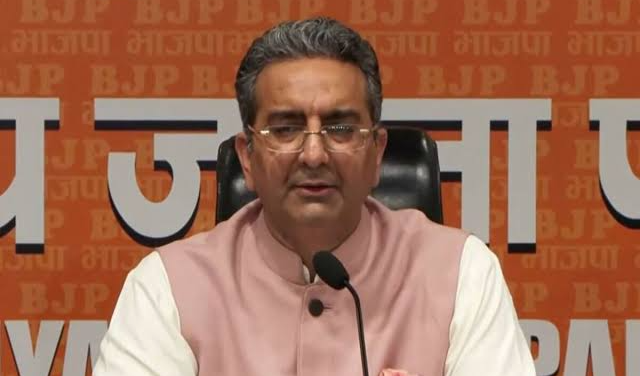
Senior BJP leader Nalin Kohli questioned the Congress party’s approach to diplomacy and argued that international engagement should not be judged solely by immediate, easily measurable gains.
Kohli said it was surprising that such comments were being made when India is hosting an important BRICS meeting involving senior leaders from member countries. He pointed to the expected bilateral interactions between Prime Minister Narendra Modi and visiting leaders as an important component of the summit.
According to the BJP leader, diplomacy involves building relationships, maintaining communication channels and advancing national interests over a longer period. He questioned whether every diplomatic engagement should be assessed like a commercial transaction in which one side immediately calculates what it has received in return.
Kohli also turned the criticism back on the Congress, raising questions about the party’s own record in handling international relations since Independence.
He argued that if every political or diplomatic initiative were judged exclusively on immediate tangible outcomes, the same standard could be applied to previous governments and their foreign-policy decisions.
The BJP has therefore sought to frame Chidambaram’s comments as an attempt to politicise an event that it believes represents India’s growing role in international diplomacy.
BJP Spokesperson Uses ‘FOMO’ Argument
BJP national spokesperson Pradeep Bhandari also criticised the Congress response to the summit. He compared the opposition party’s reaction to that of a disgruntled relative and accused it of opposing the government even when India is hosting an event of international significance.
Bhandari alleged that the Congress was experiencing what he described as a “Fear Of Missing Out” because the BRICS Summit is being held in India under the Modi government.
He argued that the hosting of a major multilateral summit provides India with an opportunity to showcase its diplomatic influence and strengthen its engagement with other emerging economies.
Bhandari also brought domestic political considerations into the debate, suggesting that Congress leaders were concerned about the party’s future political prospects and its inability to host similar international events while in government.
The comments have added another layer to an already politically charged discussion, with the two major parties offering sharply different interpretations of the significance of the summit.
India’s Fourth BRICS Chairmanship
India assumed the BRICS chairmanship on January 1, 2026. This marks the country’s fourth time leading the grouping, following previous chairmanships in 2012, 2016 and 2021.
The 2026 chairmanship is particularly significant because BRICS is marking two decades since its establishment. India’s presidency has focused on the theme of “Resilience, Innovation, Cooperation and Sustainability,” highlighting areas that New Delhi considers important for the future of the grouping.
The summit at Bharat Mandapam is expected to bring together leaders and senior representatives from BRICS member countries for discussions on international economic and political developments.
India’s leadership comes at a time when the global geopolitical environment remains unsettled. Conflicts, economic uncertainty, changing trade relationships and competition among major powers have increased the importance of multilateral platforms.
The summit is also expected to address the economic implications of the continuing crisis in West Asia. The conflict has affected energy markets, trade routes and broader economic stability, making discussions on resilience and international cooperation particularly relevant.
Diplomatic Engagement Beyond Immediate Agreements
The disagreement between Chidambaram and the BJP highlights a broader question about how the success of international diplomacy should be measured.
For critics, participation in global organisations must eventually produce identifiable benefits for India, whether through economic opportunities, investment, technology partnerships, strategic cooperation or greater international support on issues important to New Delhi.
For the government and its supporters, however, diplomacy cannot always be reduced to immediate agreements or financial gains. Regular engagement with world leaders can help countries maintain communication, manage disagreements and create opportunities for cooperation that may take years to produce visible results.
BRICS itself has evolved significantly since its formation. Originally involving Brazil, Russia, India and China, the grouping has expanded its membership and become a larger platform representing emerging economies. Its discussions increasingly cover economic cooperation, development, trade, technology and global governance.
India’s participation gives New Delhi an additional channel for engaging with major economies while maintaining relationships across different geopolitical blocs.
India’s simultaneous involvement in BRICS, the SCO, the G20 and the Quad also reflects its multi-alignment approach to foreign policy. These groupings have different memberships, objectives and strategic orientations, allowing India to engage with countries across competing geopolitical platforms.
Modi’s Bilateral Meetings in Focus
Apart from formal BRICS discussions, bilateral meetings involving Prime Minister Narendra Modi are expected to be a significant part of the summit.
Such meetings provide an opportunity for India to discuss issues that may not necessarily be resolved through collective declarations. Trade, investment, regional security, energy cooperation, connectivity and diplomatic concerns can be taken up directly with individual leaders.
The expected presence of senior leaders also gives India an opportunity to project itself as a major convening power in the developing world.
The diplomatic significance of hosting the summit therefore extends beyond the formal BRICS agenda. New Delhi can use the event to deepen existing partnerships, establish new channels of dialogue and discuss bilateral concerns on the sidelines of the multilateral gathering.
Political Debate Likely to Continue
The controversy surrounding Chidambaram’s comments is unlikely to remain limited to the BRICS agenda. With the summit beginning Friday, political parties are expected to continue debating the government's foreign-policy record and the benefits India derives from its participation in international organisations.
For the BJP, the summit represents an opportunity to demonstrate India’s expanding diplomatic profile and the government’s ability to convene influential world leaders.
For the Congress, the question of measurable outcomes provides an avenue to scrutinise the government’s foreign policy and ask whether international visibility is translating into concrete gains for the country.
The contrasting positions reflect two different approaches to evaluating diplomacy. One places greater emphasis on measurable outcomes and immediate national benefits, while the other stresses long-term relationships, strategic influence and international positioning.
As the 18th BRICS Summit gets underway in New Delhi, attention will therefore be focused not only on the leaders attending and the issues they discuss, but also on the agreements, declarations and diplomatic engagements that emerge from the meeting.
The eventual assessment of India’s BRICS chairmanship is likely to depend on whether the summit produces meaningful progress on economic cooperation, global governance and shared international challenges. The political debate at home, meanwhile, is already ensuring that the summit will be closely watched not only as a diplomatic event but also as a test of the government’s foreign-policy narrative.