Yugcharan News / 16-10-2026
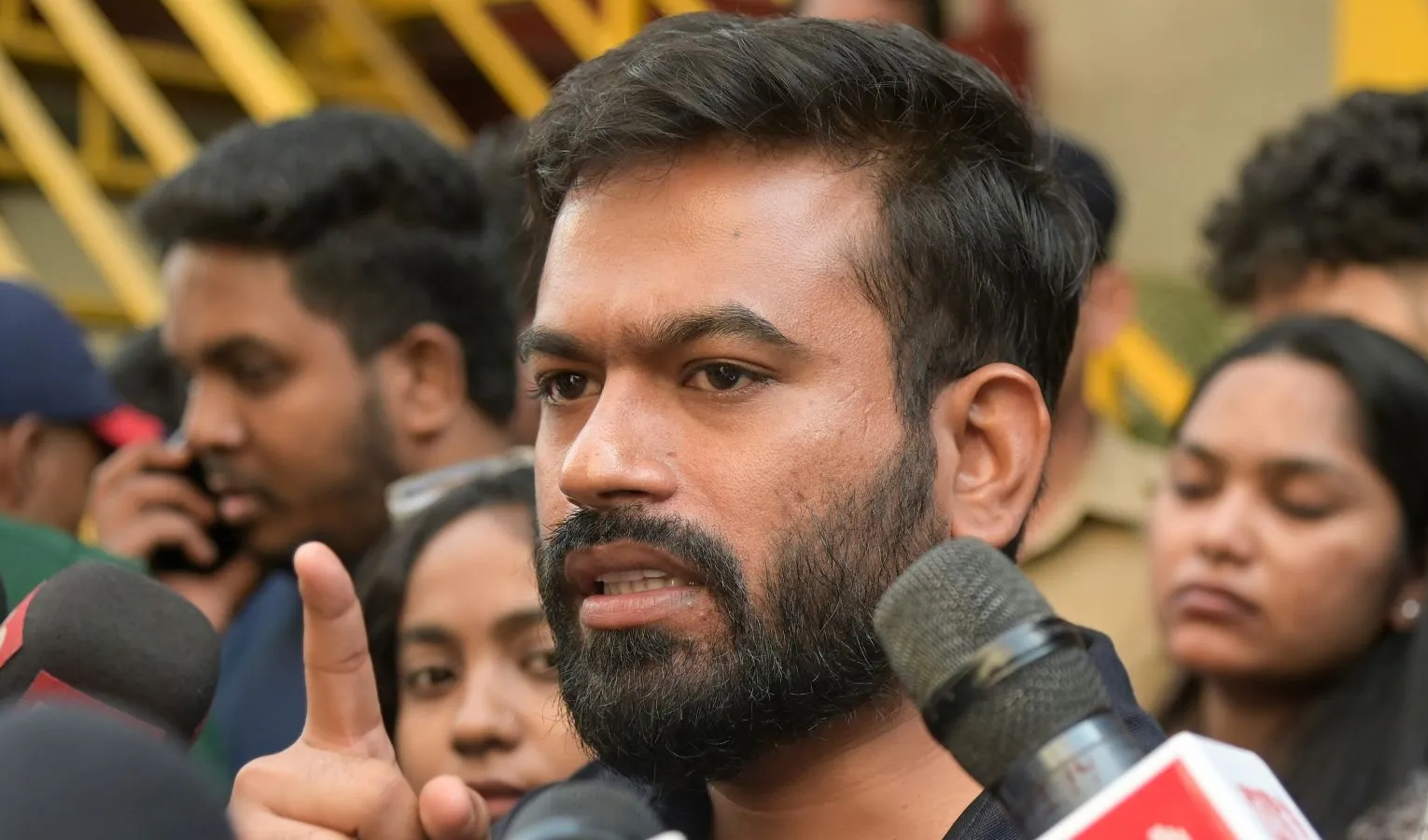
Delhi Police have served a notice on Cockroach Janta Party (CJP) founder Abhijeet Dipke, prohibiting him from holding a protest at Connaught Place ahead of the party’s proposed ‘Lehra Do Tiranga’ march scheduled for 5 p.m. on Friday, October 16. The development comes amid heightened political tensions over allegations of electoral irregularities, demands for accountability from the Election Commission of India, and a series of opposition-led demonstrations in the national capital.
More than 20 Delhi Police personnel visited Dipke’s residence in Karol Bagh to serve the notice, according to reports. The party had planned the march to demand the arrest of Saurav Das and Ashutosh Ranka and the resignation of Chief Election Commissioner Gyanesh Kumar over alleged electoral irregularities.
Police have denied permission for the proposed march, citing prohibitory orders covering Connaught Place and adjoining areas. Separately, the New Delhi Municipal Council announced that Central Park, a prominent public space in Connaught Place, would remain closed to the public on Friday and Saturday.
The restrictions have brought renewed attention to the balance between maintaining public order and protecting the constitutional right to peaceful assembly. The proposed march is part of a broader political confrontation surrounding allegations of irregularities in electoral rolls and demands for answers from election authorities.
Delhi Police Serve Notice Ahead of Scheduled March
The police action against Dipke came hours before the planned ‘Lehra Do Tiranga’ march. The notice specifically barred the CJP founder from holding a protest at Connaught Place, where the party intended to organise the demonstration.
Authorities cited prohibitory orders in Connaught Place and nearby areas as the reason for denying permission. However, the available information does not provide the complete text of the notice or specify the precise legal provisions invoked by the police.
The closure of Central Park for two days added another restriction to the arrangements surrounding the proposed gathering. The park was identified as the location associated with the CJP’s planned march.
The police action has become a focal point of the political debate, with supporters of the demonstration defending street protests as a legitimate democratic activity and authorities citing restrictions on public gatherings.
Dipke responded to the broader criticism of the party’s protest plans by defending peaceful demonstrations and rejecting the suggestion that such activities amounted to anarchy.
Abhijeet Dipke Defends the Right to Peaceful Protest
In a post on X, Dipke argued that citizens must be able to question those holding public office, demand answers from the government and protest against perceived injustice.
He also referred to an incident in Jaipur in which he said he had been physically assaulted. According to Dipke, he chose not to retaliate because responding to violence with violence would contradict the principles his party claimed to uphold.
He said the party preferred to exercise rights guaranteed by the Constitution, which was drafted under the leadership of Dr. B. R. Ambedkar, rather than resort to physical force.
Dipke also rejected attempts to portray the CJP as anarchist because of its willingness to organise protests. He argued that questioning government decisions and demonstrating against alleged injustice were fundamental expressions of democracy.
The CJP founder further accused political opponents of applying inconsistent standards to public demonstrations. He argued that political parties that organised protests while in opposition should not treat similar activities as threats to public order after coming to power.
His remarks reflected the party’s position that the proposed march was intended as a peaceful political demonstration. However, the police have denied permission for the gathering, citing prohibitory orders in the designated area.
The available material does not establish whether the notice served on Dipke included any additional restrictions beyond the prohibition on holding the protest at Connaught Place.
AAP Organises Separate Tiranga March Near Rashtrapati Bhavan
The dispute over the CJP’s proposed march coincided with a separate demonstration organised by the Aam Aadmi Party (AAP) near Rashtrapati Bhavan on Friday.
Delhi AAP president Saurabh Bharadwaj led party workers in a ‘Tiranga’ march on North Avenue. Participants carried the national flag as police personnel remained present in the area.
The AAP demonstration took place ahead of the CJP’s planned ‘Lehra Do Tiranga’ march at Central Park in Connaught Place.
Bharadwaj argued that the government and the police could not dictate where citizens were permitted to unfurl the national flag. His remarks placed the emphasis on citizens’ rights to express their views and participate in demonstrations.
AAP legislator Bharadwaj had also announced the proposed ‘Tiranga Yatra’ in front of Rashtrapati Bhavan and Parliament through a post on X.
The two demonstrations illustrated how the national flag had become a central symbol in the political mobilisation surrounding the electoral controversy. While the CJP planned to assemble at Connaught Place, the AAP organised its march in a different part of the capital.
The available information does not indicate that the AAP march and the CJP event were conducted under identical permissions or restrictions. The police action described in the reports specifically concerned the proposed CJP protest at Connaught Place.
NCP-SCP Signals Participation in Tiranga Yatra
The political response extended beyond the CJP and AAP, with Nationalist Congress Party (Sharadchandra Pawar) spokesperson Anish Gawande indicating that his party would participate in the Tiranga Yatra.
Gawande said he had only recently learnt that Delhi Police personnel had visited Dipke’s residence and served him a notice. He said he would first examine the notice before deciding on the next steps.
He also expressed his intention to participate in the march, saying that people should take part in the Tiranga Yatra.
His comments indicated that the police notice had become an issue of concern for political figures considering participation in the proposed demonstration. However, his statement did not establish what legal or organisational steps the party would take after reviewing the document.
The extent of participation by other political parties in the CJP’s proposed march remained unclear in the available reports.
Opposition's Electoral Allegations Remain at the Centre of the Dispute
The planned CJP demonstration is linked to wider opposition criticism concerning alleged irregularities in electoral rolls and demands for accountability from the Election Commission.
The party intended to use the ‘Lehra Do Tiranga’ march to demand the arrest of Saurav Das and Ashutosh Ranka, as well as the resignation of Chief Election Commissioner Gyanesh Kumar. These demands are political positions arising from allegations of electoral irregularities and should not be treated as established findings of wrongdoing.
The controversy also includes a separate legal development involving Congress leader Rahul Gandhi and other opposition leaders.
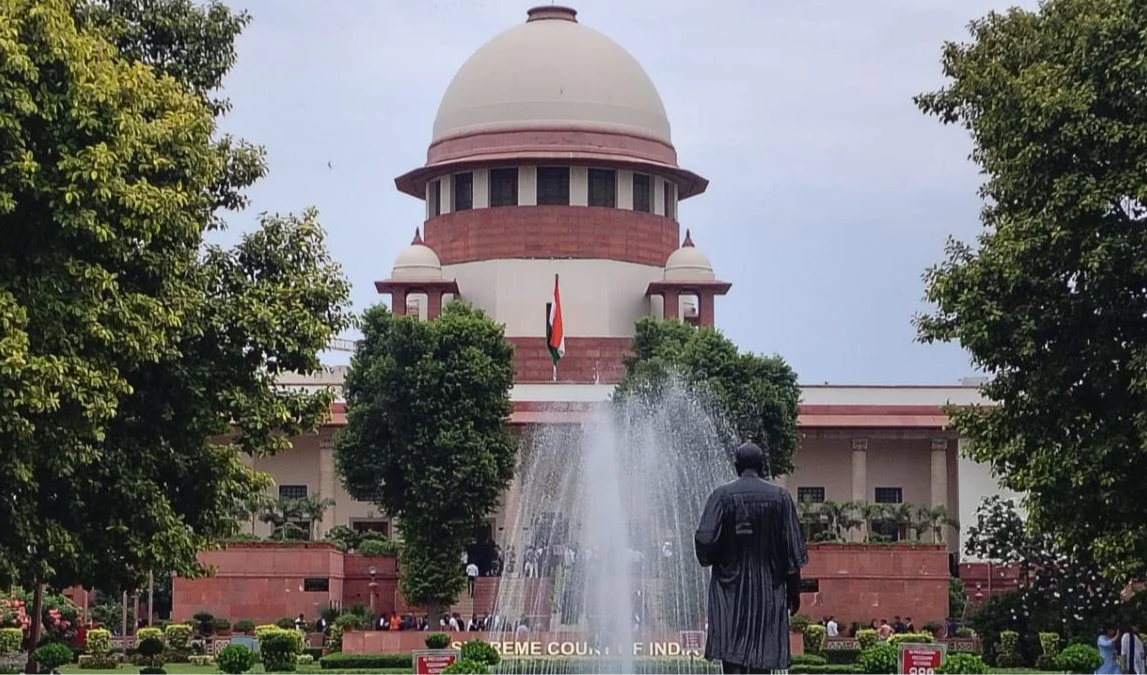
On Thursday, the Supreme Court issued notices to Gandhi and other opposition leaders following a plea challenging their October 12 march to the court over alleged irregularities in electoral rolls. The court also sought responses from the Election Commission and Chief Election Commissioner Gyanesh Kumar concerning allegations of large-scale voter deletions and irregularities during the Special Intensive Revision (SIR) of electoral rolls.
The court proceedings concern allegations that have been raised by opposition leaders. The issuance of notices and the seeking of responses do not, by themselves, establish that the alleged electoral irregularities occurred.
The legal proceedings have added another dimension to the political dispute, with opposition parties continuing to demand explanations and the ruling side and its allies criticising some of the protest actions.
JD(U) Criticises Opposition March to Supreme Court
The Janata Dal (United) criticised the opposition’s October 12 march to the Supreme Court, describing it as an attempt to exert pressure on the judiciary.
JD(U) national spokesperson Rajiv Ranjan Prasad said that most of the issues raised during the march were already sub judice, meaning they were under judicial consideration.
The party’s criticism reflects a disagreement over the appropriate relationship between political demonstrations and ongoing court proceedings. While opposition leaders have sought to draw attention to their concerns about electoral rolls, the JD(U) argued that taking such issues to the streets in connection with matters before the court was inappropriate.
The Supreme Court’s decision to issue notices to Gandhi and other opposition leaders, and to seek responses from election authorities, forms part of the ongoing legal process. The available information does not provide a final judicial determination on the allegations concerning voter deletions or the SIR exercise.
Congress Alleges Amit Shah Briefed Media Editors
The controversy also prompted the Congress to raise allegations concerning Union Home Minister Amit Shah and media editors.
In a post on X, the Congress alleged that Shah was hosting editors and briefing them “off the record” as the BJP government responded to questions that, according to the opposition party, should be addressed to Chief Election Commissioner Gyanesh Kumar.
Pawan Khera, chairman of the Congress's Media and Publicity Department, said the party had learnt about the alleged briefings through information received from editors.
The allegation was presented by the Congress and was not independently established in the available material. No response from Shah or the government to the specific claim was included in the reported updates.
The episode demonstrates how the electoral controversy has expanded beyond the functioning of election authorities to include disputes over political messaging, media briefings and public accountability.
BJP Leader Dilip Ghosh Questions Timing of March
The proposed demonstration also drew criticism from West Bengal Minister and senior BJP leader Dilip Ghosh, who accused the CJP of disrupting religious celebrations by organising a political march during Navratri and Durga Puja.
Ghosh argued that India had a tradition of celebrating religious festivals across the country and claimed that political protests during the festive period could create tension.
He warned that the public would hold the organisers accountable, according to the reported statement.
His criticism focused on the timing of the proposed demonstration rather than the legal merits of the electoral allegations raised by the CJP. The comments added a cultural and political dimension to the dispute over the march.
The available information does not establish that the proposed protest had disrupted religious celebrations. Ghosh’s remarks represented his assessment of the potential consequences of holding the demonstration during the festival period.
Press Council Issues Safety Guidelines for Journalists
The political demonstrations and related police actions have also raised concerns about the safety of journalists covering protests.
The Press Council of India issued fresh guidelines for journalists reporting on demonstrations. The advisory was adopted on October 14 and issued on October 15, following reports that journalists had been detained or injured while covering protests in Delhi on October 10.
The guidelines advise journalists to carry valid identification cards, keep first-aid kits available, plan escape routes and follow ethical reporting practices while covering protests.
The Committee to Protect Journalists also reported that police in Delhi, Ahmedabad, Pune and Mumbai had detained journalists, even after the Supreme Court had received assurances from the Solicitor-General that members of the press and lawyers would not be impeded.
These reports have intensified concerns about the conditions under which journalists can perform their duties during politically sensitive demonstrations. The safety advisory highlights the importance of preparation and professional conduct, while reports of detentions have drawn attention to the need to protect journalists covering public events.
The available information does not provide a complete account of each reported detention or the circumstances of every incident.
Political and Legal Developments Continue
The notice served on Dipke comes amid a wider dispute involving electoral-roll allegations, opposition protests, court proceedings and competing political claims about the limits of public demonstrations.
Delhi Police have denied permission for the CJP’s proposed Connaught Place march, citing prohibitory orders, while the party’s founder has defended peaceful protest as a constitutional democratic right. The closure of Central Park and the separate AAP demonstration near Rashtrapati Bhavan have further highlighted the restrictions and political activity surrounding the planned event.
Meanwhile, the Supreme Court proceedings concerning the October 12 opposition march and allegations relating to the Special Intensive Revision remain part of the broader controversy. Political parties continue to express differing views on the allegations, the conduct of protests and the role of judicial scrutiny.
The central issues include the handling of electoral-roll complaints, accountability of election authorities, the regulation of public gatherings and the safety of journalists covering demonstrations.
The available reports do not establish the truth of the electoral allegations or provide a final legal resolution to the dispute over the protests. Those questions remain distinct from the immediate police action against the proposed CJP march.
As the political confrontation continues, the notice served on Dipke has become another flashpoint in the debate over public protest, electoral accountability and the boundaries between maintaining public order and exercising democratic rights.