Yugcharan News / 27-10-2026
Israel’s 2026 general election is being shaped by intense disagreements over judicial reform, compulsory military service for ultra-Orthodox Jewish men, accountability for the October 7, 2023, Hamas-led attack, and the country’s future approach towards the Palestinians. However, despite sharp differences over domestic governance and political leadership, the leading candidates have shown limited support for establishing a Palestinian state, according to an analysis published by Al Jazeera on October 26.
The election, scheduled for Tuesday, October 27, has placed Prime Minister Benjamin Netanyahu and his right-wing governing coalition against a diverse opposition seeking changes in the country’s political and institutional direction. While opposition leaders have promised to reverse controversial judicial changes and introduce different approaches to military conscription and government accountability, the broader policy debate over the Israeli-Palestinian conflict remains constrained.
The campaign comes after years of political division, mass protests over judicial reform, and the consequences of wars following the October 7 attack. Questions surrounding the government’s handling of national security, the role of the judiciary and the burden of military service have become central issues for voters.
Palestinian Statehood Remains a Major Point of Contention
The question of a two-state solution remains one of the most significant international issues surrounding Israel’s election. The framework, envisaged under the Oslo Accords of the 1990s, proposed an eventual resolution to the Israeli-Palestinian conflict through separate Israeli and Palestinian states.
However, the leading candidates have offered little indication that they would move towards implementing such an arrangement. Their positions reflect a political environment in which security concerns, territorial claims and disagreements over Palestinian statehood continue to dominate the debate.
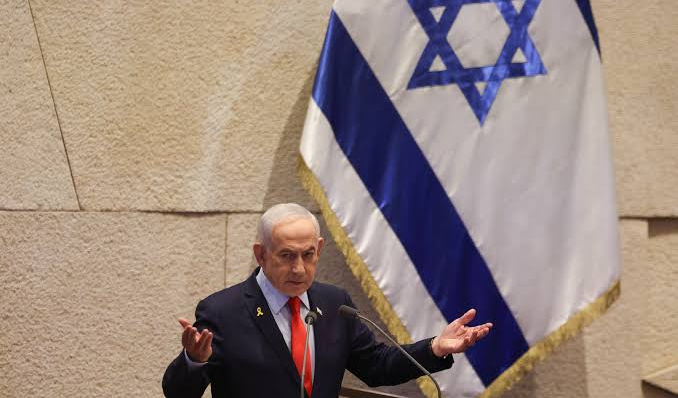
Netanyahu, the leader of the Likud party, has repeatedly opposed the creation of a Palestinian state. During the campaign, he reiterated his position, stating that his government would fulfil its promise that there would be no Palestinian state.
Gadi Eisenkot, leader of the Yashar party and a former Israeli military chief, has also rejected the two-state principle, describing it as a mistake. His position indicates that opposition to Palestinian statehood is not confined to Netanyahu’s political camp.
Bezalel Smotrich, leader of the Religious Zionist Party and finance minister, has advocated a more hardline approach. He has called for formally ending the Oslo Accords and promoting Israeli sovereignty, while also encouraging migration from Gaza and the occupied West Bank.
Yair Golan, leader of The Democrats, has argued that Israeli society remains traumatised by the October 7 attack and that moving directly towards a two-state arrangement would be difficult under current circumstances. He has instead emphasised what he describes as civil separation and security responsibility.
The debate is unfolding amid continued international criticism of Israeli settlement expansion in the occupied West Bank. The E1 settlement plan, which has drawn particular controversy, has been criticised by opponents who argue that such construction could undermine the territorial continuity needed for a viable Palestinian state.
The positions expressed by the candidates suggest that the election may produce changes in Israel’s domestic political arrangements without necessarily delivering a major shift towards a negotiated settlement with the Palestinians.
Ultra-Orthodox Military Conscription Becomes a Central Election Issue
The compulsory military service of ultra-Orthodox Jewish men, known as Haredim, has emerged as another major issue in the campaign. The debate has intensified as Israel continues to confront the military, economic and social consequences of prolonged conflict.
For decades, exemptions and special arrangements have allowed many ultra-Orthodox men studying in religious seminaries, known as yeshivas, to avoid compulsory military service. The arrangements have become increasingly controversial as demands for military personnel have grown and other sections of Israeli society have continued to bear the burden of service.
Netanyahu has relied on the support of the two principal ultra-Orthodox political parties, Shas and United Torah Judaism, to maintain his parliamentary coalition. Both parties have pressed for legislation that would protect the status of yeshiva students and limit the consequences of compulsory recruitment.
The issue has created a difficult political balance for the prime minister, who must maintain the support of his coalition partners while addressing demands for a more equal distribution of military responsibilities.
Netanyahu defended the religious community following the reported arrest of around 40 ultra-Orthodox men in October over draft avoidance. He argued that the arrests represented an attempt to undermine efforts to recruit Haredim without coercion and emphasised the importance of preserving religious study.
Shas leader Aryeh Deri has taken a firm position, declaring that his party would not support or participate in a government unless the status of yeshiva students was regulated.
Eisenkot has made military conscription a central element of his campaign, contrasting Netanyahu’s government with his proposal for a government committed to broader recruitment.
Avigdor Liberman, leader of the Yisrael Beiteinu party, has also criticised Netanyahu over the issue. Liberman has argued that the prime minister’s reliance on ultra-Orthodox parties limits his ability to implement a different conscription policy.
The disagreement reflects a broader debate over equality, religious autonomy and national service. The next government will face pressure to determine whether existing exemptions should be retained, revised or replaced with a more comprehensive framework.
Judicial Reform and the Independence of Israel’s Courts
Judicial reform remains another defining issue in the election. Netanyahu’s government introduced a plan to reduce the powers of Israel’s courts shortly after taking office in 2022. The proposals triggered widespread demonstrations in 2023, drawing hundreds of thousands of protesters into the streets at different points.
The controversy intensified concerns about the balance of power between the executive, legislature and judiciary. Supporters of reform argued that elected representatives should have greater authority over decisions affecting government policy, while critics warned that the changes could weaken institutional checks on political power.
According to the Al Jazeera report, the governing coalition has passed measures affecting the appointment of judges. It also enacted a law in July that reduced the powers of Attorney General Gali Baharav-Miara, allowing the government to reject her legal advice and select its own lawyers in court.
The report stated that the relevant changes were due to take effect after the election. Most opposition groups have promised to reverse them.
Netanyahu has defended judicial reform on the grounds that democracy requires the authority of elected representatives to be protected from excessive judicial intervention. He has argued that the judiciary should not undermine the legislative or executive branches of government.
Naftali Bennett, a former prime minister and co-leader of the Together alliance, has promised to cancel the legal changes immediately after the new Knesset convenes.
The dispute has also involved Chief Justice Isaac Amit, whom the government has boycotted, according to the report. Critics of Netanyahu’s approach contend that the changes threaten judicial independence. Justice Minister Yariv Levin, a leading supporter of the overhaul, has argued that the election offers an opportunity to complete the reforms.
The outcome could determine whether the controversial measures remain in place or face reversal under a new government.
October 7 Attack and Calls for Political Accountability
The Hamas-led attack on October 7, 2023, and the subsequent war in Gaza remain central to questions about national security and political responsibility.
Although the humanitarian consequences of the war have drawn extensive international attention, Al Jazeera reported that the suffering and deaths in Gaza have received limited attention in the campaigns of the two principal political alliances. Instead, the domestic political debate has focused heavily on whether Israeli leaders and security agencies should be held accountable for the failures preceding the attack.
Investigations into security shortcomings contributed to the resignation of Israeli military Chief of Staff Herzi Halevi, announced in January 2025. The failures also intensified tensions between Netanyahu and the security establishment, culminating in the departure of Shin Bet chief Ronen Bar in June 2025.
The prime minister has faced criticism over whether his government adequately responded to warnings before the attack. Reports cited by Al Jazeera suggested that warnings had been communicated by Egypt and the United Arab Emirates. Critics have also questioned the previous policy of allowing Hamas to retain power in Gaza, arguing that it weakened the Palestinian Authority and complicated prospects for a negotiated political settlement.
Netanyahu has not faced a comparable inquiry into his own alleged failures before October 7, according to the report.
Eisenkot has promised to establish a state commission of inquiry if his political alliance gains the authority to form a government. He has argued that Netanyahu was warned about the danger and failed to act.
Netanyahu, meanwhile, has supported an inquiry with broad public backing. He has opposed an arrangement that he believes would be rejected by a substantial portion of Israeli society.
A proposed government-led inquiry did not complete its final legislative reading and was deferred to the next parliamentary session, leaving the question unresolved ahead of the election.
The form and independence of any future investigation could become a major test for the next government, particularly as families affected by the attack and members of the public continue to demand answers about the security failures.
What the Election Could Mean for Israel
Israel’s 2026 election presents voters with competing visions of domestic governance, military obligations and institutional accountability. Netanyahu is seeking to preserve the political arrangement that has sustained his government, while opposition leaders are campaigning on promises to change judicial policy, reconsider military exemptions and investigate the failures surrounding October 7.
However, the candidates’ positions also reveal significant limits to the policy choices available to voters. Despite sharp disagreements over the courts, conscription and political accountability, the leading contenders have largely avoided offering a clear path towards Palestinian statehood.
The result could therefore reshape Israel’s domestic political direction without necessarily producing an immediate change in its approach to the occupied Palestinian territories.
The election’s consequences will depend not only on the outcome of the vote but also on the coalition negotiations that follow. With multiple parties holding different priorities, forming a stable government could require compromises over judicial reform, military recruitment and the establishment of an inquiry into October 7.
For Israel, the central question is whether the next government can resolve longstanding internal divisions while addressing the unresolved security and political challenges facing the country. For Palestinians and the wider international community, the candidates’ positions on statehood and settlement policy will remain important indicators of whether a meaningful diplomatic shift is likely to emerge from the election.