Search

    Language Settings
    Select Website Language

    GDPR Compliance

    We use cookies to ensure you get the best experience on our website. By continuing to use our site, you accept our use of cookies, Privacy Policy, and Terms of Service.

    Election Commission Tells Supreme Court All SIR Decisions Were Unanimous, Denies Form 6 Was Amended

    8 hours ago

    Yugcharan News / 27-10-2026

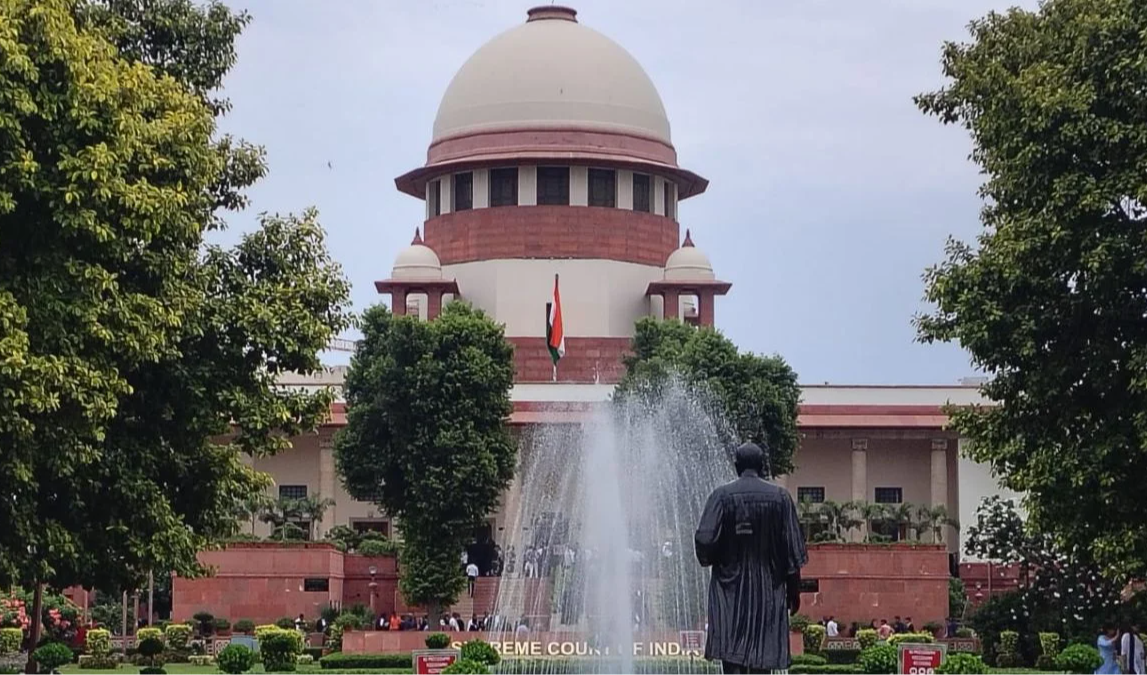
    The Election Commission of India (ECI) has informed the Supreme Court that all decisions relating to the Special Intensive Revision (SIR) of electoral rolls were taken unanimously by the Commission, rejecting allegations that Chief Election Commissioner Gyanesh Kumar acted unilaterally despite objections from the other two Election Commissioners. In a counter-affidavit filed in response to a writ petition challenging the functioning of the Chief Election Commissioner and the legality of certain SIR-related decisions, the poll body has also maintained that Form 6 was not amended through its orders.

    The affidavit was filed in response to a petition by Rakesh Kumar Singh, which challenges the decision-making process within the Election Commission. The Supreme Court had issued notice to the ECI, the Chief Election Commissioner and other officials in the matter.

    The controversy followed a report published by The Indian Express, which alleged that 14 significant decisions concerning the SIR exercise had been taken in the name of the Election Commission despite objections recorded by Election Commissioners Sukhbir Singh Sandhu and Vivek Joshi. The ECI has disputed the allegations, arguing that the petition relies entirely on a newspaper report and that the petitioner did not independently verify the claims with the respondents.

    Election Commission Says Three SIR Orders Were Unanimous

    In its counter-affidavit, the Election Commission stated that three orders concerning the Special Intensive Revision, dated June 24, 2025, October 27, 2025, and May 14, 2026, were unanimous decisions of the Commission.

    The affidavit was filed by Deputy Election Commissioner Bhanu Prakash Yeturu and, according to the Commission, was approved unanimously by the Chief Election Commissioner and both Election Commissioners.

    The ECI rejected the allegation that the Chief Election Commissioner had independently taken crucial decisions despite disagreements within the Commission. It argued that the petition was based on reported claims rather than independently established facts and contended that it was therefore not maintainable.

    The Commission also stated that it had neither released nor authorised the release of any internal note or file to the media.

    The dispute concerns the decision-making process followed during the electoral roll revision exercise and whether internal differences among Election Commissioners affected the official orders issued in the Commission's name.

    Internal Notes Do Not Automatically Constitute Commission Decisions

    The Election Commission has clarified that notes, queries, suggestions and observations recorded by the Chief Election Commissioner or other Election Commissioners while examining a file do not, by themselves, amount to formal decisions of the Commission.

    According to the affidavit, files ordinarily move through the Commission's decision-making process, beginning with one Election Commissioner, followed by the other Election Commissioner and finally the Chief Election Commissioner.

    The ECI maintained that this procedure was followed in the decisions challenged by the petitioner.

    The Commission referred to Section 18 of the Chief Election Commissioner and Other Election Commissioners (Appointment, Conditions of Service and Term of Office) Act, 2023, which provides the statutory framework for the functioning of the Commission. As described in the affidavit, decisions should, as far as practicable, be unanimous. Where unanimity is not possible, decisions are to be taken by majority.

    By relying on this provision, the ECI argued that the decisions relating to the SIR exercise complied with the applicable statutory framework.

    The Commission's response seeks to distinguish between internal discussions during the processing of official files and decisions formally adopted by the constitutional body. It has maintained that the existence of internal notes or observations should not be treated as evidence that the final orders were issued unilaterally.

    The allegations and the Commission's response remain part of the legal proceedings arising from the petition before the Supreme Court.

    ECI Denies Amending Form 6 Through SIR Orders

    Another key issue concerns Form 6, which is used for applications seeking inclusion of names in electoral rolls.

    The Election Commission has denied that it amended Form 6 through its SIR-related orders. It has maintained that the authority to amend the prescribed form rests with the Central Government under the Registration of Electors Rules, 1960.

    According to the Commission, the declaration required during the Special Intensive Revision exercise is a separate document and does not amount to an amendment of Form 6.

    The dispute arose after The Indian Express reported that two Election Commissioners had objected to changes requiring applicants to provide information linking themselves, their parents or their grandparents to previous intensive electoral rolls.

    The reported objections raised questions about the manner in which the additional declaration requirements were introduced and whether they had been formally approved by the Commission.

    The ECI has argued that the declaration and Form 6 serve different purposes. In its account, the additional declaration used during the SIR process does not alter the form prescribed under the existing electoral registration rules.

    However, the Commission acknowledged that the way the declaration appeared on its online application platform could create the impression that Form 6 had been amended.

    To address this concern, the ECI stated that changes to the online presentation of the declaration had been introduced from October 21, 2026. The supplied report does not provide the complete details of the revised online display, so the precise changes cannot be established from the available material.

    Background: Controversy Over the Special Intensive Revision

    The Special Intensive Revision is an exercise undertaken to review electoral rolls. The process has drawn attention because of questions concerning the documents and declarations required from applicants and the procedures used to establish eligibility for inclusion in voter lists.

    The controversy surrounding the current petition centres not only on the requirements imposed during the revision but also on the internal decision-making process through which the Election Commission approved the relevant orders.

    The report that prompted the legal challenge alleged that objections from two Election Commissioners had been recorded in connection with important decisions. The Commission has denied that these objections demonstrate that the Chief Election Commissioner acted alone.

    Its counter-affidavit argues that internal observations made during file processing should not be confused with final decisions taken by the Commission as a statutory body.

    The dispute over Form 6 adds another dimension to the case. While the ECI insists that the prescribed form was not amended, the controversy highlights concerns about how additional declarations are presented to applicants and how the requirements are communicated through the online application system.

    The distinction is significant because the Commission itself has acknowledged that the earlier presentation on the online platform could give applicants the impression that Form 6 had been altered.

    Legal Challenge Places ECI's Decision-Making Process Under Scrutiny

    The writ petition filed by Rakesh Kumar Singh has brought the Commission's internal decision-making procedures before the Supreme Court. The ECI's counter-affidavit represents its formal response to the allegations, setting out its position on the unanimity of the SIR orders, the legal framework governing decisions and the status of Form 6.

    The Commission has urged that the petition should not be sustained on the basis of a newspaper report whose claims, it says, were not independently verified by the petitioner. It has also disputed the suggestion that the Chief Election Commissioner took the challenged decisions unilaterally.

    At this stage, the allegations made in the petition and the arguments presented in the counter-affidavit must be distinguished from any final judicial determination. The material supplied does not establish that the Supreme Court has accepted either side's position on the disputed questions.

    The case raises issues concerning the functioning of the Election Commission, the procedure for adopting official decisions and the distinction between electoral registration forms and supplementary declarations used during revision exercises.

    Any further judicial proceedings may clarify how the relevant statutory provisions apply to the Commission's decision-making process and how the requirements associated with the SIR exercise should be presented to applicants.

    For now, the Election Commission's position remains that all three challenged SIR orders were unanimous, that internal notes do not constitute formal decisions and that Form 6 was not amended through the orders in question.

    Click here to Read More
    Previous Article
    Israel Election 2026: Netanyahu, Opposition Leaders Clash Over Judicial Reform, Military Draft and Palestinian Statehood
    Next Article
    Five Killed in Guwahati Hotel Shooting After Dispute Between Owner and Leaseholder; One Arrested

    Related National Updates:

    Are you sure? You want to delete this comment..! Remove Cancel

    Comments (0)

      Leave a comment