Yugcharan News / 21-10-2026
United Nations-appointed independent human rights experts have urged Indian authorities to stop what they described as the excessive use of force against protesters and called for an independent investigation into the conduct of law enforcement agencies during recent demonstrations over voter list revisions. The experts said reports of injuries and alleged ill-treatment of demonstrators raised serious concerns about the handling of protests.
In a statement issued on Tuesday, October 20, the experts called on the authorities to end the alleged use of excessive force, withdraw blanket restrictions on public assemblies and refrain from what they described as the misuse of digital surveillance, including biometric monitoring and internet disruptions.
The demonstrations have been organised by opposition political parties and student groups demanding the resignation of Chief Election Commissioner Gyanesh Kumar. The protesters allege that the revision of voter lists has unfairly affected eligible voters and could benefit Prime Minister Narendra Modi’s Bharatiya Janata Party (BJP). The BJP and the Election Commission of India have rejected the allegations.
The controversy has intensified debate over electoral transparency, the right to peaceful assembly and the conduct of security personnel during public demonstrations. While protesters and human rights organisations have raised concerns about the authorities’ response, the Indian government has maintained that law enforcement agencies acted in accordance with the law.
UN Experts Call for Independent Investigation
The group of independent experts appointed by the UN Human Rights Council expressed concern over reports that police and other law enforcement agencies had used force against demonstrators during recent protests.
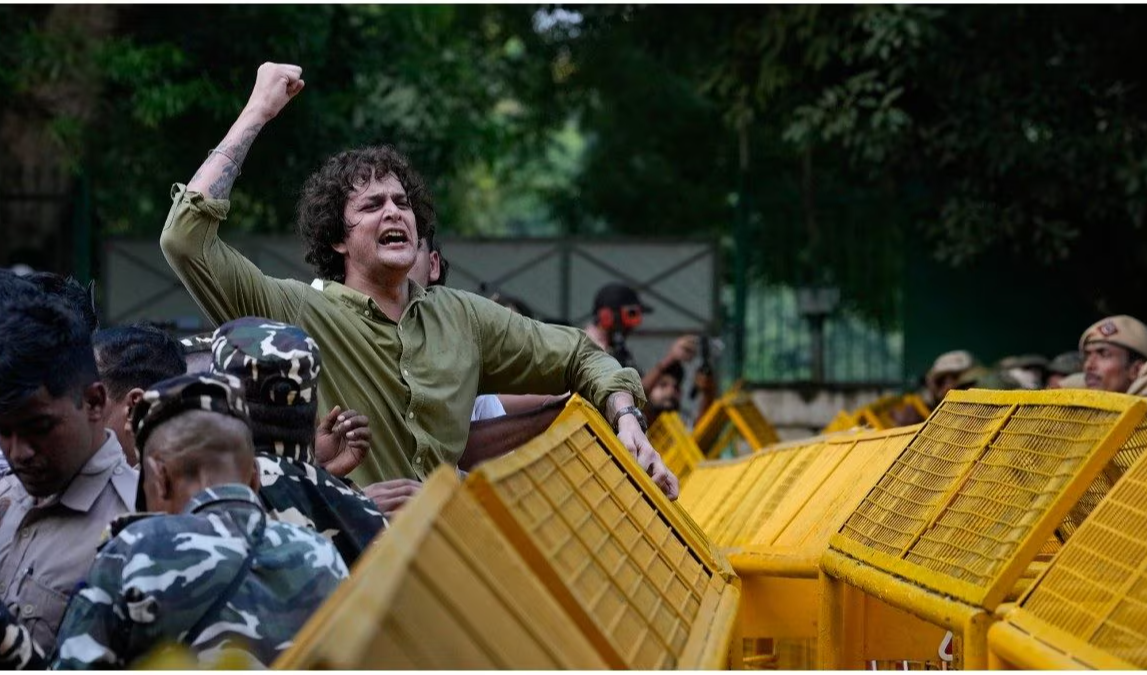
According to the experts, the demonstrations were reportedly non-violent, yet security personnel were alleged to have used force against unarmed students. They also referred to reports of baton charges and restrictions that prevented thousands of people from joining the protests.
The experts called for an independent investigation into the conduct of law enforcement agencies to establish what happened during the crackdown and examine the reported treatment of demonstrators.
They also urged Indian authorities to immediately stop the use of excessive force, revoke blanket bans on public assemblies and avoid the misuse of digital surveillance technologies, including biometric systems. Their statement additionally raised concerns about internet disruptions in the context of protests.
The call for an independent probe places the focus on accountability and the need to examine the actions of officials involved in managing demonstrations. However, the statement cited reports and concerns; it did not, by itself, establish the responsibility of particular officers or provide findings from a completed investigation.
The experts’ intervention adds an international human rights dimension to a domestic political dispute centred on electoral administration and the right of citizens to demonstrate.
Protests Demand Chief Election Commissioner’s Resignation
The demonstrations have taken place in recent weeks, with opposition political parties and student organisations calling for Chief Election Commissioner Gyanesh Kumar to resign.
Protesters have questioned the revision of electoral rolls, arguing that the exercise has resulted in the removal of eligible voters’ names and could affect the fairness of elections. They allege that the changes favour the BJP, which is led nationally by Prime Minister Narendra Modi.
The dispute has generated concerns about whether all eligible citizens will be able to exercise their voting rights. Opposition groups have argued that the removal of names from voter lists could disproportionately affect vulnerable sections of society.
According to the groups cited in the Reuters report, approximately 130 million names were removed from voter lists during the exercise. They claim that the changes risk disenfranchising eligible voters, particularly poor and homeless people and ethnic minorities, including Muslims.
These allegations remain contested. The BJP and the Election Commission have denied claims that the revision was designed to benefit the ruling party.
The controversy has therefore developed along two distinct but connected lines: the political disagreement over the voter list revision and concerns about how authorities have responded to those protesting against it.
The demand for the chief election commissioner’s resignation reflects the protesters’ lack of confidence in the process. The Election Commission, however, maintains that the exercise is intended to identify and remove duplicate, deceased, relocated and otherwise ineligible voters.
Election Commission Defends Voter List Revision
The Election Commission has said that the revision of electoral rolls is intended to improve the accuracy of voter lists by removing entries that no longer meet eligibility requirements.
According to the commission, the process covers duplicate entries, names of deceased people, voters who have shifted residence and other individuals considered ineligible under the applicable rules.
The commission has also stated that people whose names have been removed by mistake can pursue appeals to seek correction.
This position differs from the allegations made by protesting groups, which contend that the removal of names has affected eligible voters and could have significant consequences for electoral participation.
The central question is whether the revision has accurately identified ineligible entries while protecting the voting rights of citizens who remain eligible to vote. Resolving that dispute requires examination of the relevant electoral records, the procedures used to remove names and the appeals available to affected individuals.
The available report does not establish that the alleged large-scale disenfranchisement occurred in the manner claimed by protesters. It records the protesters’ allegations alongside the Election Commission’s explanation and the BJP’s denial of wrongdoing.
The controversy also highlights the importance of clear communication about electoral roll revisions. Where large numbers of entries are removed, transparent procedures and accessible correction mechanisms are important to ensure that eligible voters understand how to verify their registration and challenge errors.
Indian Government Rejects Criticism as Interference
India has previously rejected criticism from international bodies over domestic law enforcement and human rights matters, describing such interventions as interference in its internal affairs.
The Reuters report said that the UN human rights office had expressed concerns earlier in October about mass detentions connected with the latest protests. The Indian government has also defended the conduct of its law enforcement agencies.
According to the report, the government said this month that the police and other enforcement authorities acted “strictly in accordance with the law.”
The Indian embassy in Washington did not respond to a request for comment on the latest statement by the UN experts, Reuters reported.
The differing positions reflect a wider disagreement over how international human rights concerns should be addressed when they involve domestic political demonstrations.
The UN-appointed experts have called for an independent examination of the authorities’ conduct and an end to practices they consider excessive. The Indian government, meanwhile, has defended the legality of its law enforcement response and has previously criticised similar interventions as inappropriate involvement in internal matters.
The latest statement does not amount to a judicial ruling or a finding by an international court. The experts are independent specialists appointed by the UN Human Rights Council to monitor and document specific human rights issues. They operate independently of the United Nations as an organisation, according to the Reuters report.
Their statement is therefore an expression of concern and a call for action, rather than a final legal determination regarding the conduct of Indian authorities.
Human Rights Organisations Also Condemn Crackdown
The response to the protests has drawn criticism from international human rights organisations, including Amnesty International and Human Rights Watch, both of which have condemned the reported crackdown.
Their criticism has added to calls for scrutiny of the measures used to control demonstrations and the treatment of people detained during protests.
The issues raised include the reported use of force, restrictions on public gatherings, detentions and concerns about digital surveillance. These matters have broader implications for the ability of students, political organisations and ordinary citizens to assemble and express opposition to government policies.
The UN experts’ statement specifically called for an end to blanket assembly bans and cautioned against the misuse of biometric surveillance and internet disruptions. Such measures, when used during demonstrations, can raise questions about the balance between public order and civil liberties.
The experts’ request for an independent investigation is intended to address concerns over how law enforcement agencies handled the protests. An investigation could help establish the circumstances surrounding reported injuries and alleged ill-treatment, as well as assess whether the actions taken by authorities complied with applicable legal standards.
The Reuters report did not provide details of a new investigation already initiated in response to the experts’ demand.
Earlier Protests Over Examination Paper Leaks
The latest demonstrations follow another wave of protests in India during the summer over examination paper leaks. According to the Reuters report, those protests also became a major public issue and led to the resignation of India’s education minister.
The two episodes concern different immediate grievances, but both have involved public demonstrations and demands for accountability over issues affecting citizens’ confidence in public institutions.
The current protests focus on electoral roll revisions and the alleged removal of eligible voters’ names. The summer demonstrations, by contrast, centred on examination paper leaks.
The UN experts’ latest statement focuses on the conduct of law enforcement agencies during the recent voter list protests rather than making a determination on the underlying electoral dispute.
Debate Over Protest Rights and Electoral Transparency Continues
The latest intervention by UN-appointed experts has brought renewed attention to the relationship between public protest, electoral administration and law enforcement in India.
The experts have called for an independent probe and urged the authorities to stop the practices they described as excessive force, blanket assembly restrictions and misuse of digital surveillance. Protesters, meanwhile, continue to challenge the voter list revision and demand the resignation of the chief election commissioner.
The Election Commission maintains that the exercise is intended to remove ineligible entries and that people whose names were removed incorrectly can appeal. The BJP has denied allegations that the revision favours the ruling party, while the government has defended the actions of law enforcement agencies.
These competing positions leave several questions at the centre of the controversy: whether eligible voters have been wrongly excluded, whether the revision process has been administered fairly, and whether security forces acted appropriately during demonstrations.
The Reuters report does not resolve those questions. Instead, it documents the concerns raised by UN experts, the allegations made by protest groups and the responses attributed to Indian authorities and the Election Commission.
The experts’ call for an independent investigation places accountability for the handling of protests at the forefront of the debate. Any assessment of the allegations will depend on the available evidence, the procedures followed by law enforcement agencies and the examination of individual complaints.
As the dispute continues, electoral transparency and the handling of peaceful assemblies remain closely linked issues in the broader discussion over democratic participation and public accountability in India.