Yugcharan News / 10-09-2026
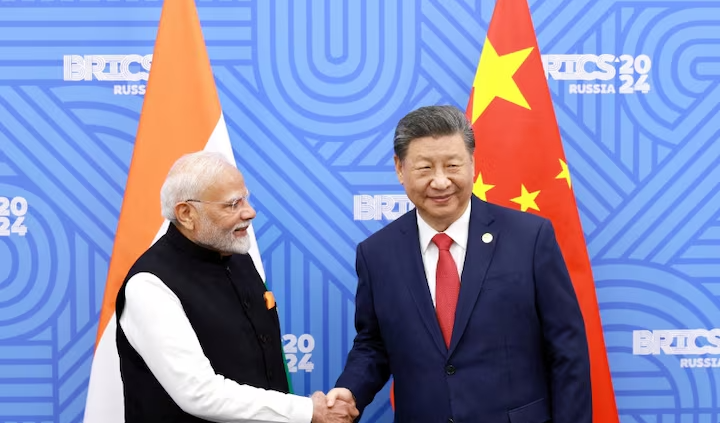
Chinese President Xi Jinping’s expected visit to New Delhi this week could provide an important opportunity for India and China to further repair their strained diplomatic relationship, but major challenges remain in the economic and business relationship between the two Asian powers.
Xi’s anticipated trip would be his first visit to India in seven years and comes at a sensitive stage in bilateral relations. Although diplomatic engagement between New Delhi and Beijing has improved in recent years, businesses on both sides continue to face regulatory restrictions, visa-related difficulties and obstacles involving industrial equipment and technology. These issues have highlighted the considerable gap between political efforts to improve ties and the realities confronting companies operating across the two countries.
Beijing has not yet formally confirmed Xi’s participation in the annual BRICS summit in New Delhi. There has also been no official confirmation about whether the Chinese leader will hold a bilateral meeting with Prime Minister Narendra Modi. Such a meeting, if it takes place, could be closely watched because discussions between the two leaders may influence the future direction of India-China relations.
The relationship between India and China has long been shaped by strategic competition and mutual suspicion. The two countries fought a war in 1962, after which their relationship remained cautious for decades. Tensions reached another major point in 2020 when a violent confrontation along their disputed border resulted in the deaths of 20 Indian soldiers and four Chinese soldiers.
Since then, both governments have taken steps aimed at stabilising relations. Diplomatic and military channels have remained active, while economic engagement has gradually resumed in selected areas. Prime Minister Modi’s visit to China last year also contributed to efforts to bring the relationship onto a more stable track.
The broader international environment has additionally encouraged both countries to reassess their strategic positions. India and China have each faced increasingly complicated relations with the United States, including disagreements over trade and economic policies. This has created some common ground, although analysts caution that shared concerns about Washington do not automatically resolve longstanding India-China differences.
“China certainly wants to improve ties, but we are waiting to see to what extent India is actually willing to improve them,” said Lin Minwang, a South Asia expert at Shanghai’s Fudan University and a former diplomat at the Chinese Embassy in New Delhi. He suggested that expectations for a dramatic transformation in relations should remain limited.
Analysts in India have also pointed to the lack of trust as one of the biggest obstacles. Harsh Pant, vice president at New Delhi’s Observer Research Foundation, said the trust deficit between the two countries remained substantial.
At the same time, Pant argued that China’s economic strength could create an opportunity for Beijing to demonstrate that it can become a dependable economic partner, particularly at a time when both countries are dealing with the effects of American trade policies.
India has already taken some steps to reopen parts of its economic relationship with China. In March, New Delhi eased certain restrictions on Chinese investment that had been introduced following the 2020 border clashes. The changes focused on sectors including electronics, capital goods and solar cells. The Indian government has also been considering quicker approval mechanisms for joint ventures involving Indian and Chinese companies in selected industries.
Several significant projects have subsequently received approval. Among them is a manufacturing partnership involving Indian electronics manufacturer Dixon Technologies and Chinese smartphone company Vivo. The approval was seen as an indication that New Delhi is prepared to permit Chinese participation in areas where it believes economic and manufacturing interests can be aligned with national priorities.
However, these developments have not yet been enough to convince some of China’s biggest companies to revive previously planned investments in India.
Chinese vehicle manufacturers BYD and Great Wall Motor had earlier planned investments in the Indian market but shelved those plans after facing increased scrutiny from Indian authorities, according to an Indian government source. Both companies declined to comment on the matter.
The investment environment is complicated further by scrutiny from the Chinese side. According to sources familiar with the situation, Chinese authorities have also increased examination of proposed investments in India, particularly in sectors involving advanced manufacturing and high-end technology.
The two governments have publicly sought to project a more cooperative approach. China’s foreign ministry said Xi and Modi view the two countries as “partners, not competitors” and consider each other opportunities rather than threats to development.
Despite this diplomatic language, New Delhi continues to maintain security-related concerns over Chinese businesses and technology.
India recently declined to approve a proposal from Alipay, a platform associated with China’s Ant Group, to connect with India’s instant payments system. The proposal was reportedly held up because of national security and data-related concerns.
Another major issue involves Xiaomi. India’s Serious Fraud Investigation Office has recommended a detailed investigation into the Chinese smartphone manufacturer over alleged irregularities in its Indian operations and possible breaches of foreign investment rules. Xiaomi has maintained that it complies with Indian laws and said it had not received communication from the investigation agency.
Trade and technology dependencies are another source of friction.
According to Indian sources and an industry executive, some Chinese-made equipment and components required by India’s solar, electronics and infrastructure sectors have faced delays at Chinese customs this year. In one particularly significant case, large tunnel-boring machines required for infrastructure projects in India have reportedly been held up for more than a year.
Such delays have raised questions about the extent to which economic interdependence can become a strategic vulnerability. Ajay Srivastava, founder of the New Delhi-based Global Trade Research Initiative and a former Indian trade negotiator, said delays involving visas and industrial equipment appeared to represent more than ordinary administrative problems. In his assessment, they could indicate China’s ability to use India’s dependence on Chinese technology and supplies as leverage.
The issue is particularly important because India has been rapidly expanding manufacturing and infrastructure projects that depend on specialised machinery, electronic components and renewable-energy equipment.
At the same time, the people-to-people and business links between the two countries have also experienced a mixed recovery.
India and China restored direct air links last year, while New Delhi introduced measures to make visa procedures easier for Chinese business professionals. These moves were viewed as important steps toward restoring normal economic interaction following years of restrictions.
Yet difficulties have not disappeared. Some Indian businesspeople with commercial interests in China have recently faced problems obtaining visas, according to sources and an industry executive. China’s foreign ministry has said that Indian nationals with genuine reasons to travel to China can receive visas according to Chinese laws and regulations.
The contrast between improving diplomatic contacts and continuing commercial barriers underscores the complexity of the relationship.
A successful meeting between Modi and Xi could potentially help address some of these problems. Senior officials and analysts believe direct engagement between the two leaders could create space for both governments to discuss investment restrictions, visa procedures, supply-chain issues and other economic concerns.
Former senior Indian trade official Anup Wadhawan said a meeting between the leaders would provide an opportunity to bring political and economic interests closer together. However, he also stressed that commercial relations ultimately depend on the economic interests of businesses and citizens in both countries.
The future of India-China ties is therefore likely to depend on whether the current diplomatic thaw can be converted into greater predictability for businesses. Restoring political communication may be comparatively easier than rebuilding confidence among companies that have faced regulatory uncertainty, security scrutiny and supply disruptions.
For India, Chinese investment and technology can offer economic advantages in sectors where China has developed strong manufacturing capabilities. At the same time, New Delhi remains determined to protect national security interests and reduce excessive dependence on any single foreign source.
For China, India represents one of the world’s largest and fastest-growing markets, making deeper commercial engagement economically attractive. But Chinese companies seeking to expand in India must navigate a significantly more cautious regulatory environment than before the 2020 border crisis.
Xi’s expected India visit could therefore become an important diplomatic moment, but it is unlikely to immediately resolve the deeper problems affecting the relationship. A successful summit-level engagement could establish the political framework for further progress, yet restoring business confidence will require sustained action beyond high-level meetings.
For now, the relationship remains caught between cooperation and caution. Diplomatic channels are reopening, selected investments are moving forward and travel links have improved, but trust remains fragile. Whether the latest political engagement can translate into stable economic cooperation will be one of the key questions surrounding the next phase of India-China relations.