Search

    Language Settings
    Select Website Language

    GDPR Compliance

    We use cookies to ensure you get the best experience on our website. By continuing to use our site, you accept our use of cookies, Privacy Policy, and Terms of Service.

    India’s Economy Expands 7.8% in April-June Quarter, Beating Expectations on Strong Investment and Manufacturing

    15 hours ago


    Yugcharan News / 01-09-2026

    India’s economic growth remained stronger than anticipated in the first quarter of the 2026-27 financial year, with the country’s gross domestic product (GDP) expanding 7.8% during the April-June period, according to government data released on Monday. The performance exceeded market expectations and highlighted the resilience of domestic economic activity despite global uncertainties, geopolitical tensions and uneven conditions in some sectors.

    The latest GDP figure was significantly higher than the 7.1% growth economists had expected in a recent market survey. However, the pace was lower than the revised 8.6% expansion recorded in the January-March quarter. The data nevertheless provided a positive opening to the new financial year and strengthened expectations that India could maintain growth above 7% for the full year if domestic demand and investment momentum remain intact.

    The Reserve Bank of India had earlier projected first-quarter economic growth at 7%, making the actual performance notably stronger than the central bank’s estimate.

    Investment and Manufacturing Provide Strong Support

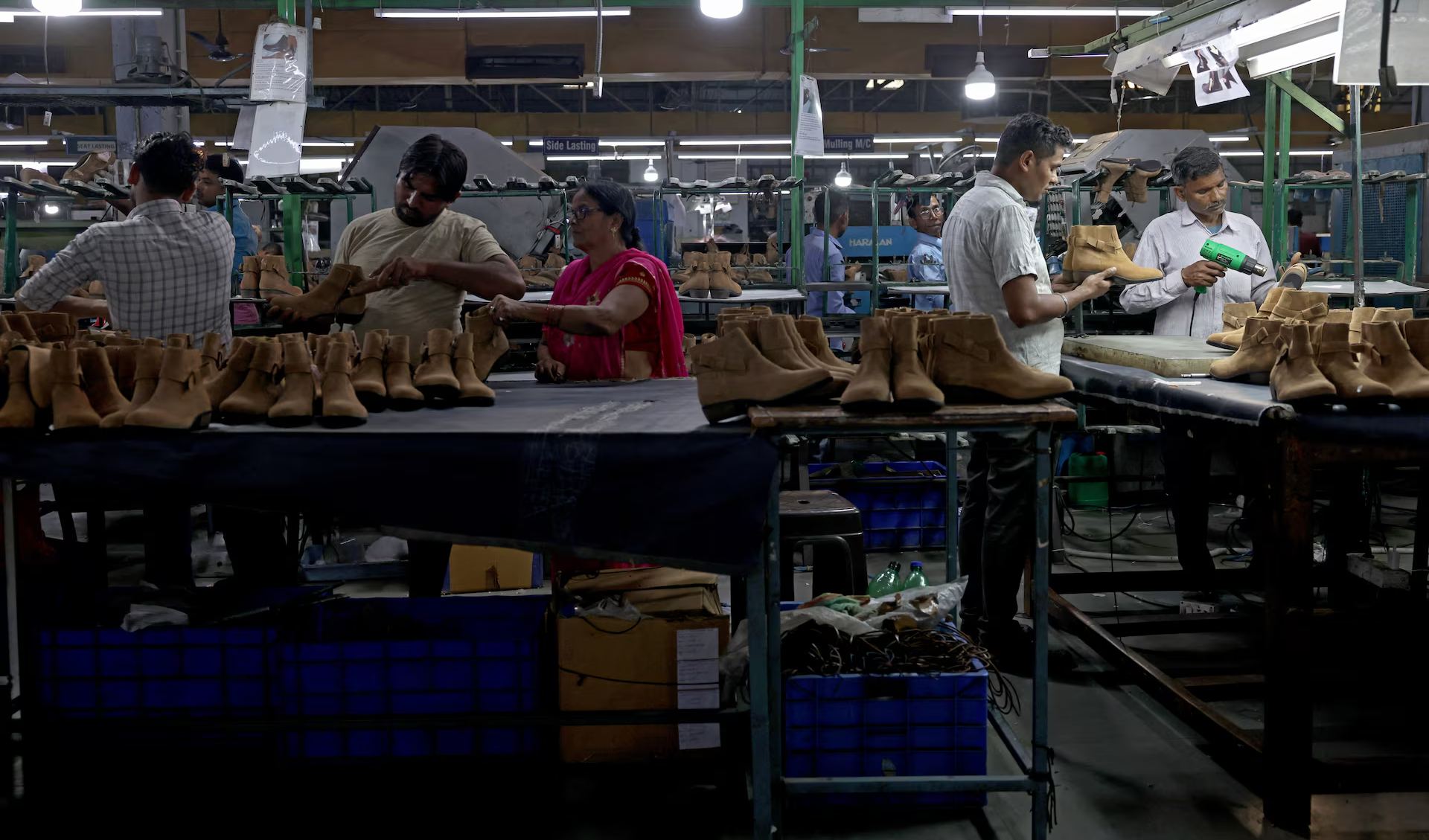
    One of the most important features of the latest growth data was the contribution from investment and manufacturing activity. Economists said capital formation emerged as a major driver of expansion, suggesting that the investment cycle may be gaining broader momentum.

    Manufacturing and electricity, gas and related utility activities recorded growth close to 9%, helping offset weaker performances in areas such as mining and some consumer-oriented services. The manufacturing sector’s performance is particularly significant because sustained industrial expansion can support employment, business investment, transportation activity and demand across multiple supply chains.

    Economists also pointed to continued government spending and capital expenditure as important contributors to economic activity. Public investment has remained a key element of India’s growth strategy, particularly through infrastructure development and projects intended to improve the country’s productive capacity.

    At the same time, signs of improving private investment have attracted attention. Analysts said spending by private companies in areas such as data centres, power infrastructure and metals could become increasingly important in determining whether the investment cycle broadens during the second half of the financial year.

    Domestic Demand Remains Resilient

    The stronger-than-expected GDP figure also indicated that domestic demand has held up better than some earlier indicators suggested.

    Consumption continued to provide support to economic activity, while government expenditure and investment helped maintain overall momentum. Economists had been watching consumer demand closely amid concerns over inflation, weather conditions and global economic uncertainty.

    The latest figures suggest that India’s internal economic drivers remain relatively strong. This resilience is important because the global environment continues to present challenges, including elevated energy costs, geopolitical tensions and tighter financial conditions in several major economies.

    Analysts said the combination of consumption and investment gives the Indian economy a more balanced growth profile. While exports have also remained relatively resilient, a strong domestic market provides an important cushion against fluctuations in international demand.

    Services Sector Continues to Perform

    The services sector remained another major contributor to the economy. Financial, real estate and professional services recorded particularly strong growth during the quarter, with expansion reaching around 12%, according to comments cited by economists.

    The performance demonstrates the continuing importance of services to India’s overall economic structure. Financial and professional services have benefited from rising economic activity, increasing formalisation and continued demand from businesses and consumers.

    However, economists also noted that not all service-related segments have performed equally strongly. Consumer-facing activities and certain parts of the economy remain vulnerable to changes in household spending patterns and external conditions.

    External Risks Remain

    Despite the positive GDP figures, economists cautioned that India’s growth outlook is not free from risks.

    The conflict and instability in West Asia have created concerns over energy prices and international trade routes. Higher oil prices can affect India significantly because the country relies heavily on imported crude oil. A sustained increase in energy costs could put pressure on businesses, consumers and the country’s external balance.

    The rupee’s performance is another factor being closely watched. Currency weakness can increase the domestic cost of imported commodities, particularly crude oil, and could add pressure if global energy prices remain elevated.

    Global financial conditions also remain an important consideration. Higher international interest rates or tighter liquidity could influence capital flows into emerging markets, including India. Analysts said investors would therefore be watching whether the strong domestic growth performance translates into sustained foreign and domestic investment.

    Expectations for Full-Year Growth Rise

    The better-than-expected first-quarter performance has led several economists to become more optimistic about India’s full-year growth prospects.

    Some analysts now believe that annual growth of around 7% or slightly higher could be achievable. The stronger starting point for the financial year means that even if quarterly growth moderates later, India could still maintain a relatively high annual expansion rate.

    Economists also said the monsoon will remain an important factor, particularly for rural demand. Agricultural conditions influence rural incomes, food prices and consumption across a large part of the Indian economy. If monsoon performance remains broadly supportive, rural spending could provide an additional source of strength during the remainder of the year.

    The outlook for inflation is also important. A stable inflation environment would give households greater purchasing power and could support consumption, while allowing policymakers greater flexibility in managing monetary conditions.

    Economists Highlight Strength of Investment Cycle

    Several economists described the investment component of the latest GDP data as one of the most encouraging developments.

    Capital formation was estimated to have risen to 34.3% in nominal terms, compared with 31.4% a year earlier, while growth in this area was reported at more than 20%. Analysts said this reflected spending by both the government and private sector.

    The expansion of investment beyond traditional public infrastructure projects could prove significant for the medium-term outlook. Private-sector spending on power, data centres, metals and other productive assets could create additional capacity and generate demand for a wide range of industries.

    A broader private investment cycle would also reduce dependence on government expenditure as the primary engine of capital formation. Economists said this would be an important development if sustained through the remainder of the financial year.

    India Enters FY2027 on Stronger Footing

    The April-June GDP figures have given India a stronger-than-expected start to the 2026-27 financial year. Although growth moderated from the previous quarter’s revised 8.6%, the 7.8% expansion demonstrated that economic activity remained robust despite a challenging international environment.

    The combination of investment, manufacturing, government spending, services and domestic consumption has provided multiple sources of support. Export performance has also remained relatively resilient, offering another positive element for the economy.

    At the same time, policymakers and businesses will have to navigate several uncertainties in the coming quarters. Oil prices, geopolitical developments, global trade conditions, currency movements and international financial conditions could influence the pace of growth.

    For now, however, the latest data suggests that concerns over a sharp slowdown may have been overstated. India’s domestic economy has shown considerable resilience, and the strength of investment and industrial activity has improved the prospects for maintaining a growth rate of around 7% for the year.

    The key challenge will be to ensure that the momentum seen in the first quarter continues to spread across the wider economy. Sustained private investment, healthy consumption, stable inflation and supportive external conditions will be crucial in determining whether the strong opening quarter develops into another year of broad-based economic expansion.

    Click here to Read More
    Previous Article
    Iran Targets Jordan as US Launches First Strike on Iran in a Month
    Next Article
    India and Uzbekistan Deepen Strategic Partnership With Long-Term Uranium Supply Agreement

    Related National Updates:

    Are you sure? You want to delete this comment..! Remove Cancel

    Comments (0)

      Leave a comment