Yugcharan News / 22-10-2026
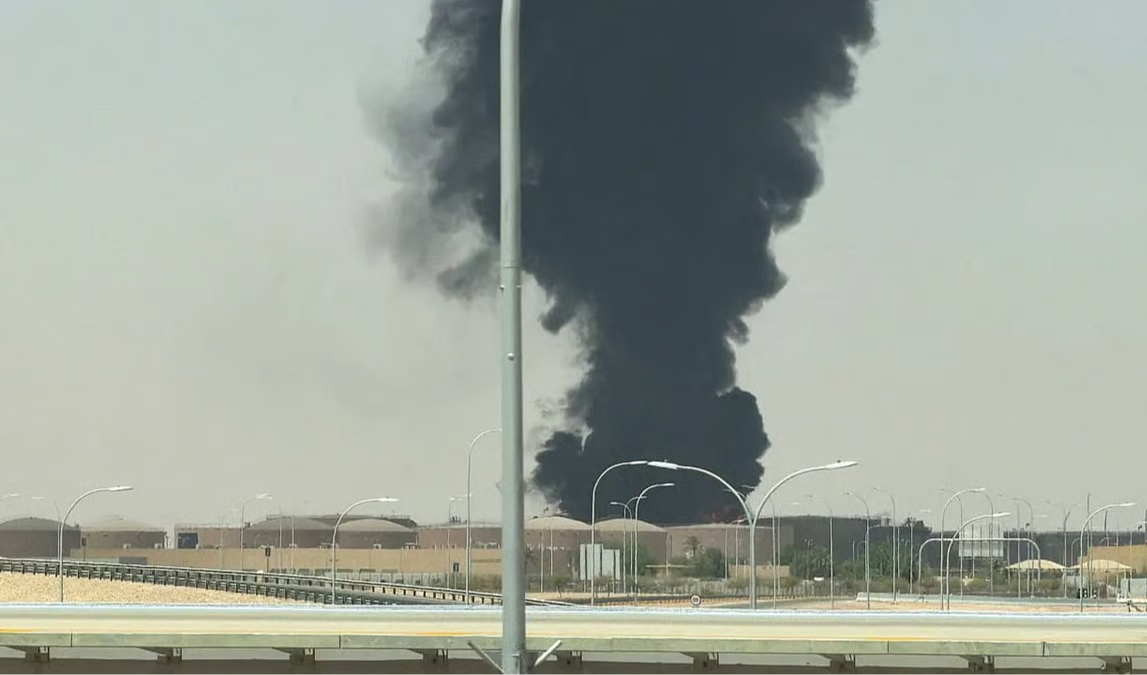
An attack on Saudi Arabia’s King Fahd International Airport in Dammam has killed two people, including a Saudi national and an Indian resident, while eight others sustained injuries, according to the kingdom’s General Authority of Civil Aviation (GACA). The incident took place on Wednesday, October 21, with the updated death toll announced by the aviation authority on Thursday, October 22, as security concerns continued to grow over attacks on critical infrastructure across Saudi Arabia.
The incident adds to a series of reported attacks targeting Saudi infrastructure amid escalating tensions linked to the conflict involving Houthi forces in Yemen and the Saudi-backed internationally recognised Yemeni government. The latest developments have raised concerns about the security of airports, energy facilities and other strategically important sites in the kingdom.
According to the General Authority of Civil Aviation, all those injured in the airport attack were immediately transported to hospitals for medical treatment. The authority indicated that further updates would be provided as additional information became available.
The circumstances surrounding the attack, including the precise method used and the extent of damage at the airport, were not fully detailed in the available report. Authorities have not provided sufficient information to establish the complete sequence of events leading to the casualties.
Two People Killed and Eight Injured
Saudi Arabia’s General Authority of Civil Aviation confirmed that the airport attack resulted in two deaths and eight injuries. The victims who died were identified as a Saudi national and an Indian resident, highlighting the impact of the incident on people of different nationalities living in or travelling through the kingdom.
The aviation authority said the injured individuals were taken to hospitals immediately after the incident. However, the available information did not specify the severity of their injuries or provide further details about their identities.
The attack occurred at King Fahd International Airport in Dammam, an important aviation facility serving Saudi Arabia’s Eastern Province. The airport is a significant transport hub for the region, which also contains major energy infrastructure and industrial facilities.
The latest casualty figures represent an update to the information released following Wednesday’s incident. The authority’s statement confirmed the deaths and injuries but did not provide a comprehensive account of the attack or clarify whether airport operations were disrupted.
Further official information will be important in establishing how the incident unfolded, whether the airport sustained infrastructure damage and what additional security measures may be introduced in response.
Saudi Arabia Reports Separate Attack on Shaybah Oilfield
The airport incident came amid reports of another deadly security event involving Saudi Arabia’s energy infrastructure.
Earlier on Thursday, Saudi Arabia’s Ministry of Energy said two people were killed after air defences intercepted a drone attempting to strike a facility at Saudi Aramco’s Shaybah oilfield.
The reported incident at Shaybah and the attack on King Fahd International Airport were separate events. The available information does not establish whether they were coordinated or carried out by the same group.
The Shaybah oilfield is an important part of Saudi Arabia’s energy sector, making security around the facility strategically significant. Any attempt to target oil infrastructure can raise concerns about the safety of personnel, the continuity of operations and the protection of critical energy assets.
The ministry’s statement indicated that Saudi air defences had intercepted the drone. However, the available report did not provide further details about the intended target’s condition, the extent of any damage or the identity of those responsible for the attempted strike.
Taken together, the reported incidents involving the airport and oilfield have increased attention on the kingdom’s ability to protect civilian transport facilities and strategically important energy installations during the widening regional security crisis.
Series of Attacks Raises Concerns Over Saudi Infrastructure
The latest incident follows other reported attacks on Saudi Arabia, including incidents involving King Khalid International Airport in Riyadh.
According to the report, a projectile strike on Riyadh’s King Khalid International Airport on October 11 killed one person and injured 11 others.
A separate attack reported on October 10 was said to have killed 12 people and injured more than 300. The available information did not provide a detailed account of the circumstances surrounding that incident or establish whether it was directly connected to the later airport attack in Dammam.
The reported casualties from these incidents have heightened concerns about the vulnerability of airports and other public infrastructure as the conflict continues to intensify.
Airports are particularly sensitive facilities because they handle large numbers of passengers, airline employees, ground staff and security personnel. Attacks or attempted attacks can have consequences extending beyond immediate casualties, potentially affecting travel arrangements, aviation security procedures and public confidence.
Energy facilities are similarly important because disruptions can have implications for production, transportation and regional energy security. Saudi Arabia’s combination of major aviation hubs and significant oil infrastructure makes the protection of these facilities a central security concern.
However, the individual incidents must be assessed separately unless authorities establish a direct connection between them. The available reporting does not provide enough evidence to conclude that every attack formed part of a single coordinated operation.
Conflict in Yemen Adds to Regional Security Pressures
The attacks come amid intensifying conflict involving Houthi forces and the Saudi-backed internationally recognised government of Yemen.
Saudi Arabia has played a significant role in Yemen’s conflict, supporting the internationally recognised government in its struggle against the Houthis. The wider confrontation has repeatedly created security challenges for countries in the region, particularly where hostilities threaten cross-border stability and critical infrastructure.
The latest incidents have renewed attention on the possibility of attacks affecting civilian facilities and strategic assets inside Saudi Arabia.
The report describes the airport attack as part of a broader series of assaults on Saudi infrastructure. Nevertheless, the information available does not establish the identity of those responsible for the Dammam incident or provide a confirmed claim of responsibility.
Attributing an attack requires evidence from official investigations or independently verified information. Until such details are released, responsibility for the airport incident should not be treated as conclusively established.
The security situation also has implications for countries whose citizens live, work or travel in Saudi Arabia. The death of an Indian resident in the Dammam attack underlines the international dimension of the incident and the potential risks faced by expatriate communities during periods of heightened regional instability.
United States Orders Diplomatic Personnel to Leave Saudi Arabia
Amid the continuing security concerns, the United States State Department on Wednesday ordered diplomats and their family members to depart from US missions in Saudi Arabia, according to the report.
US officials also told Reuters that there were plans to withdraw family members from several other American diplomatic missions in the region.
The move came as the security situation deteriorated amid reported Houthi attacks. The US Embassy in Riyadh separately issued a security alert on Wednesday warning of the possibility of further attacks against Saudi Arabia.
The departure order for diplomats and their families represents a significant precautionary measure, reflecting concern about the potential risks facing American personnel in the kingdom.
Diplomatic missions routinely review their security arrangements when the threat environment changes. Depending on the circumstances, governments may restrict movement, issue travel warnings, reduce staffing levels or direct non-essential personnel and family members to leave affected locations.
The available report does not specify the full scope of the US departure order, the number of personnel affected or the precise timetable for their departure. It also does not establish whether the measure was issued specifically in response to the Dammam airport attack or reflected a broader assessment of regional threats.
The US Embassy’s warning about possible further attacks nevertheless indicates that American officials consider the evolving security situation serious enough to require additional precautions.
Indian Resident Among Those Killed
The death of an Indian resident in the airport attack is likely to draw attention in India because of the large number of Indian nationals who live and work across Gulf countries, including Saudi Arabia.
The available report confirms the victim’s status as an Indian resident but does not provide a name, age, occupation or information about family members. It also does not include details of any communication from Indian diplomatic authorities.
Without further official information, the victim’s identity and circumstances should not be speculated upon.
The incident highlights the importance of accurate and timely communication between authorities when foreign nationals are affected by security incidents abroad. Consular assistance may become relevant in confirming identities, contacting relatives and coordinating any necessary arrangements, although the available information does not establish what assistance has been provided in this case.
The eight people injured in the attack were taken to hospitals, but their nationalities and medical conditions have not been specified.
Further Details Awaited as Security Concerns Continue
The immediate priority following the attack is the treatment of the injured and the establishment of the full circumstances surrounding the incident. Additional official statements are expected to clarify the nature of the attack, the damage caused and any steps being taken to strengthen security at the airport.
The reported drone interception at Shaybah oilfield and earlier attacks involving King Khalid International Airport demonstrate the range of infrastructure facing security concerns in Saudi Arabia. However, the precise relationship, if any, between these incidents remains unclear.
The US decision to order diplomatic personnel and family members to leave its missions in Saudi Arabia adds another dimension to the evolving situation, as foreign governments reassess potential risks to their personnel.
For now, the confirmed toll from the King Fahd International Airport attack stands at two dead and eight injured. One victim was a Saudi national, while the other was an Indian resident. Authorities have confirmed that the injured were transported to hospitals, but further information about the attack and its wider consequences remains limited.
As the regional conflict continues, developments surrounding airport security, energy infrastructure and diplomatic precautions are likely to remain central to assessments of the security situation in Saudi Arabia.