Search

    Language Settings
    Select Website Language

    GDPR Compliance

    We use cookies to ensure you get the best experience on our website. By continuing to use our site, you accept our use of cookies, Privacy Policy, and Terms of Service.

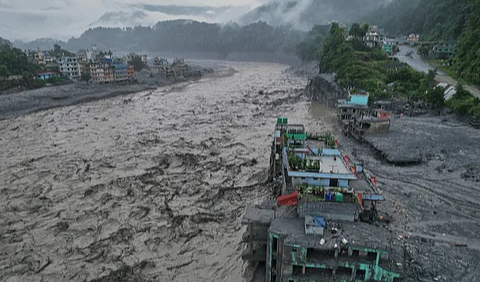
    Nepal Flood Death Toll Crosses 900 as Rescue Teams Search for Survivors in Devastated Border Region

    16 hours ago


    Yugcharan News / 01-09-2026

    Rescue operations continued across parts of Nepal and Tibet after catastrophic flash floods swept through communities near the Nepal-China border, leaving hundreds dead and thousands of people missing. Authorities and rescue teams are facing difficult terrain, blocked roads, damaged infrastructure and large quantities of mud and debris as they work to locate survivors and reach isolated communities.

    The disaster has emerged as one of the most severe flooding events to hit the Himalayan region in recent years. According to the latest reports, the combined death toll in Nepal and Tibet has crossed 900, while thousands of people remain unaccounted for. Rescue efforts have been particularly focused on hydropower project tunnels where hundreds of workers are believed to have been trapped by floodwater, mud and debris.

    The flooding struck the region on August 26 after a major glacial and geological event near the Nepal-Tibet border triggered a massive surge of water, rocks, ice and debris. The resulting flood travelled rapidly through river valleys, causing extensive destruction in areas along the Trishuli and Bhotekoshi river systems.

    Rescue Operations Intensify

    Emergency teams have been working against difficult conditions to reach people believed to be trapped in underground sections of hydropower projects. Nepalese authorities have identified hundreds of missing people associated with hydropower facilities in the worst-affected areas.

    The tunnels have become one of the most challenging parts of the rescue operation. Large amounts of mud and debris entered the underground infrastructure, making access difficult and creating additional risks for rescuers. Excavators and other heavy machinery are being used to clear blocked entrances, while teams are attempting to determine whether workers may still be alive inside protected sections of the projects.

    Nepal's security forces, civilian workers and volunteers have been involved in the wider emergency response. More than 20,000 security personnel have reportedly been deployed for rescue and relief operations. Teams are also working to restore access to communities that have been cut off after roads and bridges were damaged or swept away.

    The scale of the destruction has made it difficult for authorities to immediately establish a complete picture of casualties and damage. The number of people reported missing has also changed as officials receive information from remote areas and begin reaching communities that were previously inaccessible.

    Thousands Remain Missing

    The growing number of missing people has become one of the most serious concerns following the disaster. Nepalese authorities reported more than 4,000 people missing, while hundreds more were reported missing on the Chinese side of the border. The figures include foreign nationals who were travelling or working in the affected region.

    For families in Kathmandu and other areas, the continuing uncertainty has added to the tragedy. Hospitals and public locations have become gathering points for relatives looking for information about missing family members.

    Tribhuvan University Teaching Hospital in Kathmandu has reportedly displayed posters carrying photographs and details of missing people. Families continue to wait for confirmation about relatives who disappeared when floodwaters swept through settlements and transportation routes.

    The humanitarian consequences extend beyond the immediate loss of life. Thousands of residents have lost homes, businesses and access to basic services. The destruction of bridges and roads has made the delivery of food, drinking water, clothing and medical supplies particularly difficult in some districts.

    Helicopters Carry Aid to Cut-Off Areas

    With several communities isolated by the destruction of road networks, helicopters have become an important part of the relief effort.

    In Nuwakot, one of the badly affected districts, helicopters have been used to transport essential supplies to communities that cannot currently be reached by road. The aircraft have also been involved in evacuating injured people and survivors from areas affected by the flooding.

    The operation is challenging because of Nepal's mountainous geography. Narrow valleys, unstable slopes and continuing risks from landslides can make flying and ground operations difficult. Weather conditions have also periodically interrupted rescue activities.

    Officials have warned that the danger may not be over. A lake formed by the disaster near the Nepal-China border has raised concerns about the possibility of additional flooding if water levels rise or the natural barrier holding back the water becomes unstable.

    Possible Glacial Trigger Under Investigation

    The flooding is believed to have been connected to a major glacial and geological event in the Himalayan region. Reports indicate that an ice and rock avalanche created conditions that resulted in a sudden release of water and debris into downstream valleys.

    The precise chain of events and the contribution of different geological and climatic factors remain subjects of investigation. Chinese state media has linked the disaster to glacier instability and the long-term effects of global warming, while scientists are examining satellite information and other data to understand the event.

    The incident has once again drawn attention to the vulnerability of Himalayan communities to sudden changes in glacial and mountain environments. Nepal is home to numerous glaciers, rivers and hydropower projects, while settlements and infrastructure are often located along narrow river valleys.

    The disaster therefore raises broader questions about early-warning systems, disaster preparedness, information sharing and the safety of infrastructure in high-risk mountain regions.

    International Assistance and Cooperation

    Although Nepal has maintained its own extensive search-and-rescue operation, neighbouring countries have also become involved in efforts requiring specialised expertise.

    India and China have provided assistance in areas where rescue teams are dealing with difficult tunnel and mountainous conditions. China has deployed thousands of rescuers and provided equipment and supplies for emergency operations on its side of the border.

    The scale of the disaster has also created challenges for international travellers and foreign nationals whose whereabouts remain uncertain. Governments and diplomatic missions are monitoring the situation and working to establish information about citizens who may have been in affected areas.

    The humanitarian response is expected to continue for an extended period as authorities move from immediate rescue efforts towards recovery, reconstruction and assessment of the damage.

    Communities Face Long Recovery

    Beyond the search for survivors, the affected communities now face the difficult task of rebuilding.

    Homes, roads, bridges and other infrastructure have been damaged or destroyed in several areas. Hydropower facilities have also suffered severe disruption, raising concerns about the longer-term impact on electricity generation and local economies.

    The Red Cross has estimated that more than 90,000 people could have been affected by the disaster, underlining the scale of the humanitarian challenge.

    For residents who survived the floods, the immediate priorities include finding missing relatives, securing shelter, obtaining food and clean water and restoring basic transportation links. The psychological impact is also likely to remain significant, particularly for families who have lost relatives or remain uncertain about their fate.

    Nepal's authorities have described the flooding as an unprecedented and devastating natural disaster. The continuing rescue operation reflects the urgent need to reach isolated populations before the opportunity to save survivors diminishes.

    As rescue teams continue clearing tunnels and debris, families across the affected region are waiting for news. The death toll has already reached devastating levels, but the full human cost of the disaster may take considerably longer to establish.

    For now, the focus remains firmly on rescue. Teams are searching damaged hydropower facilities, evacuating survivors, delivering emergency supplies and attempting to reopen routes into communities cut off by the floods. With thousands still missing, the coming days will remain critical for both rescue operations and the broader humanitarian response.

    The disaster also serves as a stark reminder of the risks faced by communities living in the Himalayan region, where powerful rivers, unstable mountain terrain and rapidly changing glacial conditions can combine to produce devastating consequences with very little warning.

    Click here to Read More
    Previous Article
    PM Modi Tells Putin World Must Move From Endless War to an End of War
    Next Article
    Iran Targets Jordan as US Launches First Strike on Iran in a Month

    Related International Updates:

    Are you sure? You want to delete this comment..! Remove Cancel

    Comments (0)

      Leave a comment