Search

    Language Settings
    Select Website Language

    GDPR Compliance

    We use cookies to ensure you get the best experience on our website. By continuing to use our site, you accept our use of cookies, Privacy Policy, and Terms of Service.

    Defence Acquisition Council Clears ₹1.1 Lakh Crore Proposals to Strengthen Armed Forces and Boost Domestic Manufacturing

    13 hours ago

    Yugcharan News / 08-09-2026

    The Defence Acquisition Council (DAC), chaired by Defence Minister Rajnath Singh, has cleared a series of defence procurement proposals with a combined value of approximately ₹1.1 lakh crore, marking a significant push to strengthen the operational capabilities of the Indian armed forces while accelerating domestic defence manufacturing.

    The approvals cover a wide range of military requirements for the Indian Army, Indian Navy and Indian Air Force. The proposed acquisitions include systems for fighter aircraft, transport planes and helicopters, advanced helicopters, electronic warfare equipment, surveillance radars, chemical, biological, radiological and nuclear (CBRN) reconnaissance vehicles, high-mobility platforms and other specialised military systems.

    According to the Defence Ministry, nearly 98 per cent of the procurement covered by the Acceptance of Necessity (AoN) approvals will be sourced from Indian industry. The move is in line with the government's broader objective of reducing dependence on overseas suppliers and expanding India's domestic defence production capabilities.

    Major Push for Self-Reliance

    Under India's defence procurement framework, an AoN represents an important initial stage in the process of acquiring military equipment. The latest approvals therefore indicate the government's intention to move forward with a large number of capability-enhancement projects.

    The emphasis on Indian industry is particularly significant as India continues to promote self-reliance in the defence sector. In recent years, the government has introduced several measures aimed at increasing domestic production, encouraging private-sector participation and reducing imports of defence equipment and critical components.

    These measures have included phased restrictions on imports of selected weapons, platforms, ammunition and components, along with the creation of dedicated financial allocations for procurement from domestic manufacturers.

    The government has also increased the foreign direct investment limit in the defence sector from 49 per cent to 74 per cent under the applicable framework, while introducing measures intended to make it easier for companies to participate in defence manufacturing and procurement.

    India has set a target of achieving defence manufacturing worth ₹3 lakh crore by 2029-30. The country recorded defence production of around ₹1.8 lakh crore during 2025-26, according to the information cited in the report.

    The latest DAC approvals are expected to contribute to this wider effort by creating additional demand for equipment designed, developed and manufactured within the country.

    Air Force Capability to Get New Systems

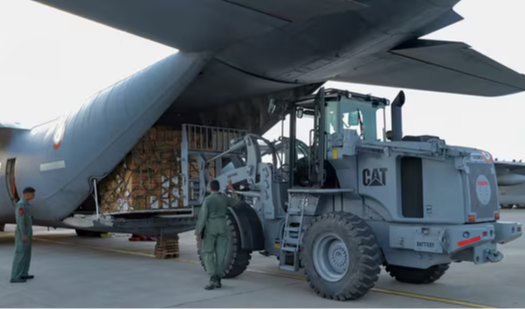
    The Indian Air Force is among the principal beneficiaries of the latest proposals. The approved projects include equipment intended to strengthen the war-fighting capabilities of fighter aircraft, transport planes and helicopters.

    One of the proposals involves a pilot project to integrate Russian-origin RVV-BD long-range air-to-air missiles with Sukhoi-30 fighter aircraft. People familiar with the matter were cited as saying that the initiative is intended to enhance the capabilities of the aircraft by integrating a long-range missile system.

    The DAC has also granted AoN for a ground-based multi-purpose jammer, or GBMPJ, for the Indian Air Force. Such a system is intended to strengthen electronic warfare capabilities by disrupting or interfering with adversarial radar and related electronic systems.

    The addition of electronic warfare capabilities has become increasingly important in modern military operations, where radar, communications and other electronic systems play a central role in detecting and tracking targets.

    New Equipment for the Army

    The Indian Army will also receive attention under the approved procurement proposals. Among the systems cleared are CBRN reconnaissance vehicles, high-mobility vehicles, trawl tanks and the Sarvatra bridge system.

    CBRN reconnaissance vehicles are designed to assist military units in identifying and monitoring areas affected by chemical, biological, radiological or nuclear hazards. According to the Defence Ministry, the vehicles will have the ability to detect, identify, monitor and mark areas contaminated by such agents.

    Such capabilities are particularly relevant for military formations operating in environments where hazardous substances may pose a threat to personnel and equipment.

    The high-mobility vehicles, meanwhile, are expected to improve operational movement, logistics and support in difficult terrain. Their role is especially important for formations operating in areas where conventional transportation systems may face limitations.

    The DAC has also approved self-propelled mechanical mine layers. These systems are intended to provide the Army with a faster and more responsive capability for laying mines in challenging operational environments.

    Trawl tanks and the Sarvatra bridge system also form part of the Army-related approvals. The Defence Ministry said these systems would support composite crossings for fighting formations during military operations across different types of terrain.

    The ability to create crossings quickly can be important during operations in areas where natural or man-made obstacles restrict the movement of armoured and other military formations.

    Naval Surveillance and Propulsion

    The Indian Navy is also set to benefit from the latest round of approvals.

    The DAC has cleared proposals involving Arudhra radars for naval air stations. These radars are expected to replace existing air-route surveillance radars at various naval aviation facilities.

    Improved radar systems can strengthen surveillance and airspace monitoring around naval installations, supporting the broader requirement for situational awareness and operational readiness.

    Another important proposal concerns the design, development and subsequent procurement of marine gas turbines for the Navy. Marine gas turbines are used as propulsion systems on warships, and the proposal is aimed in part at reducing dependence on foreign suppliers.

    Developing and procuring such systems domestically could therefore have implications beyond the immediate equipment requirement, particularly in terms of building indigenous expertise in complex naval propulsion technologies.

    Secure Identification System for Defence Forces

    Apart from major weapons and military platforms, the DAC has also approved the installation of the Defence Forces Secure Access Card system.

    The proposed system is expected to replace existing paper-based identity cards, passes and permits with an interoperable smart-card system based on radio-frequency identification technology.

    The shift towards a digital and interoperable identification mechanism is intended to improve access management and security across defence establishments. A technology-based system can also provide a more standardised mechanism for verifying authorised personnel and managing entry into protected areas.

    Broader Significance for Defence Manufacturing

    The scale of the latest approvals reflects the government's continued focus on strengthening military preparedness while simultaneously expanding India's defence-industrial base.

    The decision to source approximately 98 per cent of the approved procurements from Indian industry is particularly notable. It indicates that domestic manufacturers are expected to play a central role in meeting the armed forces' future equipment requirements.

    For Indian defence companies, such procurement programmes can create opportunities to develop manufacturing capacity, invest in research and development and participate in increasingly sophisticated military supply chains.

    At the same time, the emphasis on indigenous production is intended to reduce vulnerabilities associated with excessive dependence on overseas vendors. Domestic capability in areas such as radar, electronic warfare, propulsion, specialised vehicles and missile integration can strengthen India's ability to maintain and upgrade military systems over the long term.

    The latest approvals, however, represent the beginning of procurement processes rather than immediate delivery of all the equipment involved. AoN is an early stage in the acquisition process, and individual projects will still have to proceed through the applicable procurement and contracting procedures.

    The ₹1.1 lakh crore package nevertheless represents a substantial commitment to modernising India's defence capabilities. With the Army, Navy and Air Force all covered by the approvals, the proposals span land, air, maritime, electronic warfare and support requirements.


    As India works towards its 2029-30 defence manufacturing target, the latest DAC decisions underline the government's effort to connect military modernisation with the development of a stronger domestic defence industry. The coming stages of procurement will determine how quickly these approved requirements translate into contracts, production and eventual induction into the armed forces.

    Click here to Read More
    Previous Article
    Manipuri Guitarist Chongtham Vikram Singh Dies After Alleged Assault Outside Delhi Home
    Next Article
    Iran Reaffirms Strong Ties With India, Signals Further Talks Ahead of BRICS Summit

    Related National Updates:

    Are you sure? You want to delete this comment..! Remove Cancel

    Comments (0)

      Leave a comment