Search

    Language Settings
    Select Website Language

    GDPR Compliance

    We use cookies to ensure you get the best experience on our website. By continuing to use our site, you accept our use of cookies, Privacy Policy, and Terms of Service.

    Delhi High Court Seeks Centre’s Response Over Repeated Blocking of ‘Nehr_Who?’ X Account

    6 hours ago


    Yugcharan News / 07-07-2026

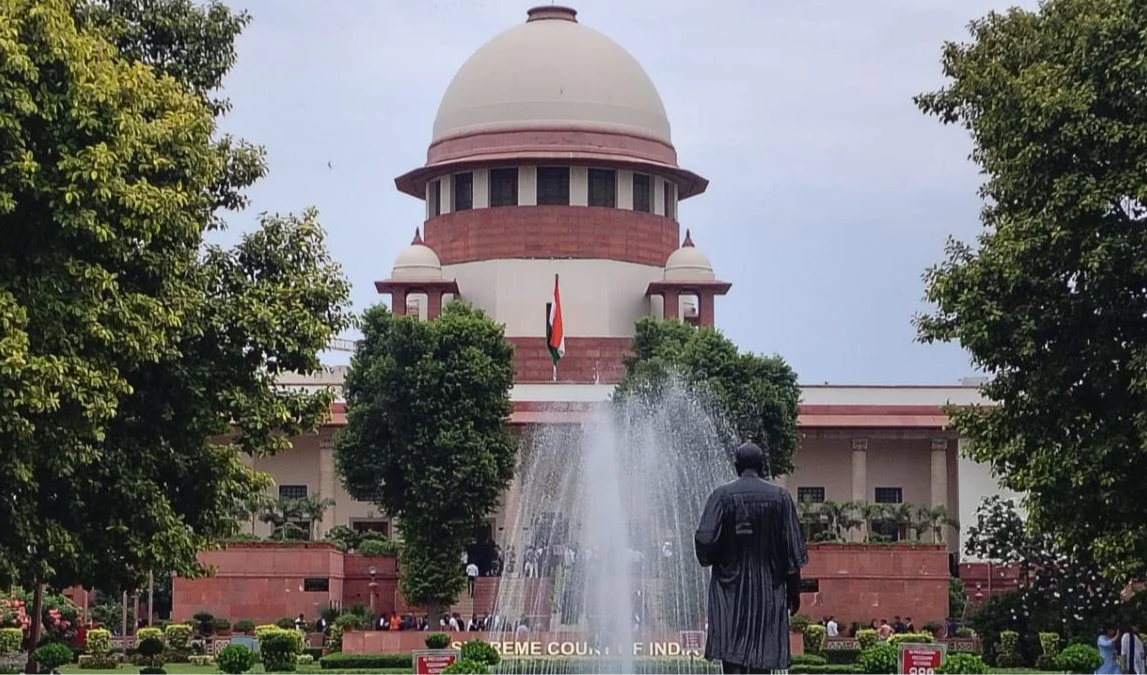
    The Delhi High Court has sought the Central government’s response to a petition challenging the repeated blocking of the popular X account “Nehr_Who?”, with the court particularly questioning why the government’s blocking order was not provided to the account operator.

    Justice Swarana Kanta Sharma heard the matter on September 10 and directed the government counsel to obtain instructions on the issues raised by the petitioner. The case has now been listed for further hearing on September 16.

    The proceedings concern an ongoing dispute over the government’s decision to restrict access to the social media account under Section 69A of the Information Technology Act, 2000, read with the Information Technology (Intermediary Guidelines and Digital Media Ethics Code) Rules, 2021. The account operator has alleged that the handle has been blocked twice within a period of a few months and that the authorities have failed to provide him with the relevant blocking orders despite earlier directions from the High Court.

    The petition raises wider questions concerning transparency in government directions to block online content, the procedural safeguards available to social media users and the balance between regulatory powers and constitutional rights.

    During Thursday’s hearing, advocate Apar Gupta, appearing for the petitioner, informed the court that the account had been blocked for a second time. According to the petitioner’s submission, the account had earlier received protection from the High Court, but a subsequent notice was issued concerning certain posts, following which the entire account was blocked.

    The blocking order was placed before the court during the hearing. After examining the document, Justice Sharma questioned the government counsel about why a copy of the order could not be given to the account holder.

    The court observed that the contents did not appear to be of such a nature that they could not be disclosed to the petitioner, particularly since the material concerned matters that were already available in the public domain.

    The government counsel, however, maintained that the order contained confidential information and stated that instructions would have to be obtained before taking a position on whether it could be shared. The counsel also indicated that there were specific reasons behind the decision to block the account.

    The court therefore directed the government side to obtain instructions and adjourned the matter for consideration on September 16.

    The dispute dates back several months. According to the petition, the operator has been running the “Nehr_Who?” account since October 2016. By the time the account was first blocked in March this year, it had accumulated approximately 2.5 lakh followers.

    The petitioner claims that he was informed on March 19 that access to his X account had been restricted following directions issued by the Ministry of Electronics and Information Technology (MeitY).

    The first round of litigation resulted in an order from the Delhi High Court on April 6. The petitioner has stated that the court directed the government to identify the tweets that had been objected to and to provide the relevant blocking order.

    Following the court’s intervention, the account was restored on April 8. However, according to the petition, the blocking order itself was not supplied to the account operator. The issue subsequently became the subject of a contempt proceeding, which remains pending.

    The matter took another turn on July 27, when the account was blocked once again. This time, the petitioner has alleged that the action was taken pursuant to directions associated with the Ministry of Information and Broadcasting.

    The petitioner has contended that he was again not provided with the blocking order. He has further alleged that during proceedings before an Inter-Departmental Committee on August 7, he was questioned about his political commentary and views on geopolitical issues.

    According to the petition, the account operator was also allegedly told that he was “masquerading as an Indian citizen.” The petitioner has challenged the circumstances surrounding these proceedings and argued that the authorities’ actions go beyond the permissible framework for restricting online content.

    The legal challenge places particular emphasis on the safeguards contained in the blocking rules. The petitioner has argued that repeatedly restricting access to an entire account without properly disclosing the basis for the action undermines procedural protections intended to apply when the government exercises its powers under Section 69A of the Information Technology Act.

    Section 69A gives the Central government certain powers to direct the blocking of public access to online information in specified circumstances. The law provides a regulatory framework through which such directions may be issued, while the associated rules establish procedures concerning examination and consideration of blocking requests.

    The petition argues that these safeguards cannot be bypassed and that a person whose online account has been blocked should be informed about the basis for the restriction, particularly when a court has previously directed authorities to identify the allegedly objectionable content.

    The petitioner has also invoked fundamental rights guaranteed under Articles 14, 19 and 21 of the Constitution of India. Article 14 protects equality before the law, Article 19 guarantees several fundamental freedoms, including freedom of speech and expression subject to constitutionally permitted restrictions, while Article 21 protects life and personal liberty.

    The case consequently extends beyond the individual social media account and raises broader concerns about how government blocking powers are exercised in the digital environment.

    Social media platforms have increasingly become important spaces for political discussion, commentary, public debate and dissemination of information. At the same time, governments have argued that restrictions may be necessary in circumstances involving security, public order, misinformation or other legally recognised grounds.

    The dispute before the Delhi High Court highlights the tension between these competing considerations. While the government possesses statutory authority to issue blocking directions in appropriate circumstances, the petitioner’s case is that such powers must be exercised in accordance with established procedures and constitutional safeguards.

    A significant issue in the present proceedings is therefore the disclosure of the blocking order itself. The High Court’s questioning of the government counsel indicates that the court is examining whether the account operator should be given access to the reasons behind the restriction.

    The government, on the other hand, has maintained that confidentiality concerns exist and that it needs to obtain instructions before determining what information can be disclosed.

    The court has not, at this stage, issued a final ruling on whether the blocking of the account was lawful. The September 10 hearing was primarily focused on obtaining the government’s position and addressing the question surrounding disclosure of the blocking order.

    The petitioner has sought restoration of the “Nehr_Who?” account and production of the relevant blocking order before the court. Through the petition, he has also challenged the repeated restrictions imposed on the account and questioned whether the authorities followed the safeguards prescribed under the applicable legal framework.

    The writ petition has been filed through advocate Naman Kumar.

    The next hearing on September 16 is expected to provide greater clarity on the government’s position and whether it will agree to furnish the blocking order to the account operator. The court may also consider the petitioner’s arguments concerning the repeated blocking of the account and the alleged failure to comply with the earlier directions.

    For now, the Delhi High Court’s intervention places the question of transparency at the centre of the dispute. The proceedings could have implications for the manner in which government directions to restrict social media accounts are communicated and challenged, particularly in cases where constitutional rights and freedom of expression are invoked.

    As the matter moves forward, the court will have to consider the competing claims of confidentiality, regulatory authority, procedural fairness and individual rights. The outcome may also offer further judicial guidance on the safeguards that authorities must observe when exercising statutory powers to block online accounts and content.

    Click here to Read More
    Previous Article
    BRICS Summit 2026: Modi to Host Putin, Xi and Other Global Leaders in New Delhi
    Next Article
    MCD Intensifies Delhi-Wide Crackdown on Dangerous Buildings and Unauthorised Constructions After Satya Niketan Collapse

    Related National Updates:

    Are you sure? You want to delete this comment..! Remove Cancel

    Comments (0)

      Leave a comment