Yugcharan News / 27-10-2026
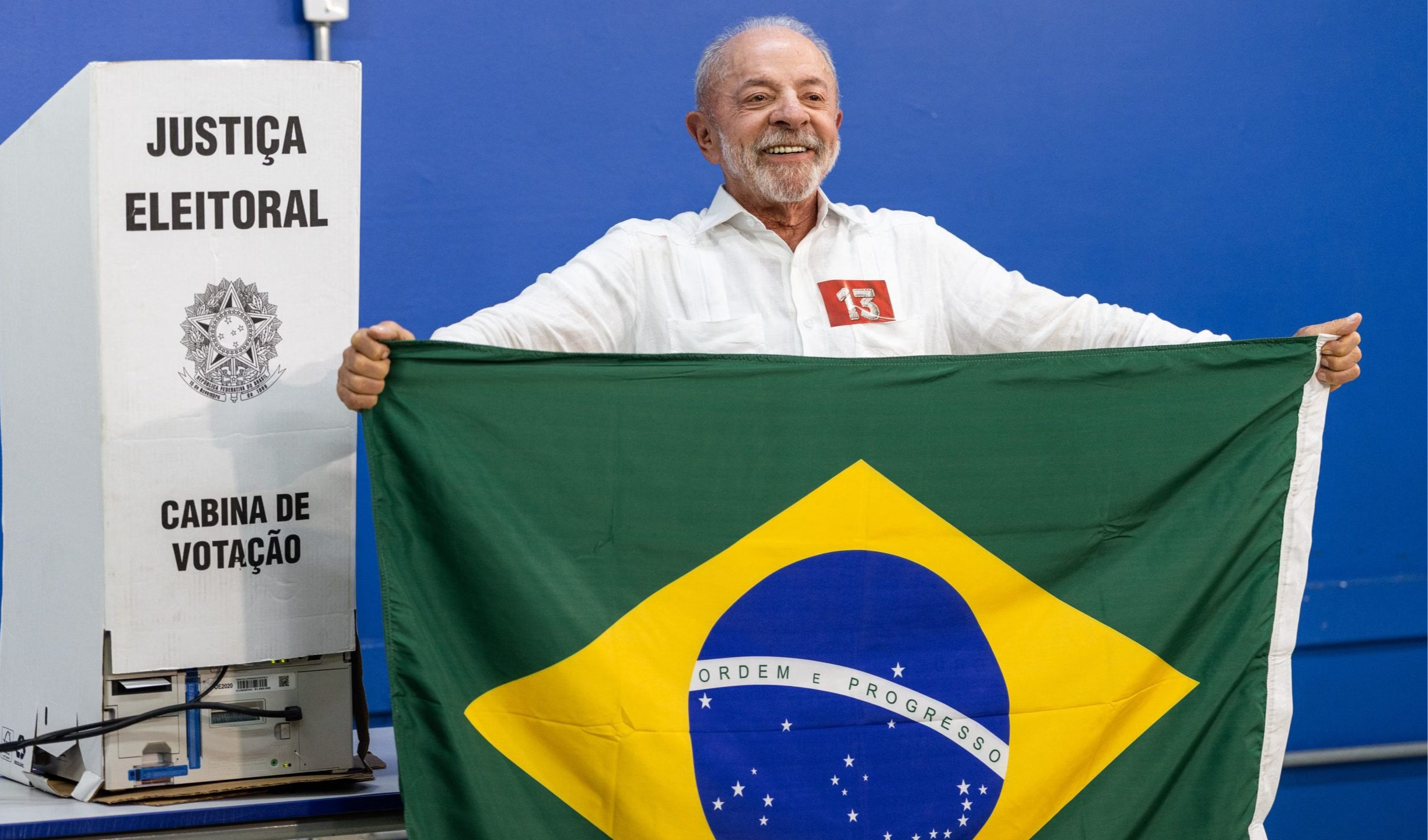
Brazilian President Luiz Inácio Lula da Silva’s election victory has delivered a setback to US President Donald Trump’s ambitions to strengthen Washington’s influence across Latin America, while opening a new chapter in the complicated relationship between the two leaders. Lula’s return for a fourth term signals that Brazil intends to maintain an independent foreign policy, even as the United States seeks closer alignment with governments across the region.
In his victory speech, Lula declared that “Brazil will not accept being anyone’s backyard”, a message directed at Washington and its approach to Latin America. His campaign repeatedly emphasised national sovereignty and opposition to what he described as American interference in Brazilian affairs. The stance became a central political theme as tensions between the two countries rose over tariffs, judicial proceedings and the role of the United States in the region.
Although domestic concerns generally dominate national elections, Lula’s confrontation with Trump appears to have strengthened his political appeal. The Brazilian president presented himself as a leader prepared to defend the country’s interests against pressure from a powerful international partner. That message also reinforced his long-standing political identity as a former union leader who challenges influential figures and institutions.
Trump’s response to the result reflected the complicated nature of their relationship. He said he liked Lula and that the two leaders got along well, while also describing the election as “terrible” and “rigged”. His remarks came despite his claim that he had not taken sides in the contest.
The outcome has wider implications for Trump’s regional strategy, particularly as several Latin American countries have elected leaders aligned with the US administration. Brazil is the region’s largest economy and a significant player in international diplomacy, trade and critical mineral supply chains. Lula’s victory means Washington will have to continue dealing with a government that has resisted some of its policies and defended a more independent position on regional security and international affairs.
Lula’s Defiance of Trump Became a Political Advantage
Relations between Lula and Trump deteriorated sharply after the US president imposed punitive tariffs on Brazilian goods. According to the BBC report, the tariffs were largely a political response to the trial of former Brazilian president Jair Bolsonaro over an alleged coup attempt. Trump described the proceedings against Bolsonaro as a “witch-hunt”, while Lula defended Brazil’s judicial independence and criticised what he regarded as interference in the country’s internal affairs.
The disagreement placed Lula in a politically sensitive position. Rather than avoiding confrontation with Washington, he responded publicly and repeatedly invoked Brazilian sovereignty. His speeches portrayed the tariff dispute as an attempt to pressure Brazil over decisions that should be made through its own democratic and judicial institutions.
Lula also adopted a visible campaign symbol by wearing a blue cap carrying the words “Brazil belongs to Brazilians”. The message helped communicate his opposition to external pressure and reinforced his argument that national interests should take priority over the preferences of foreign governments.
His campaign also accused the Bolsonaro family of putting American interests ahead of Brazil’s. Members of the family had supported the US pressure campaign, according to the report, giving Lula an opportunity to challenge the political right on an issue traditionally associated with patriotism and national identity.
The strategy appeared to resonate beyond his traditional supporters. Some members of Brazil’s agricultural lobby, which has generally supported Bolsonaro-aligned politics but also depends on access to the US market, reportedly believed Lula had a point in defending Brazil’s interests.
The US administration eventually reduced the tariffs, although they later increased again. The change contributed to an improvement in relations between the two presidents, demonstrating that the dispute did not prevent diplomatic engagement.
Lula and Trump subsequently spoke at the United Nations and met in the Oval Office. Trump described their talks as “very good”, while Lula said he had left the meeting “very satisfied”. Their interactions suggested that the relationship had become less confrontational than during the earlier tariff dispute, even though major disagreements remained unresolved.
Brazil Emerges as a Major Test for Trump’s Regional Strategy
Lula’s victory is significant because Trump has sought to strengthen American influence throughout the Western Hemisphere. The BBC report describes a regional political shift towards the right, with Ecuador, Chile, Colombia, Argentina and Peru electing presidents closely aligned with the Trump administration.
Trump has sought to use these relationships to advance a more assertive US role across the Americas, a strategy he has called the “Donroe Doctrine”. The approach reflects an ambition to reinforce Washington’s position in the region and encourage cooperation with governments that share its political and security priorities.
Brazil’s election has complicated that objective. Christopher Sabatini, a senior fellow for Latin America at Chatham House, said Trump had viewed Brazil as the “10th and biggest prize” after Flávio Bolsonaro won the first round of voting.
The younger Bolsonaro was expected to bring Brazil closer to Trump’s regional agenda, including participation in the US-backed “Shield of Americas” coalition against narcotics trafficking. Lula’s victory instead preserves a government that has expressed strong reservations about American military and political intervention in Latin America.
Brazil’s importance extends beyond its political influence. As the largest economy in Latin America, it plays a central role in regional trade and diplomacy. Its economic weight means that Washington cannot easily pursue a strategy for the hemisphere without accounting for Brazil’s position.
The country also possesses substantial mineral resources. The BBC report says Brazil has the world’s second-largest reserves of rare earth minerals after China, making it strategically important as countries seek access to materials used in advanced technologies and other industrial applications.
The United States has been interested in obtaining preferential access to these resources. However, Lula’s emphasis on sovereignty suggests that any effort to deepen economic cooperation will have to contend with Brazil’s insistence on maintaining control over its own national interests.
His re-election does not necessarily mean that relations with Washington will deteriorate immediately. The two leaders have already demonstrated that they can engage diplomatically despite their disagreements. Nevertheless, the next four years could bring renewed tension if the US administration attempts to exert pressure on Brazilian political institutions or expects Brasília to follow its regional agenda.
Electoral Dispute Could Reignite Diplomatic Tensions
The relationship remains vulnerable to disagreements over democratic institutions and electoral legitimacy. According to the report, Brazil accused the United States earlier in 2026 of attempting to cast doubt on its electoral system. Brasília denied visas to two US State Department officials who had planned to visit the country.
The American government rejected Brazil’s allegations as baseless and responded by revoking the Brazilian ambassador’s visa.
The dispute highlighted the sensitivity of questions surrounding foreign involvement in national political processes. For Lula, the defence of Brazil’s electoral and judicial institutions has been central to his argument that the country should not be subjected to political pressure from abroad.
Trump’s description of the election result as “rigged” could create further difficulties if he continues to question the outcome. Such statements may complicate diplomatic engagement, particularly if Brazilian officials interpret them as an attempt to undermine the legitimacy of the country’s democratic process.
Lula’s victory speech, with its emphasis on refusing to become another country’s “backyard”, suggests that his administration intends to maintain a firm public position on sovereignty. The political challenge will be to defend that position without allowing disagreements to damage important economic and diplomatic ties.
The dispute also illustrates the difficulties involved in managing relations between leaders who may share an interest in practical cooperation but disagree over the limits of foreign influence. Lula and Trump have demonstrated a willingness to meet and speak directly, yet their differences over political accountability and regional power remain substantial.
Lula Opposes US Military Action in Latin America
Security policy is another area where the two governments could clash. Lula has strongly opposed US military action in the region, including the seizure of Venezuelan President Nicolás Maduro and the bombing of vessels alleged to be involved in drug trafficking, according to the BBC report.
The Brazilian president has also criticised Washington’s decision to designate Brazil’s two major criminal gangs as terrorist organisations. The report says the move followed lobbying by Flávio Bolsonaro.
Lula warned that such actions could threaten Brazilian sovereignty. His government’s opposition reflects concerns about the consequences of extending US security policy into Latin American countries without sufficient regard for their own political and legal frameworks.
The issue is particularly sensitive because of the region’s history of military dictatorships during the 20th century. Parts of the political left in Latin America continue to remember authoritarian regimes that received support from the US Central Intelligence Agency during the Cold War, when Washington justified intervention in the name of combating communism.
That history influences how Lula and his supporters view American military involvement in the region. They are wary of policies that could expand Washington’s power over domestic security decisions or undermine the independence of national governments.
The Trump administration, by contrast, has sought to build stronger regional cooperation against organised crime and narcotics trafficking. The disagreement over the designation of criminal gangs and the use of military force could therefore become a recurring point of tension.
For Brazil, the challenge will be to address security concerns while retaining control over its domestic legal processes and foreign policy decisions. For Washington, maintaining cooperation with Brasília may require a more flexible approach than the one it has pursued with governments that are more closely aligned with Trump.
Technology Companies and Digital Platforms Add to the Dispute
Technology policy has also become part of the wider political contest. During the campaign, Lula’s supporters accused Meta of favouring Flávio Bolsonaro. Meta denied the allegation but acknowledged moderation problems and technical errors that had resulted in some posts being wrongly removed or their reach being restricted.
The controversy reflected growing concern about the influence of digital platforms on political communication. In a closely contested election, decisions affecting the visibility of campaign messages can become a source of distrust among candidates and their supporters.
Lula’s supporters responded by sharing his messages through a WhatsApp group with approximately 10 million members, according to the report. The strategy allowed them to distribute campaign communications directly rather than relying entirely on the visibility provided by social media algorithms.
The episode demonstrates how digital communication has become an important element of election campaigning, while also highlighting tensions between political parties and technology companies over moderation, distribution and perceived bias.
A separate disagreement concerns Pix, Brazil’s instant payment system. The system has expanded rapidly and contributed to changes in the country’s digital payments landscape. However, the Trump administration is unhappy with Pix because it sees the system as taking business away from US payment companies Visa and Mastercard.
The dispute links domestic digital infrastructure to international commercial competition. Brazil’s payment system serves national economic needs, but its growth has also raised concerns among foreign companies and policymakers about the competitive position of American financial services providers.
Lula’s government is likely to continue treating the system as part of Brazil’s economic and technological development. Any attempt by Washington to pressure Brasília over Pix could therefore reinforce the Brazilian president’s argument that the country should determine its own policy priorities.
Political Divisions Reflect Competing Visions for Brazil
The election campaign also exposed contrasting views of Brazil’s relationship with the United States. Supporters of Bolsonaro displayed American flags at rallies, reflecting their political alignment with Trump and their preference for closer ties with his administration.
The BBC report also describes an incident in which an inflatable displayed the words “Trump Nuke Brazil”. The episode illustrated the polarised atmosphere surrounding the campaign and the intensity of debate over the country’s relationship with Washington.
Lula and his supporters, meanwhile, accused Flávio Bolsonaro of prioritising US interests over Brazilian sovereignty. Their argument sought to portray the election as a choice between a government willing to defend national independence and one they believed would bring Brazil closer to Trump’s political agenda.
Nevertheless, the relationship between Brazil and the United States is not defined solely by political disagreements. The US remains Brazil’s second-largest trading partner after China, according to the report. The scale of their economic relationship creates incentives for both governments to preserve cooperation, even when they differ over security, technology and foreign policy.
Trade, investment and diplomatic engagement will continue to shape the relationship alongside ideological differences. Both leaders may find areas where practical cooperation is possible, but the balance will depend on how each responds when national interests or political priorities collide.
The Road Ahead for Lula and Trump
Lula’s fourth-term victory represents a setback for Trump’s efforts to bring Brazil into a closer regional alignment with Washington. It also demonstrates that an assertive response to American pressure can become a domestic political advantage for leaders who frame their campaigns around national sovereignty.
The Brazilian president has benefited from presenting himself as a defender of the country’s independence, particularly during the tariff dispute and the controversy surrounding the trial of Jair Bolsonaro. His victory means that this approach will continue to shape Brazil’s relationship with the United States for the foreseeable future.
However, the result does not automatically signal a breakdown in bilateral ties. The two presidents have already moved from open confrontation towards more constructive meetings, and their countries remain important economic partners.
The principal question is whether that pragmatic engagement can survive future disagreements. Continued American criticism of Brazil’s election, disputes over military action in the region, disagreements about criminal organisations and competition over digital payments could all test the relationship.
For Lula, maintaining a strong defence of Brazilian sovereignty while protecting trade and diplomatic cooperation will be a central challenge. For Trump, Brazil’s continued independence means that his regional strategy cannot rely exclusively on governments that share his political outlook.
The next four years will determine whether the two leaders can sustain their improved personal relationship despite their policy differences. For now, Lula’s return to office has made clear that Brazil intends to remain an independent voice in Latin America rather than automatically align itself with Washington’s ambitions.