Search

    Language Settings
    Select Website Language

    GDPR Compliance

    We use cookies to ensure you get the best experience on our website. By continuing to use our site, you accept our use of cookies, Privacy Policy, and Terms of Service.

    Skip to content Register Sign In Home News Sport Business Technology Health Culture Arts Travel Earth Audio Video Live How India's election chief became embroiled in a crisis of trust 1 day ago Share Save Add as preferred on Google Nikita Yadav & Z

    12 hours ago

    Yugcharan News / 01-10-2026

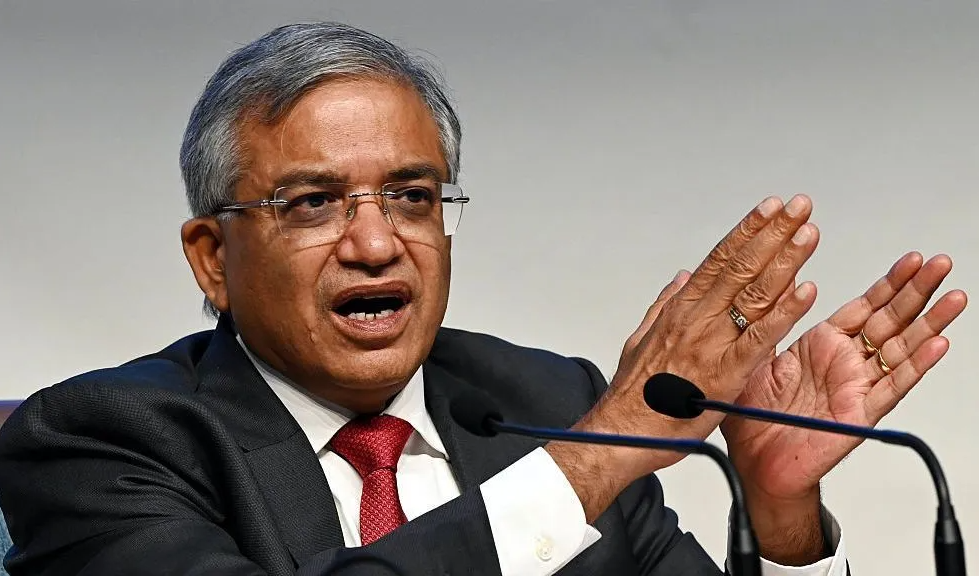
    India’s Chief Election Commissioner Gyanesh Kumar is facing heightened public and political scrutiny following reports of disagreements within the Election Commission of India (ECI) over decisions linked to the Special Intensive Revision (SIR) of electoral rolls. The reported differences have added another layer to an already contentious debate surrounding the revision exercise, which the Election Commission says is intended to identify duplicate and ineligible entries while ensuring that eligible voters remain on the rolls.

    The ECI is a constitutional authority responsible for administering elections to the Lok Sabha, Rajya Sabha, state Legislative Assemblies and the offices of the President and Vice-President. Its current three-member commission comprises Gyanesh Kumar as Chief Election Commissioner and Sukhbir Singh Sandhu and Vivek Joshi as Election Commissioners, according to the Commission’s official records.

    Internal Disagreements Reported Over SIR

    The latest controversy followed an investigation by The Indian Express, which reported that Election Commissioners Sukhbir Singh Sandhu and Vivek Joshi had formally objected on at least 14 occasions over a period of 10 months to decisions and orders they said had been issued without their knowledge.

    According to the report cited by the BBC, the disagreements concerned matters at the centre of the SIR exercise, including procedures for adding or removing names from electoral rolls, changes to voter-registration processes and access to the electoral database containing information on hundreds of millions of voters.

    The reported disagreements are significant because decisions within the three-member Election Commission are determined by a majority. The BBC said Kumar had not personally responded to the investigation and that it had contacted his office for comment.

    The Election Commission, however, has rejected suggestions that the reports demonstrate a serious internal rupture. In a statement issued after the investigation, the Commission said differences of opinion could arise during normal deliberations and maintained that decisions taken by the full Commission during the preceding year, including decisions concerning SIR, were ultimately unanimous.

    Commission Attempts to Address Concerns

    Following the reports, Kumar, Sandhu and Joshi met over the weekend and issued a joint statement addressing some of the issues raised. The Commission also released a photograph showing the three Election Commissioners together.

    The Commission subsequently announced changes to its internal working arrangements. These included circulating meeting agendas in advance, issuing minutes of meetings and ensuring that directions issued by Election Commissioners to officials were complied with.

    The developments have placed renewed attention on how the ECI makes decisions on electoral-roll management, particularly while the SIR exercise is being carried out across several parts of the country.

    Official ECI communications show that Kumar, Sandhu and Joshi have continued to jointly conduct election-related reviews and programmes. In March 2026, for example, the three-member Commission reviewed preparations for the Kerala Assembly election and interacted with representatives of national and state political parties. The ECI said Kumar reiterated that SIR was intended to ensure that no eligible elector was excluded and no ineligible person was included in the electoral rolls.

    SIR at Centre of Wider Political Dispute

    The Special Intensive Revision has become the defining issue of Kumar’s tenure as Chief Election Commissioner. According to the BBC report, the exercise began in Bihar and was subsequently extended to most of India. More than 130 million names had been struck from draft electoral rolls across 30 states and Union Territories, according to figures cited in the report.

    The Election Commission maintains that the exercise is designed to clean electoral rolls by identifying duplicate and ineligible entries while protecting the inclusion of legitimate voters. Opposition parties and activists have raised concerns that the process could result in eligible voters being excluded. The Commission and Kumar have rejected allegations that the exercise is being manipulated for political purposes.

    The ECI has publicly defended the process on several occasions. In an official March 2026 statement, Kumar said the objective of SIR was to ensure that no eligible elector was left out while no ineligible person was included.

    The Commission has also continued to describe electoral-roll revision as an important part of maintaining the integrity of the electoral process. In May 2026, the ECI held a national conference involving its legal representatives, with SIR among the electoral processes discussed. The Commission’s statement from that event included Kumar’s observation that accurate electoral rolls are central to elections.

    Political Opposition and Calls for Removal

    The dispute has also generated political reactions. The BBC reported that opposition parties were preparing a motion in Parliament seeking Kumar’s removal. The report also said that Rahul Gandhi and other opposition leaders were involved in the political response to the controversy.

    Such calls are part of the political response to the controversy and do not, by themselves, establish any wrongdoing by the Chief Election Commissioner. The Election Commission has continued to defend the SIR process and its decision-making.

    Andhra Pradesh Chief Minister N. Chandrababu Naidu, whose party is part of the governing coalition at the Centre, was reported as defending the Commission’s clarification and saying it reaffirmed the institution’s integrity.

    Kumar’s Bureaucratic Career

    The current controversy has also brought greater attention to Kumar’s long career in government. He joined the Indian Administrative Service in 1988 after studying civil engineering at IIT Kanpur. His early career included service in Kerala, where he served as district collector of Ernakulam and was involved in the redevelopment of Kochi’s waterfront.

    His later assignments took him into more politically sensitive areas of government. In 2016, Kumar joined the Jammu and Kashmir division of the Union Home Ministry. He was subsequently involved in work connected with the Jammu and Kashmir Reorganisation Bill, which followed the Narendra Modi government’s decision to revoke the region’s special constitutional status and reorganise the former state into two Union Territories.

    Kumar also headed a team involved in implementing the Supreme Court’s 2019 Ayodhya judgment, including work relating to the trust responsible for overseeing construction of the Ram temple.

    He retired from the civil service in January 2024 and was appointed an Election Commissioner less than two months later. In February 2025, he became Chief Election Commissioner. The ECI currently lists him as the 26th CEC and records that he took charge on February 19, 2025.

    Appointment Process Also Under Scrutiny

    Kumar was the first Chief Election Commissioner appointed under the 2023 law that changed the composition of the selection panel for Election Commissioners. The law replaced the Chief Justice of India on the panel with a Union Cabinet minister nominated by the Prime Minister.

    Opposition parties have argued that the change could affect the institutional independence of the Election Commission. The BBC reported that Rahul Gandhi, then Leader of the Opposition and a member of the selection panel, had opposed Kumar’s appointment and sought to defer it while legal challenges to the new law were being considered.

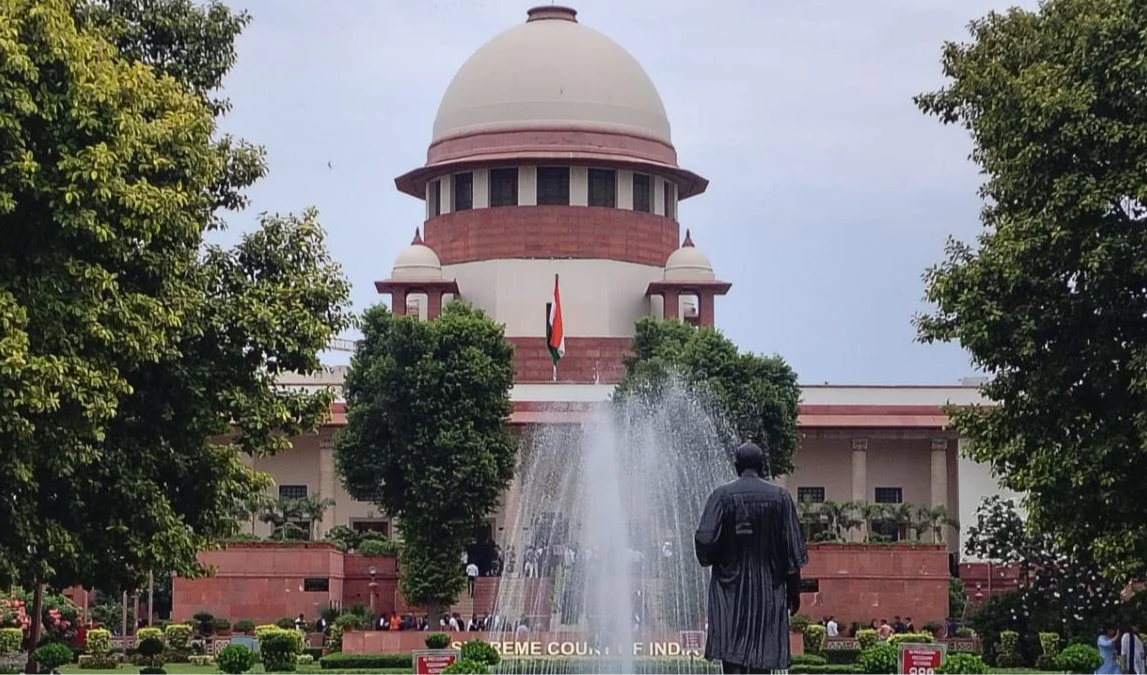
    The law remains in force, while its constitutional validity is under consideration by the Supreme Court. According to the BBC report, a two-judge bench differed on the challenge in September and referred the matter to the Chief Justice for consideration of whether it should be placed before a larger bench.

    Scrutiny of the Election Commission Continues

    Kumar’s tenure has included administrative changes within the election machinery, including measures concerning staff attendance, polling-station arrangements, voter information slips and access to polling stations. The BBC also reported that at least 10 chief electoral officers were transferred during his first month as CEC, a move that critics described as unusually high for routine changes.

    The ECI has simultaneously highlighted administrative and legal reforms. In June 2026, it held a conference for media and communication officers from states and Union Territories, where Kumar, Sandhu and Joshi addressed officials on electoral communication, misinformation, electoral laws and the Commission’s technology initiatives.

    The latest internal-disagreement reports therefore come against the backdrop of wider scrutiny of the Election Commission, its leadership and the SIR exercise. The Commission has maintained that its decisions have ultimately been unanimous and has rejected suggestions of a serious institutional rupture. At the same time, reports of repeated objections by two Election Commissioners have raised questions about internal deliberations and decision-making procedures.


    Whether the controversy will result in further political or legal developments remains to be seen. For now, the dispute has intensified attention on the Election Commission’s handling of electoral-roll revisions and on the institutional functioning of one of India’s key constitutional bodies

    Click here to Read More
    Previous Article
    Trump Hails Flydubai Pilot Smit Machchhar as ‘Hero’ After Knife Attack Aboard Dubai-Tel Aviv Flight
    Next Article
    Sachin Pilot Report Paves Way for Amarinder Singh Raja Warring’s Exit as Punjab Congress Chief

    Related National Updates:

    Are you sure? You want to delete this comment..! Remove Cancel

    Comments (0)

      Leave a comment